Artwork
An Italian peasant boy
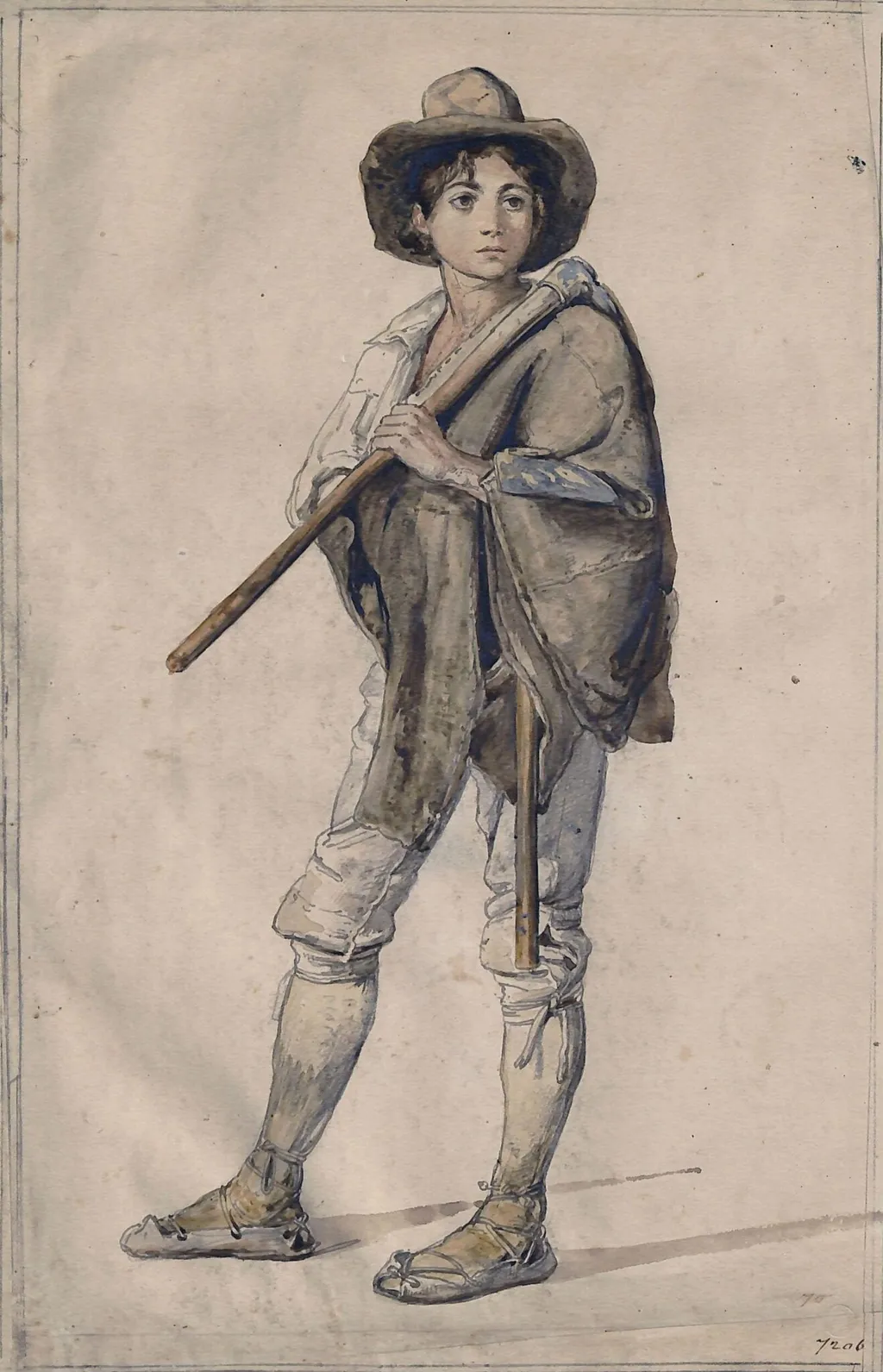
An Italian peasant boy is a watercolor work on paper by the Biedermeier artist Carl Friedrich Heinrich Werner. It dates from 1830 and is held in the collection of the Victoria and Albert Museum.
About this work
Overview
The work is part of the Victoria and Albert Museum’s collection and exemplifies 19th-century European interest in rural life.
Created in 1830 by Carl Friedrich Heinrich Werner, this watercolor depicts a young Italian peasant boy in quiet motion. The work is part of the Victoria and Albert Museum’s collection and exemplifies 19th-century European interest in rural life. Rendered in delicate washes, the image captures a moment of ordinary travel rather than grand narrative, reflecting a broader artistic shift toward humble subjects.
Subject & Meaning
The boy, dressed in simple, functional clothing, carries a heavy satchel and a walking stick, suggesting he is en route to labor. His wide-brimmed hat and tucked trousers indicate practical adaptation to terrain and climate. There is no overt emotion or drama; instead, the image conveys quiet resilience. The absence of context—no landscape, no companions—focuses attention on the individual’s solitary journey, evoking themes of endurance and daily toil.
Technique & Style
Werner employed transparent watercolor washes to build soft, muted tones, avoiding sharp outlines in favor of gentle transitions. The brushwork is light yet deliberate, capturing texture in fabric and the suggestion of sunlight without direct modeling. The composition is uncluttered, with the figure centered and slightly off-kilter, enhancing the sense of movement. This restrained approach aligns with Romantic-era tendencies to elevate the ordinary through sensitivity rather than spectacle.
History & Provenance
The painting entered the Victoria and Albert Museum’s collection in the 19th century, likely acquired during a period when British institutions were expanding holdings of European genre scenes. Its origin traces to Werner’s travels in Italy, where he sketched local life. While not widely exhibited, it has remained in public care since its acquisition, preserved as an example of academic watercolor practice from the early 1800s.
Context
In the 1830s, European artists increasingly turned to rural subjects as industrialization reshaped society. Werner’s work reflects this trend, aligning with Romanticism’s fascination with authenticity and the dignity of labor. Unlike grand historical paintings, this piece offers no moralizing or idealization—just a solitary figure, grounded in observation. Similar studies appeared in the work of French and German contemporaries, responding to a growing cultural interest in the lives of the rural poor.
Legacy
Though not widely reproduced or celebrated in major art histories, the painting endures as a quiet testament to 19th-century observational practice. It contributes to the broader archive of genre scenes that documented everyday existence before photography became commonplace. Its preservation in a major museum underscores its value as a record of visual anthropology, offering insight into how artists of the time chose to represent the unseen margins of society.
Own this work as a print
Artist & collection


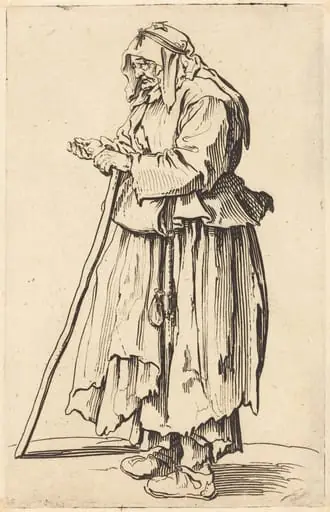 Beggar Woman Receiving Charity
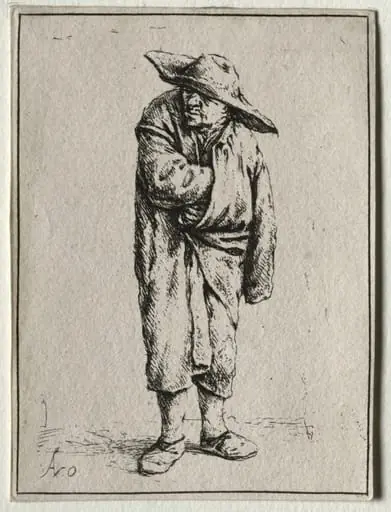 Peasant with his hand in his cloak
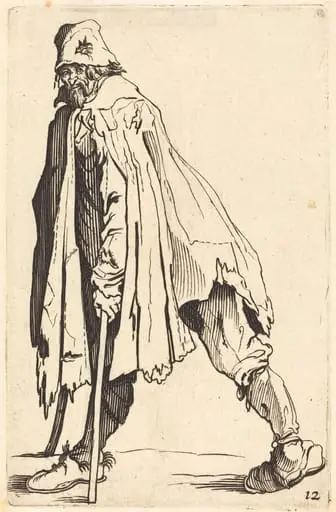 Beggar with Crutches and Cap
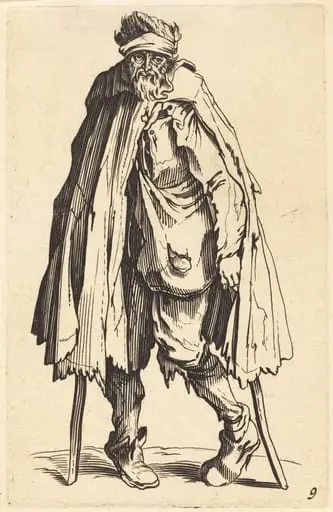 Beggar with Crutches and Sack
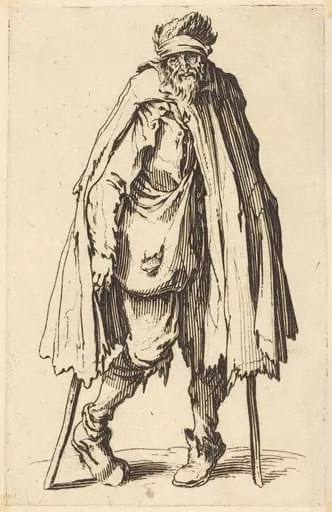 Beggar with Crutches and Sack
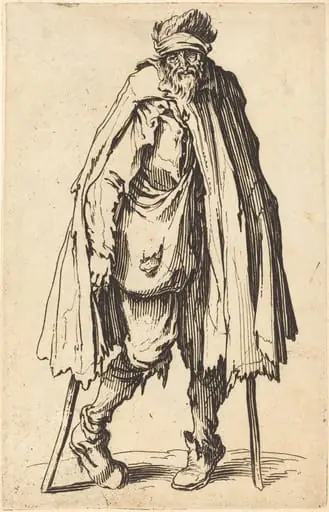 Beggar with Crutches and Sack
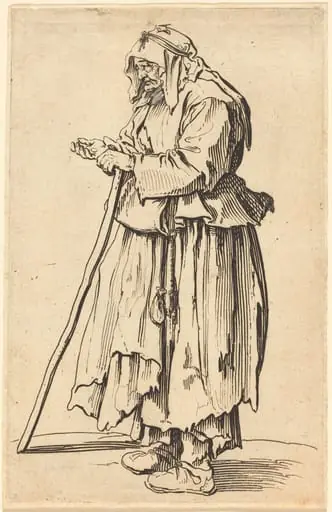 Beggar Woman Receiving Charity
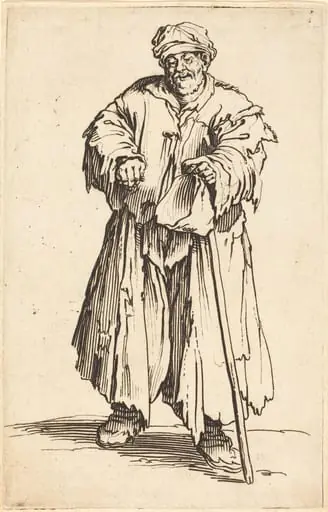 Fat Beggar with Eyes Cast Down
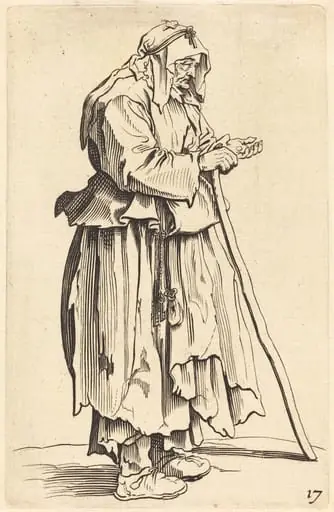 Beggar Woman Receiving Charity
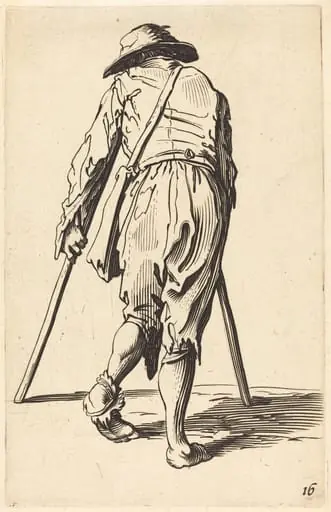 Beggar with Crutches and Hat, Back View
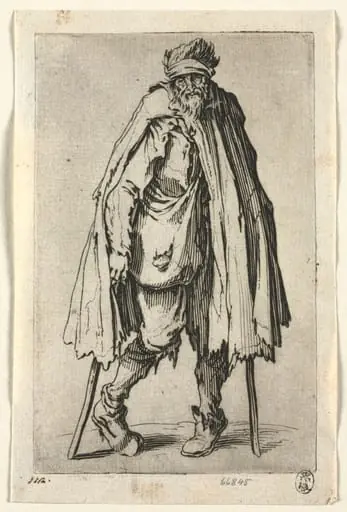 The Beggars: Beggar on Crutches with a Bag
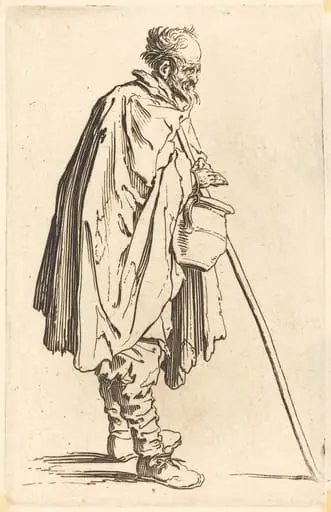 Beggar with Pot