Artwork
La Révéranse d'Arlequin
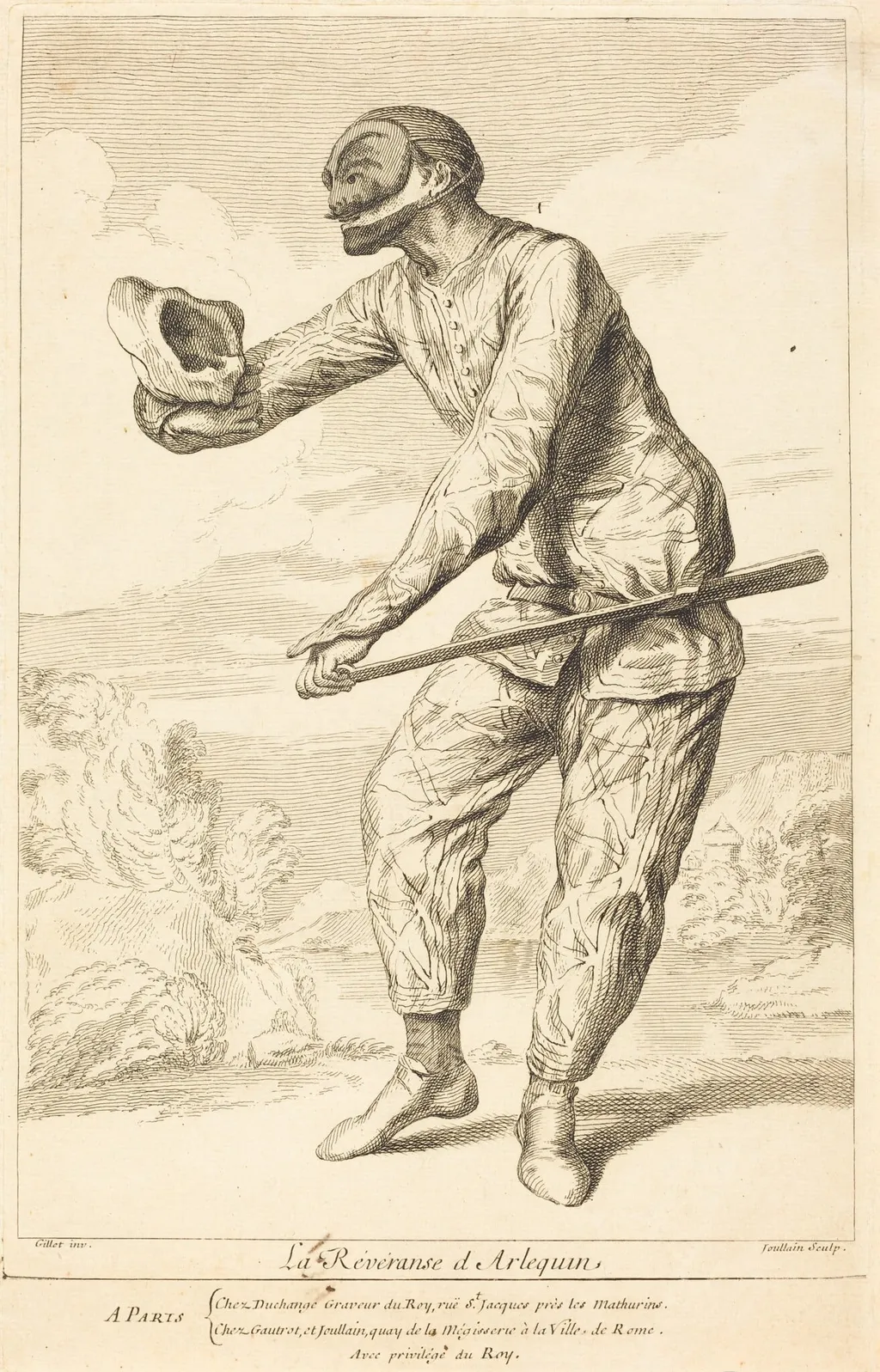
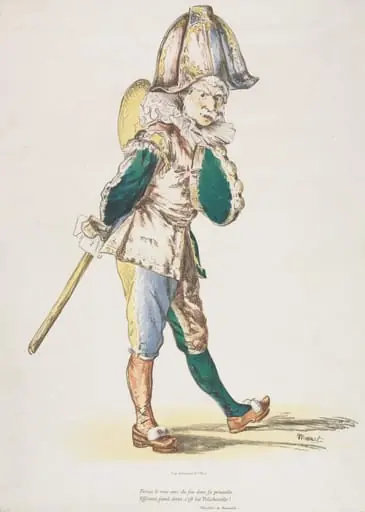
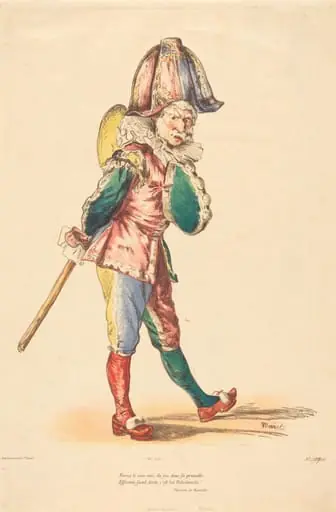
La Révéranse d'Arlequin is an ink print by the Baroque artist François Joullain. It dates from 1730 and is held in the collection of the National Gallery of Art.
About this work
Overview
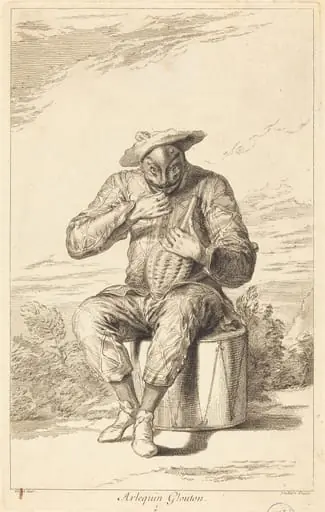
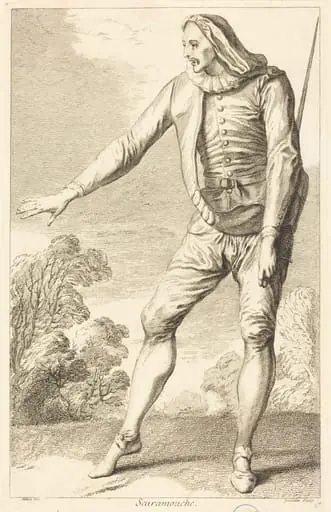
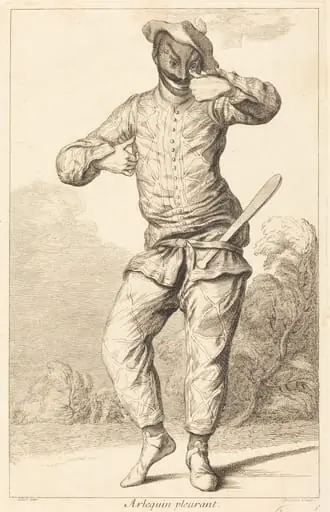
François Joullain’s print La Révéranse d’Arlequin, executed in etching on laid paper around 1730, presents a solitary figure in costume against a natural backdrop. The work measures the typical dimensions of early eighteenth‑century French prints and exemplifies the period’s interest in theatrical subjects.
Subject & Meaning
The central character wears a mask and a long‑sleeved shirt, holding a hat in his right hand while his left arm extends forward. The attire and mask identify him as a performer, likely an Arlequin or Harlequin, a stock figure in commedia dell’arte, suggesting a moment of theatrical preparation or performance.
Technique & Style
Joullain employed the fine lines of copper‑plate etching to render both the figure’s detailed costume and the surrounding landscape of trees and water. The contrast between the crisp foreground and the softer background demonstrates the artist’s control of line weight and atmospheric perspective.
History & Provenance
Created circa 1730, the print belongs to the early phase of Joullain’s career, when he was establishing himself as a leading French engraver and publisher. Copies of La Révéranse d’Arlequin circulated among collectors of theatrical prints in Paris and later entered museum collections through 19th‑century acquisitions.
Context
The image reflects the eighteenth‑century fascination with stagecraft and the popular Harlequin character, who embodied both comedy and disguise. Such prints served both as decorative objects and as visual records of contemporary performance culture.
Artist & collection