Artwork
Oriental Woman, Holding a Torch
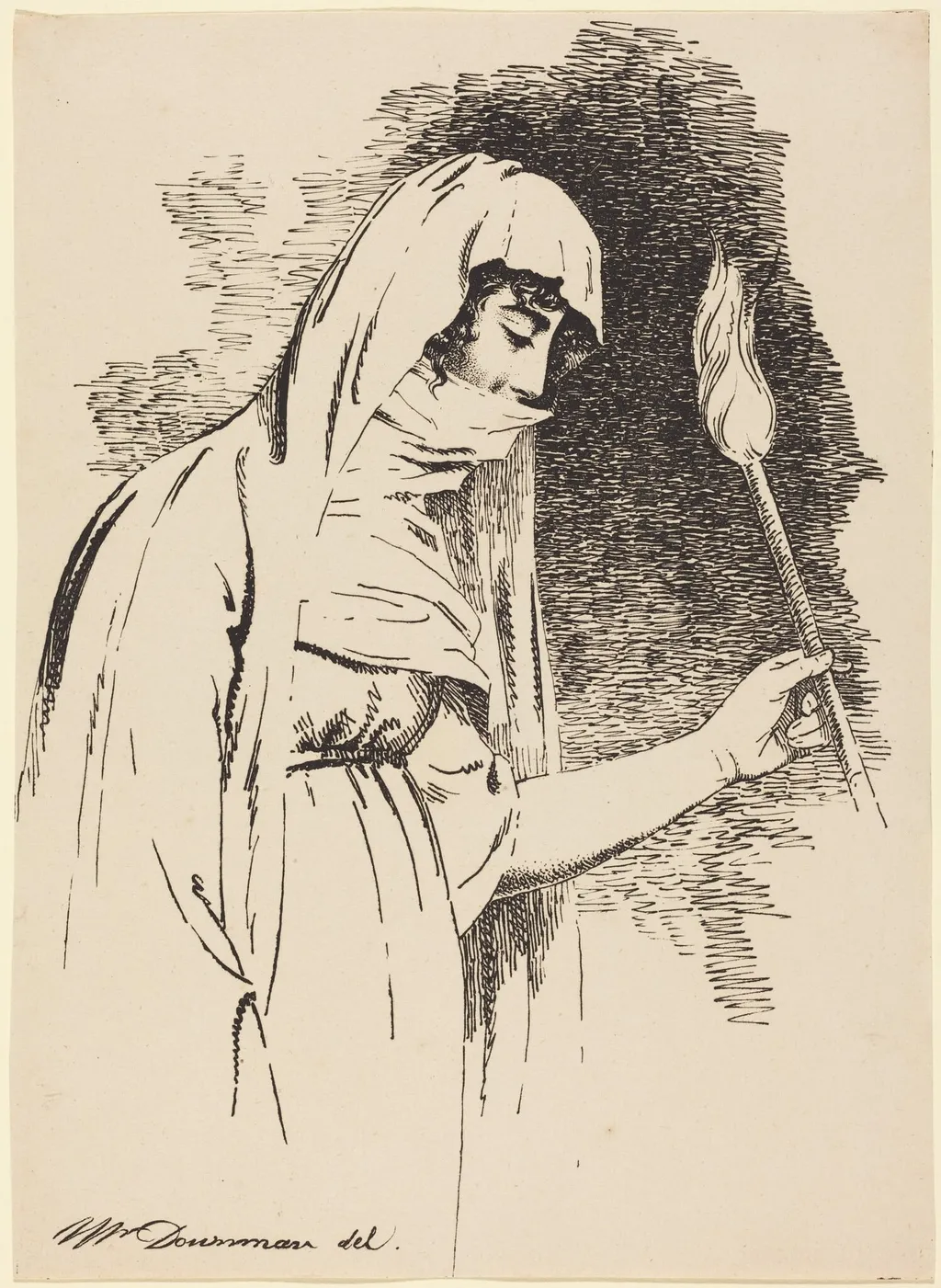
Oriental Woman, Holding a Torch is an ink print by the Romanticist artist John Downman. It dates from 1806 and is held in the collection of the National Gallery of Art.
About this work
Overview
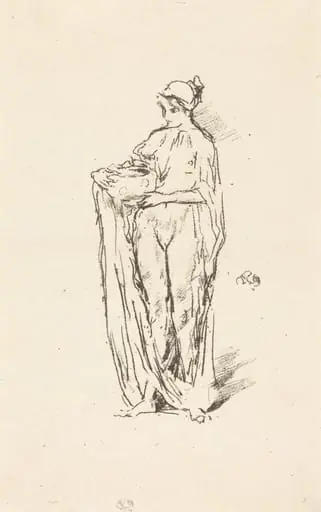
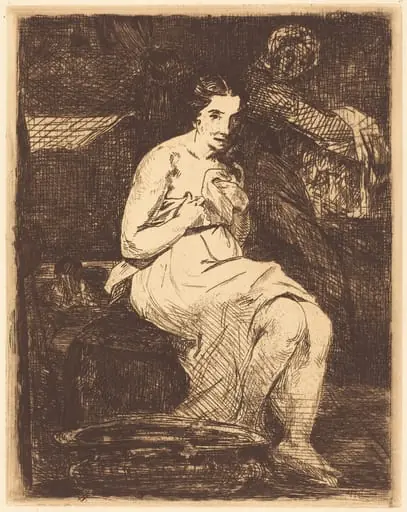
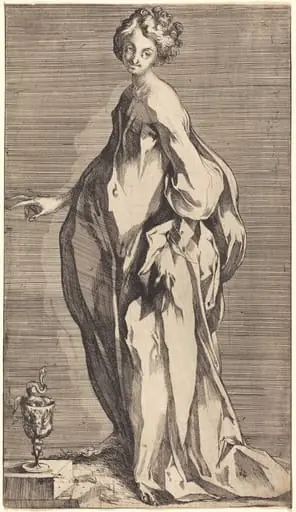
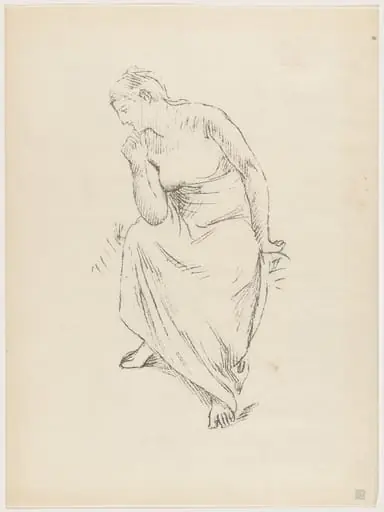
Created in 1806 by John Downman, this lithograph is a monochrome print executed in pen and tusche. It depicts a solitary female figure illuminated by a torch, rendered with rapid, expressive lines that suggest movement and atmosphere. The absence of color heightens the contrast between light and shadow, emphasizing the figure’s presence against a deep, undefined background.
Subject & Meaning
Her draped robe and stylized features evoke an idealized Eastern archetype common in early 19th-century European art.
The figure, interpreted as an Oriental woman, holds a torch aloft, casting upward light across her face. Her draped robe and stylized features evoke an idealized Eastern archetype common in early 19th-century European art. The torch may symbolize enlightenment or mystery, though no specific narrative is confirmed. The pose and lighting focus attention on her expression, inviting contemplation rather than storytelling.
Technique & Style
Downman employed pen-and-tusche lithography, a technique allowing fluid, ink-like marks on stone. His lines are loose and gestural, capturing the flow of fabric and hair as shadowy forms. The torch’s glow is suggested by the paper’s untouched surface, while surrounding areas are darkened with dense washes. This method produces a dramatic chiaroscuro effect without color or shading tools.
History & Provenance
The print was produced in 1806 during Downman’s active period as a British artist and printmaker. It was likely part of a series exploring exoticized figures, reflecting contemporary European fascination with the Orient. No documented early ownership is recorded, but it appears in later collections of British graphic art, suggesting modest circulation among collectors of prints.
Context
This work emerged amid a wave of Orientalist imagery in British art, influenced by travel literature and colonial expansion. Artists often depicted Eastern subjects through a romanticized lens, prioritizing mood over accuracy. Downman’s focus on light and gesture aligns with Romantic-era interests in emotion and the sublime, even within small-scale graphic works.
Legacy
Though not widely exhibited today, the print remains a representative example of early 19th-century British lithography and Orientalist aesthetics. Its emphasis on tonal contrast and spontaneous line influenced later artists experimenting with expressive printmaking. It survives as a quiet artifact of how European artists imagined the East through light, shadow, and suggestion.
Artist & collection