Artwork
Reverie
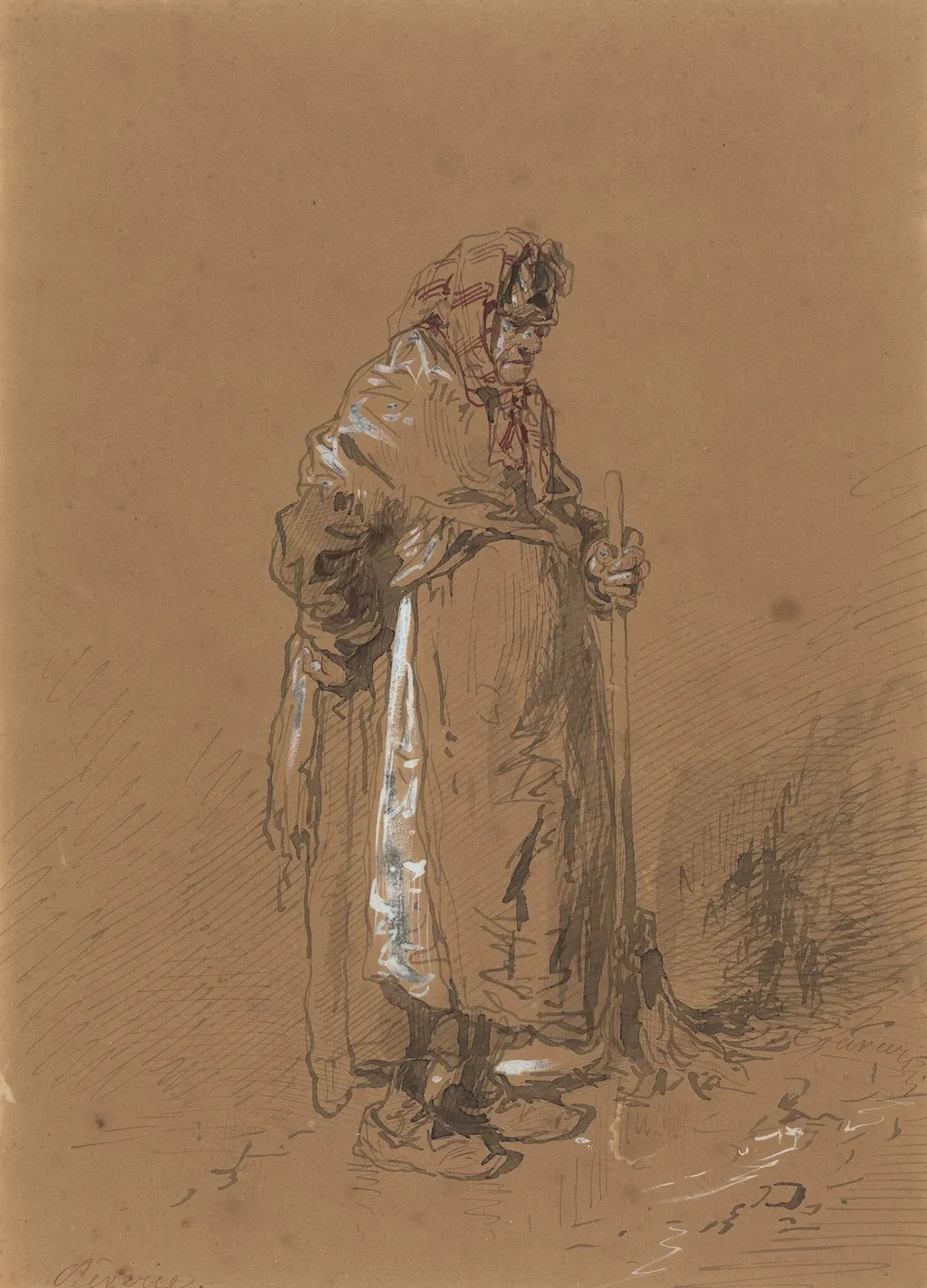
Reverie is an ink drawing by the Romanticist artist Paul Gavarni. It dates from 1835 and is held in the collection of the National Gallery of Art.
About this work
Overview
Reverie is a drawing created by Paul Gavarni in 1835, utilizing pen and gray and red ink heightened with white on darkened paper. This technique was characteristic of mid-19th-century French graphic traditions, emphasizing delicate tonal effects through ink and paper manipulation.
Subject & Meaning
The drawing portrays a solitary figure clad in a long coat, leaning on a cane in an understated interior. The figure's tilted head and closed eyes convey a state of deep contemplation or daydreaming, inviting the viewer to interpret the nature of their reverie.
Technique & Style
Gavarni employed loose, sketchy lines and expressive shading to suggest the texture of the figure's clothing and imply movement. The darkened paper serves as a backdrop, with white highlights subtly illuminating the coat, creating a soft glow.
History & Provenance
Created in 1835 by Paul Gavarni (pen name of Sulpice Guillaume Chevalier, born 1804 in Paris), this work aligns with the French illustrative practices of its time, though specific provenance details are not provided here.
Context
Reverie reflects the artistic preferences of mid-19th-century France, where illustrators like Gavarni used ink techniques and paper manipulation to achieve nuanced, expressive drawings, often focusing on everyday life and introspective moments.
Legacy
While specific legacy details of 'Reverie' are not outlined, it contributes to the broader appreciation of Gavarni's work within French graphic art history, showcasing techniques like cross-hatching (implied by the description of line work for shading) that were foundational to the period's illustrative style.
Artist & collection

Artist
Paul Gavarni was the pen name of Sulpice Guillaume Chevalier (13 January 1804 – 24 November 1866), a French illustrator, born in Paris.

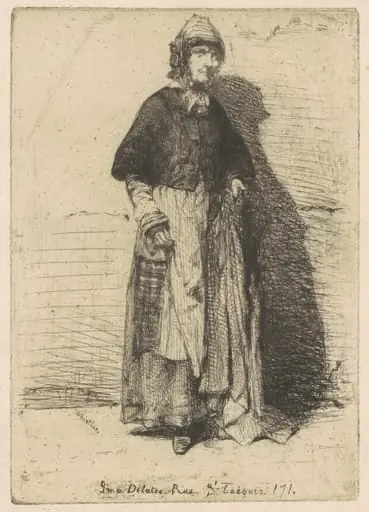 La Mère Gérard
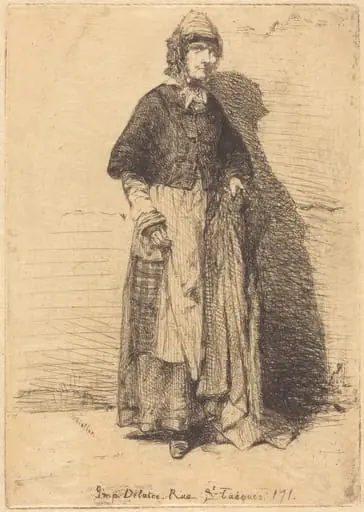 La Mère Gérard
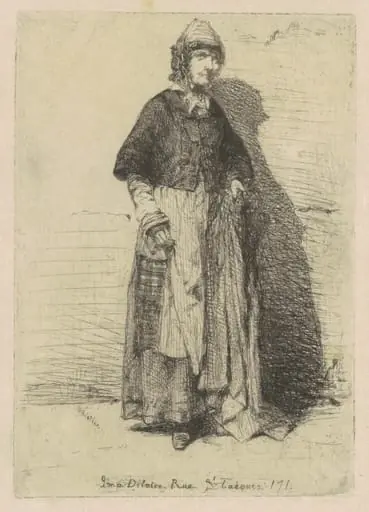 La Mère Gérard
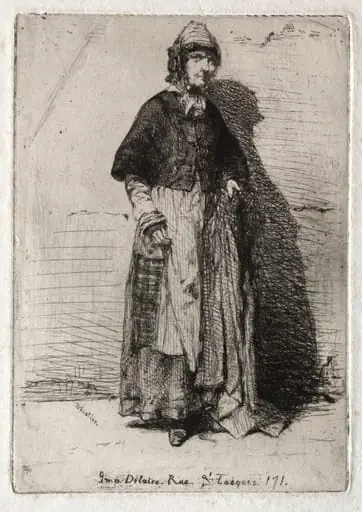 Twelve Etchings from Nature: La Mère Gérard
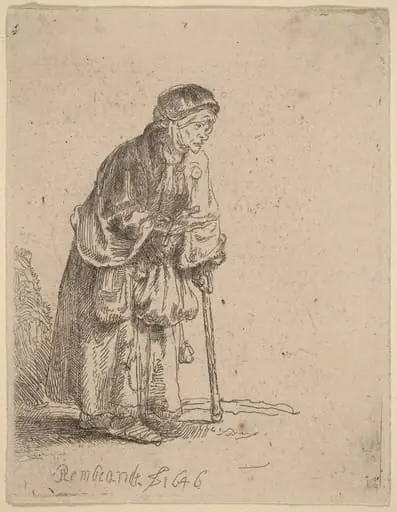 Beggar Woman Leaning on a Stick
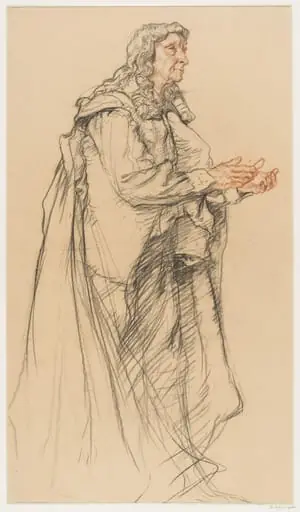 Prince Rupert receiving the Charter of the Hudson Bay Company from Charles II
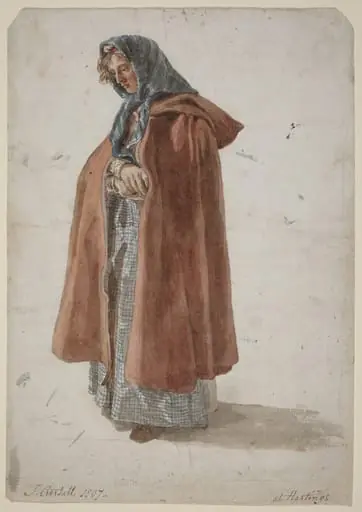 Young Woman in a Kerchief and Cloak at Hastings
 A stooping Chinese man
 The Draped Figure Seated
 Beggar with Crutches and Cap
 The Mantle
 Beggar with a Stick, Walking to the Left