Artwork
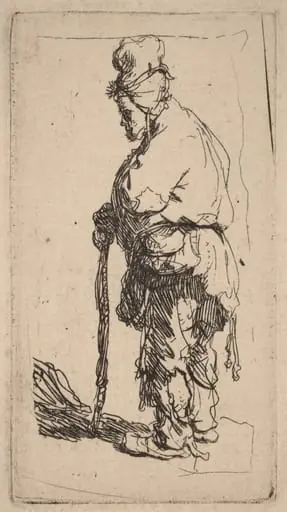
Beggar with a Stick, Walking to the Left
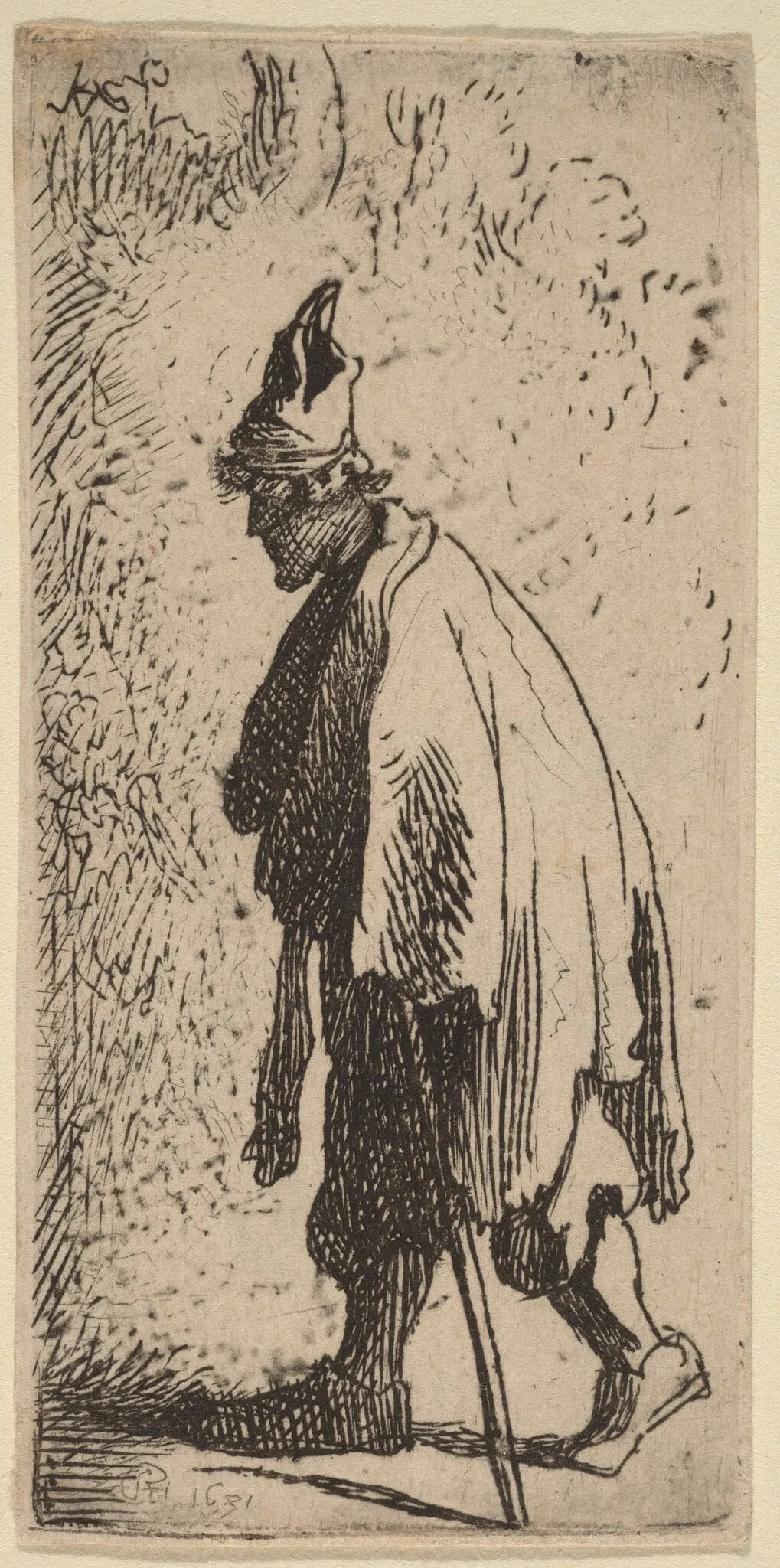
Beggar with a Stick, Walking to the Left is an ink print by the Baroque artist Dutch 17th Century. It dates from 1631 and is held in the collection of the National Gallery of Art.
About this work
Overview
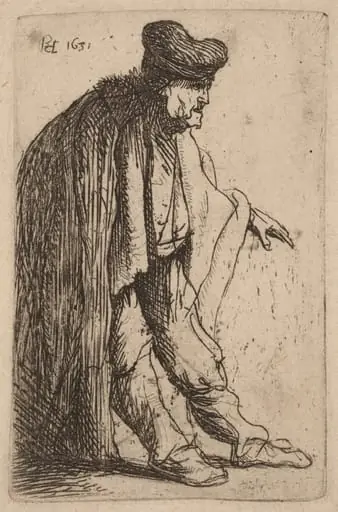
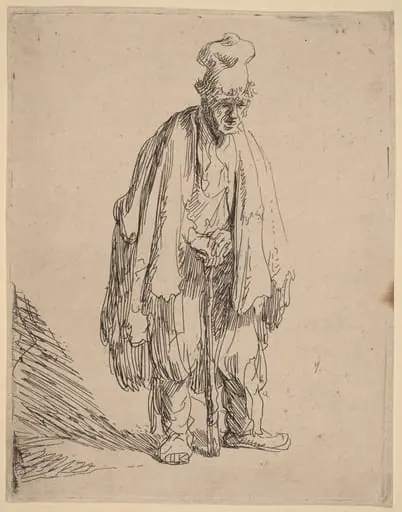
The work is an etching titled *Beggar with a Stick, Walking to the Left*. It depicts a solitary figure, hunched and leaning on a staff, moving laterally across a landscape of tall grasses or reeds. The composition is rendered in a loose, sketch‑like manner, emphasizing the figure’s motion and the texture of the surrounding vegetation.
Subject & Meaning
The central subject is a destitute wanderer, clothed in loose, worn garments and wrapped in a scarf, suggesting poverty and itinerancy. The posture—bent forward, leaning on a stick—conveys fatigue and the burden of travel, while the sideways direction hints at a journey without a clear destination.
Technique & Style
Executed in etching, the image relies on swift, confident lines that create a rough, almost scribbled quality. The artist’s hand is evident in the quick strokes that form the figure’s hands and the tangled grasses, producing a sense of immediacy and texture characteristic of a sketch rather than a polished print.
Context
The work belongs to a tradition of social genre prints that document everyday hardship. By focusing on a single, anonymous beggar, the image aligns with broader 19th‑century interests in realism and the portrayal of marginalized individuals within urban and rural settings.
Artist & collection

Artist
This Dutch artist made small, sharp engravings and etchings—mostly portraits and sea battles—printed from metal plates.