Artwork
The Toilette (La toilette)
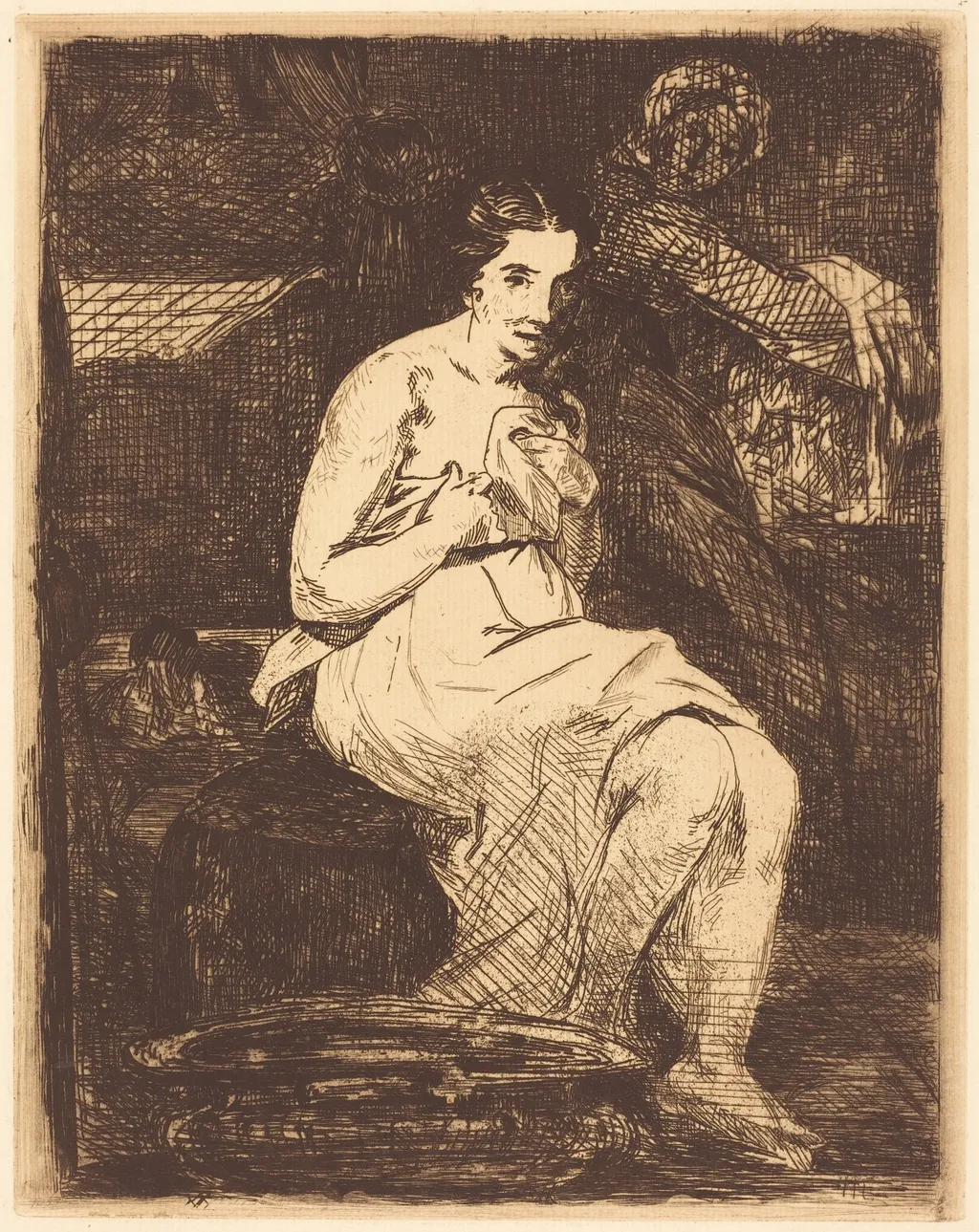
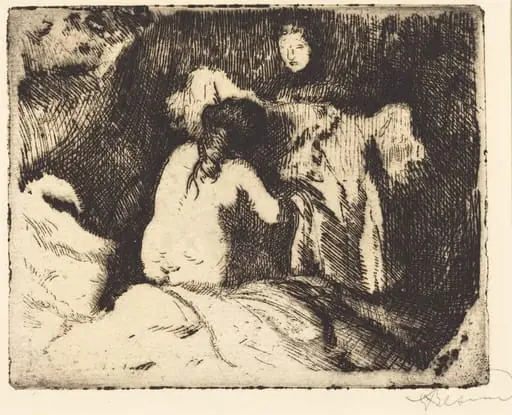
The Toilette (La toilette) is an ink print by the Impressionist artist Edouard Manet. It dates from 1862 and is held in the collection of the National Gallery of Art. Created in 1862, The Toilette is an etching by Édouard Manet that captures a quiet, intimate moment in a domestic setting.
About this work
Overview
The composition focuses on two figures in a private ritual, rendered with deliberate roughness that prioritizes immediacy over finish.
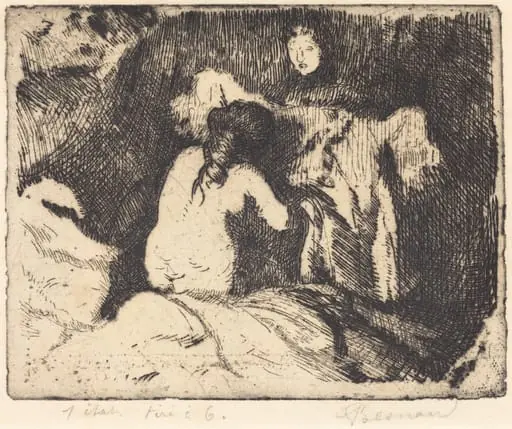
Created in 1862, The Toilette is an etching by Édouard Manet that captures a quiet, intimate moment in a domestic setting. Unlike polished academic prints of the era, this work embraces a spontaneous, almost sketchlike quality. The composition focuses on two figures in a private ritual, rendered with deliberate roughness that prioritizes immediacy over finish. The medium’s capacity for bold, linear contrast allowed Manet to explore form through minimal yet expressive marks.
Subject & Meaning
The scene depicts a man seated, shirtless and at ease, holding an object near his face—perhaps a towel or grooming tool—while a woman stands behind him, turned away, clutching a cloth. Their postures suggest a private, unguarded moment, avoiding theatricality or narrative clarity. The absence of explicit context invites interpretation: is this a servant, a partner, or a family member? The work resists moralizing, instead presenting a candid glimpse into everyday life.
Technique & Style
Manet employed etching to create sharp, irregular lines that convey texture and motion through deliberate imperfection. The ink-filled grooves produce strong contrasts, with dark, broken strokes defining form rather than smooth contours. This approach departs from the refined lines typical of 19th-century printmaking, favoring a tactile, urgent quality. The roughness suggests haste or direct observation, aligning the print with Manet’s broader interest in capturing transient moments.
History & Provenance
The Toilette was made in 1862 during a period when Manet was experimenting with printmaking, often using it to explore themes later developed in his paintings. Few impressions were likely pulled, and the work remained relatively obscure until later scholarly attention. Its survival in limited numbers reflects its status as a private study rather than a commercial product, offering insight into Manet’s process away from public scrutiny.
Context
In the early 1860s, Manet was challenging academic norms in both painting and printmaking. While the Salon favored idealized subjects, he turned to ordinary scenes, often with ambiguous social dynamics. The Toilette aligns with his interest in modern life and informal compositions, paralleling contemporaneous works like The Absinthe Drinker. Its raw style echoed emerging realist tendencies, distancing itself from historical or mythological conventions.
Legacy
Though not widely exhibited in Manet’s lifetime, The Toilette became a touchstone for later artists drawn to the expressive potential of printmaking. Its unpolished aesthetic influenced generations seeking to convey psychological presence through minimal means. The work exemplifies how technical experimentation could serve a deeper observation of human behavior, bridging the gap between drawing and finished art.
Artist & collection

Artist
Édouard Manet didn’t have much time to make his mark—he died at 51—but he used every year.