Artwork
The Sybarite
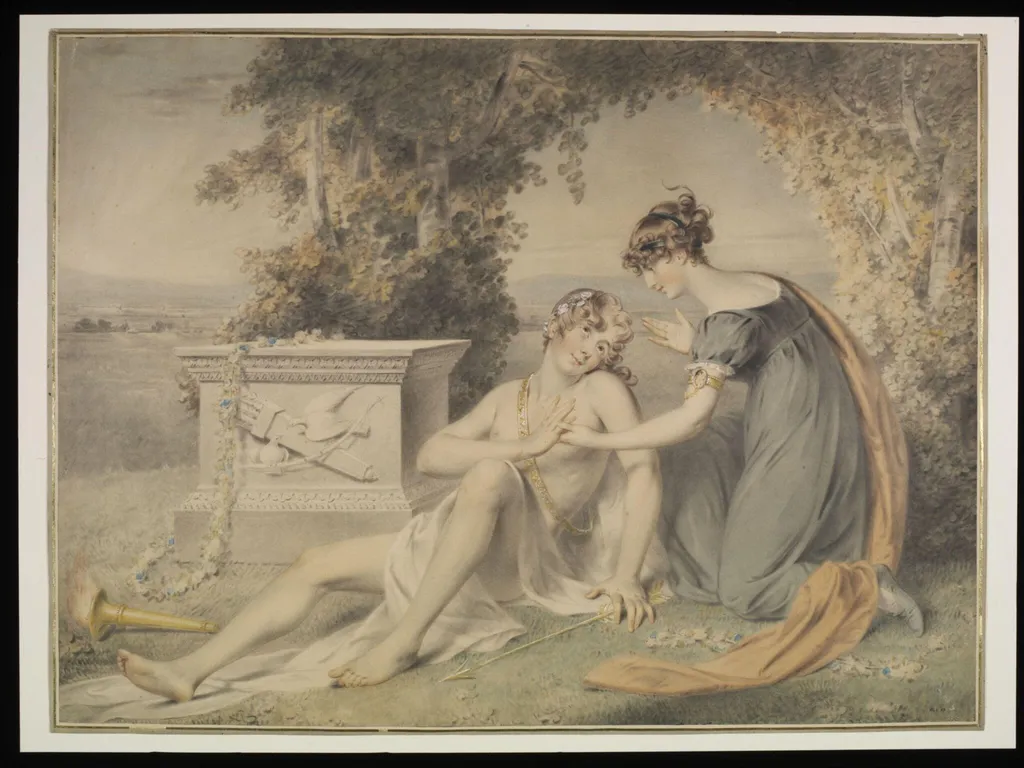
The Sybarite is a watercolor work on paper by the British Romanticist artist John Downman. It dates from 1805 and is held in the collection of the Victoria and Albert Museum.
About this work
Overview
The Sybarite is a watercolour by Downman, signed and dated 1805, exhibited at the Royal Academy that same year. The work depicts a serene scene of a woman in elaborate attire kneeling beside a nude boy, set against a dreamy, natural backdrop.
Subject & Meaning
The composition features a gentlewoman holding a golden horn and a relaxed, naked youth seated on a carved pedestal, behind which a reclining figure is sculpted. The tranquil, enigmatic atmosphere suggests a nuanced exploration of themes, potentially alluding to classical ideals of beauty and contemplation.
Technique & Style
Downman employed a palette of light colors, characterized by smooth blending, to evoke a soft, mystical ambiance. This technical approach contributes to the overall sense of calm and quiet introspection in the scene.
History & Provenance
First publicly shown at the Royal Academy's 1805 annual exhibition (entry 460), the watercolour's subsequent ownership history is not detailed here.
Context
The Sybarite aligns with the burgeoning Romantic movement, evident in its emphasis on emotional atmosphere, the sublime in nature, and a hint of mystique. The dreamy light and focus on mood further solidify its connection to Romantic ideals.
Legacy
While specific influences or direct artistic descendants are not noted, The Sybarite remains a characteristic example of early 19th-century Romantic watercolour practice, offering insights into the period's aesthetic values.
Artist & collection

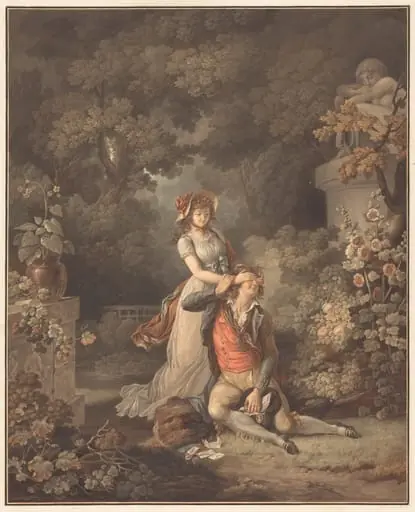 L'Amant surpris
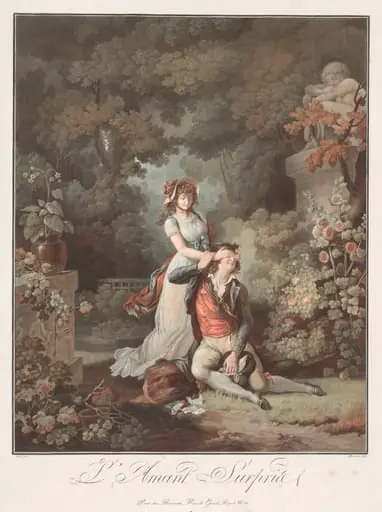 The Lover Surprised (L'Amant Surpris)
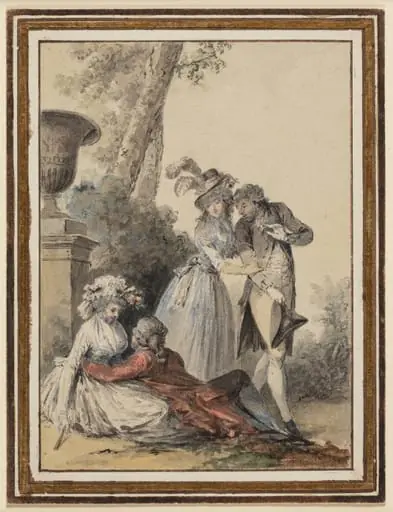 To galante par i en have, det ene liggende, det andet stående
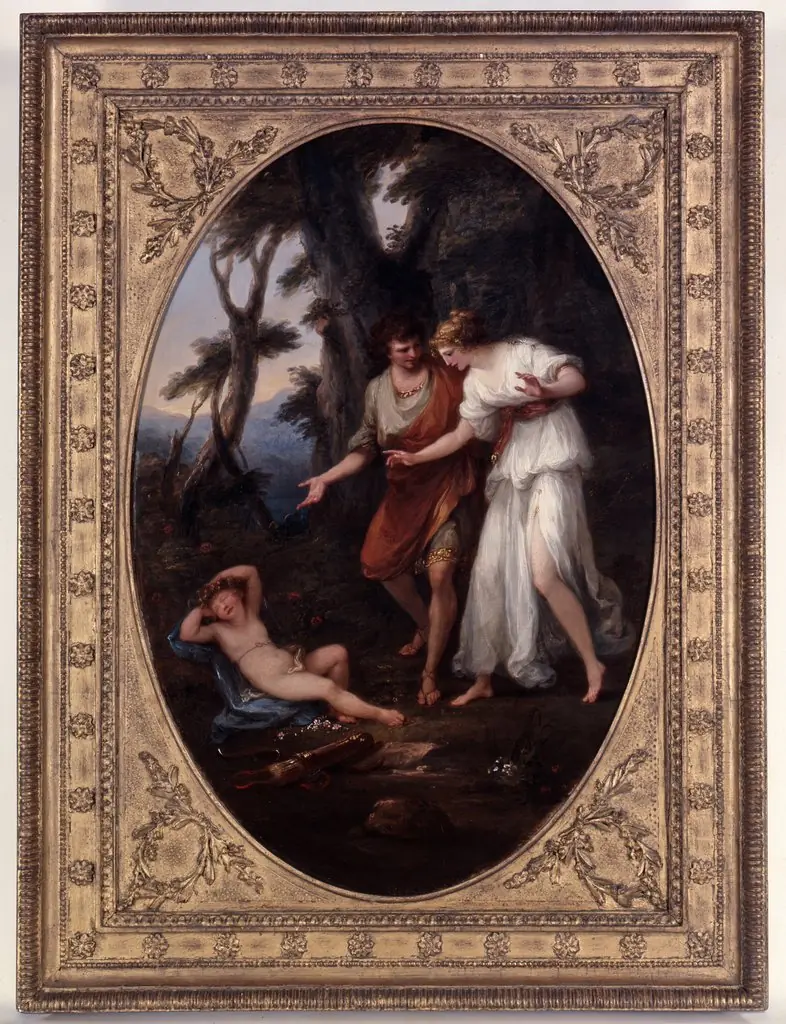 Cephise and her Lover discover the sleeping Cupid in the Woods of Idalia
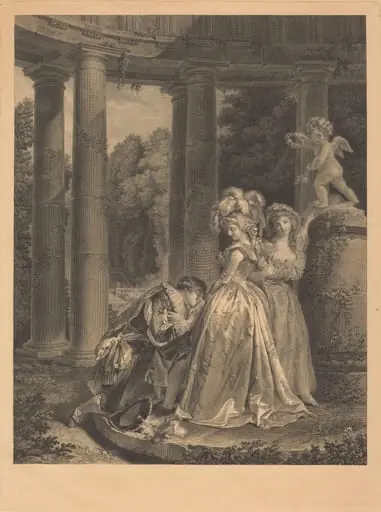 La Declaration
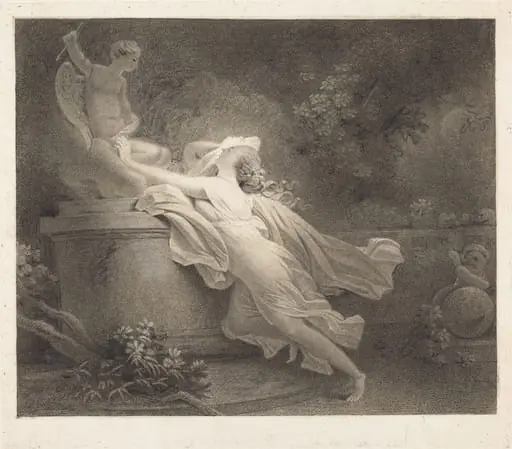 L'invocation a l'amour
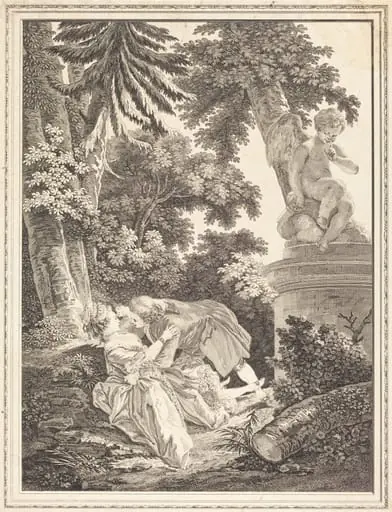 La nuit
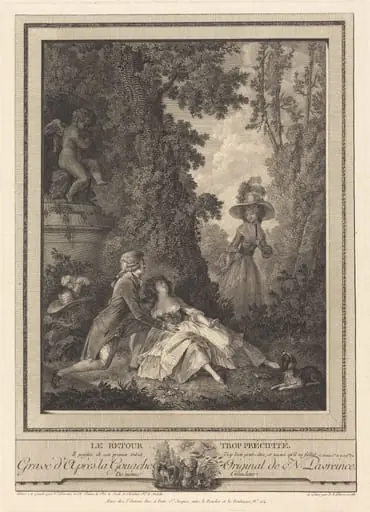 Le retour trop precipite
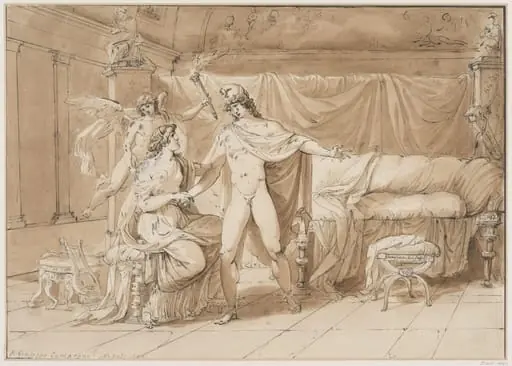 Paris and Helen, with Hymen
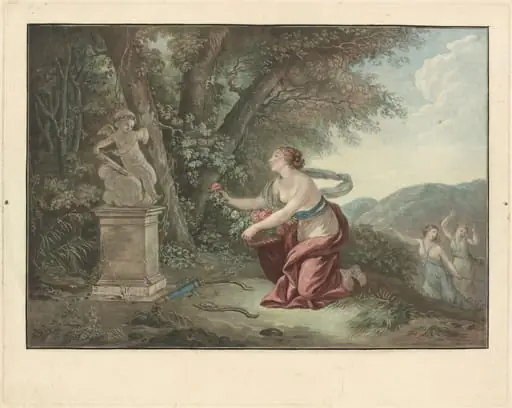 Offrande à l'amour
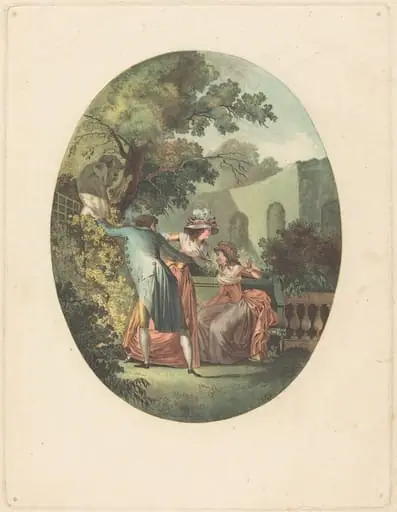 La statue du dieu Pan (Statue of the God Pan)
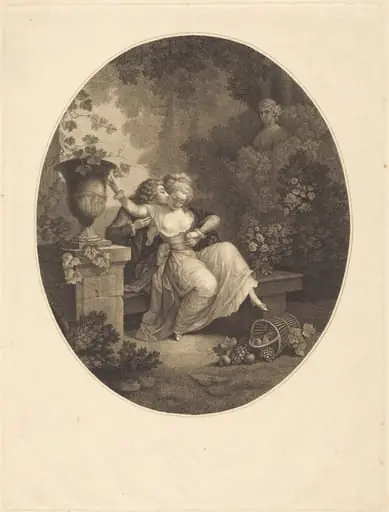 The Upset Basket