Artwork
L'invocation a l'amour
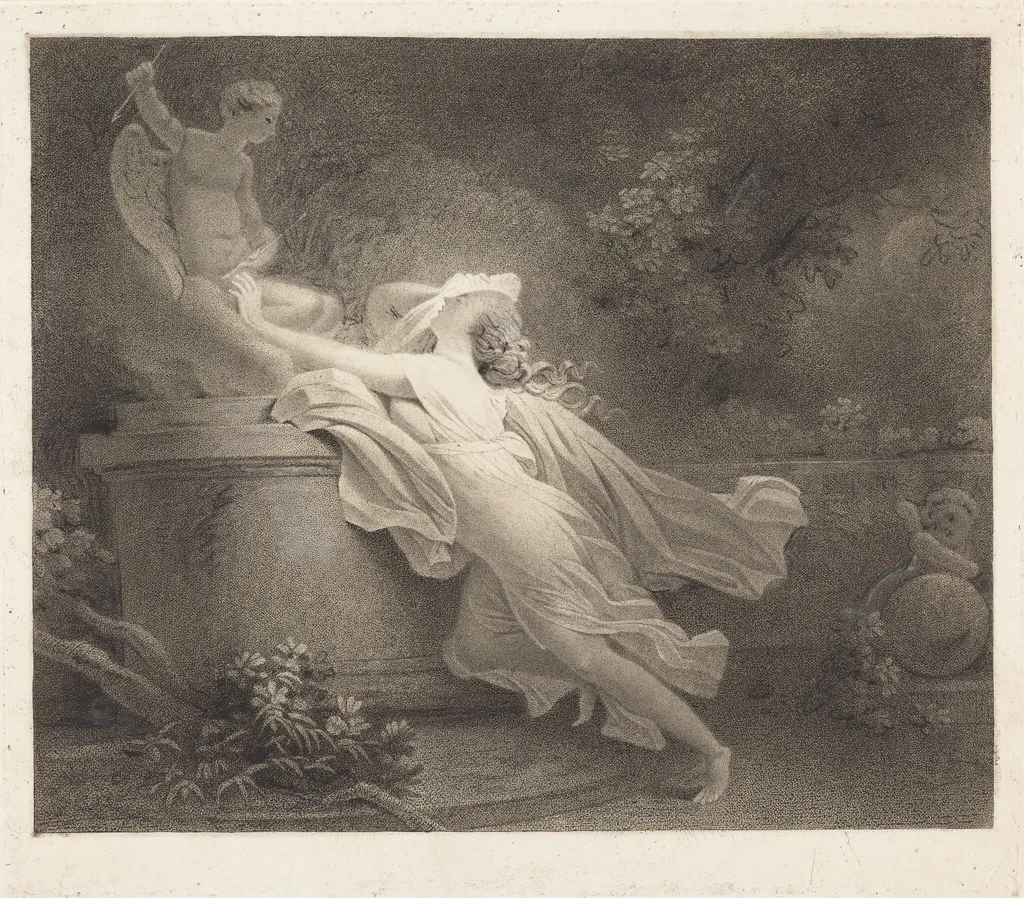
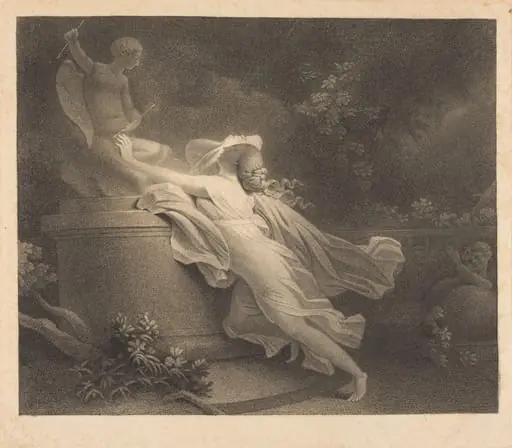
L'invocation a l'amour is an ink print by the Baroque artist Carl Guttenberg. It dates from 1766 and is held in the collection of the National Gallery of Art.
About this work
Overview
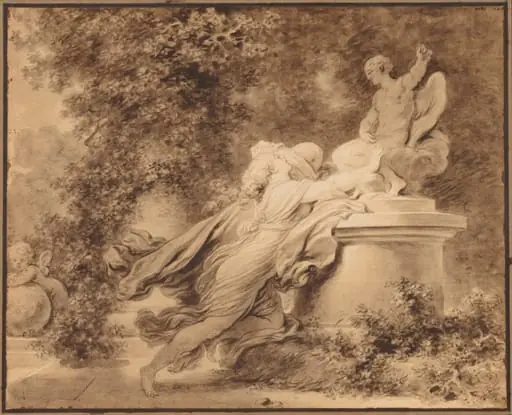
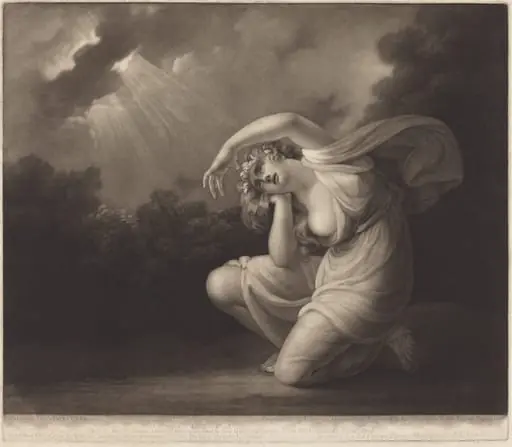
The image presents a reclining female figure swathed in draped fabric, her hand extended toward a diminutive, possibly winged, presence perched above her.
Carl Guttenberg’s 1766 work L’invocation à l’amour is a stipple etching with retouching, executed as a single‑plate print. The image presents a reclining female figure swathed in draped fabric, her hand extended toward a diminutive, possibly winged, presence perched above her. The composition is set against a deep, textured background that includes sparse foliage, creating a contrast between the illuminated figure and the surrounding gloom.
Subject & Meaning
The central motif depicts a woman in a languid pose, reaching toward a small, ethereal figure that may represent a spirit or a Cupid‑like being. The juxtaposition of the mortal body and the airborne entity suggests an appeal to love or desire, while the enveloping darkness hints at the uncertainty or longing inherent in such an invocation.
Technique & Style
Guttenberg employed a stipple etching process, incising fine dots and delicate lines into a metal plate to achieve subtle tonal gradations. After the initial etching, he applied retouching to refine highlights and deepen shadows, producing a smooth, almost painterly shading uncommon in conventional line etchings. The result is a nuanced surface that balances crisp detail with soft atmospheric effects.
History & Provenance
Created in 1766, L’invocation à l’amour belongs to the late‑Baroque period when printmaking was increasingly used to disseminate allegorical subjects. The work is catalogued among Guttenberg’s prints, though specific ownership records prior to the modern era remain sparse. It has surfaced in several European collections, reflecting the artist’s modest but steady circulation among connoisseurs of the time.
Context
The print emerges from a broader 18th‑century fascination with allegorical representations of love and the supernatural. Stipple etching, popularized by artists such as Boucher and later by French printmakers, allowed for greater tonal subtlety, aligning with contemporary tastes for delicate, intimate scenes. Guttenberg’s choice of this medium situates the work within the evolving technical experiments that characterized the period’s graphic arts.
Artist & collection