Artwork
Astronomy
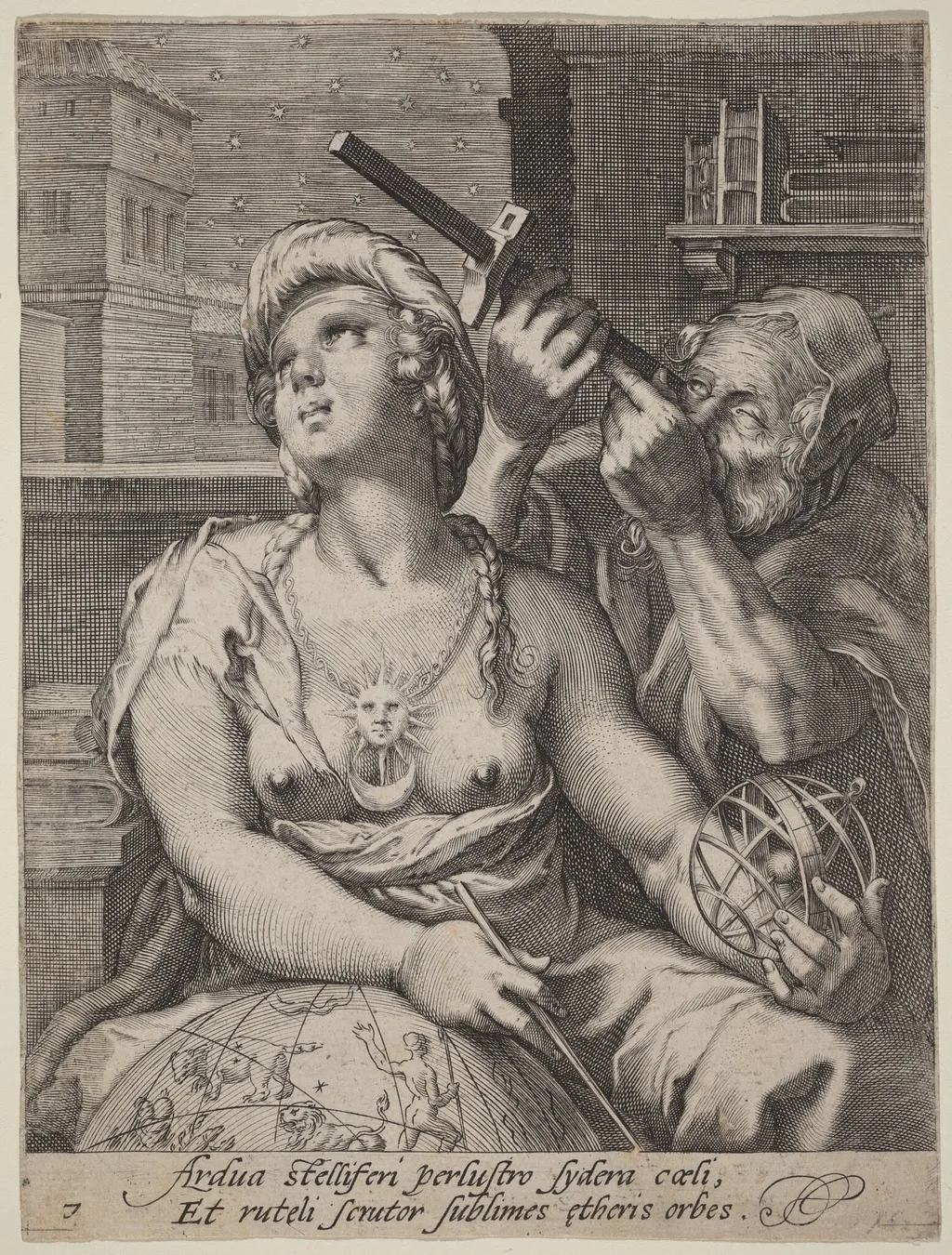
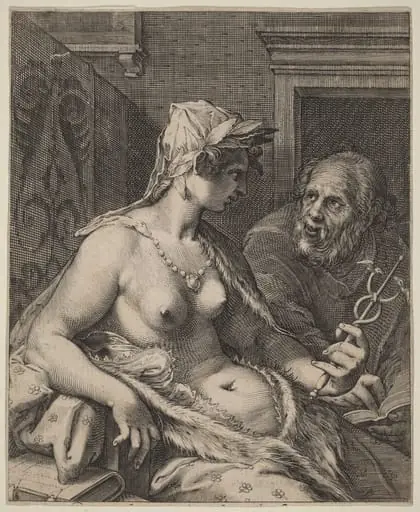
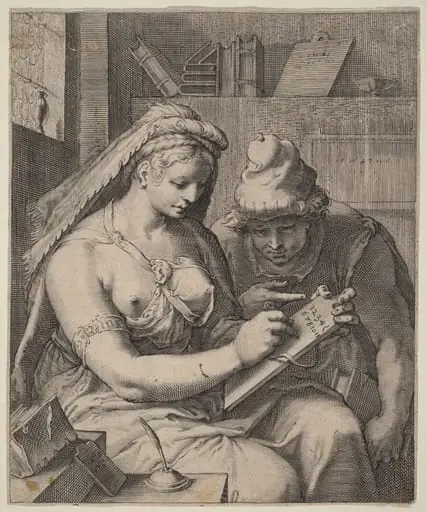
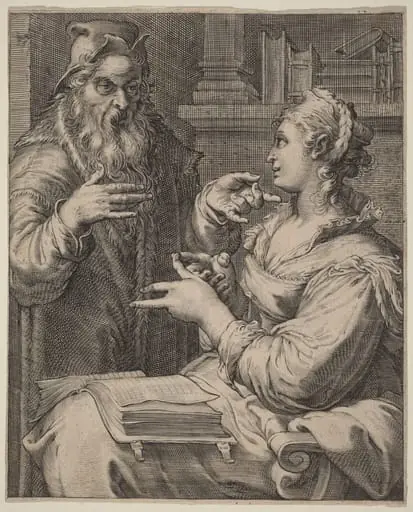
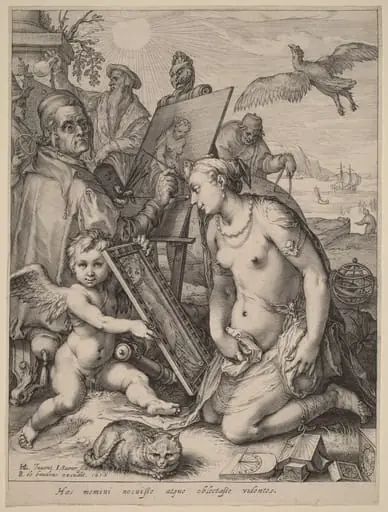
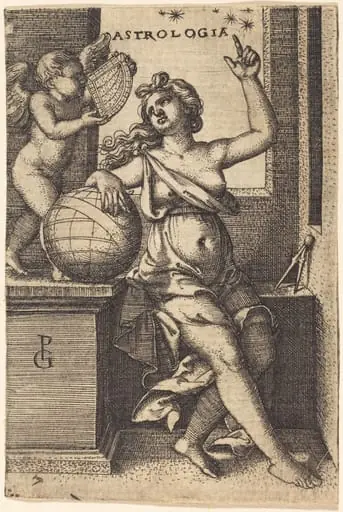
Astronomy is an ink print by the Renaissance artist Cornelis Jacobsz Drebbel. It dates from 1597 and is held in the collection of the National Gallery of Art.
About this work
Overview
Cornelis Jacobsz Drebbel’s print titled *Astronomy* dates to around 1597. Executed as an engraving on laid paper, the work presents a compact, detailed composition that combines figurative allegory with scientific symbolism, reflecting the late‑Renaissance interest in celestial study.
Subject & Meaning
The central female figure, draped in a flowing robe and crowned with a crescent moon and star, holds a globe marked with assorted symbols, embodying the heavens. Behind her stands an older man, hat‑clad, grasping a navigational instrument resembling a compass or sextant, representing the human endeavor to chart the skies.
Technique & Style
Drebbel employed fine line engraving to render intricate details, from the texture of the figures’ garments to the delicate rendering of distant architecture and starry background. The use of laid paper provides a subtle tonal variation, enhancing the contrast between the illuminated foreground and the darker sky.
Context
Produced at the close of the sixteenth century, the print aligns with a period when astronomy transitioned from purely philosophical speculation to empirical observation. The allegorical pairing of celestial and scholarly figures mirrors contemporary efforts to reconcile classical symbolism with emerging scientific methods.
History & Provenance
The work is attributed to Drebbel, a Dutch engraver active in the late 1500s, though specific ownership records are scarce. It survives in several museum collections, indicating its circulation among collectors interested in scientific and allegorical prints of the era.
Artist & collection