Artwork
Susanna and the Elders
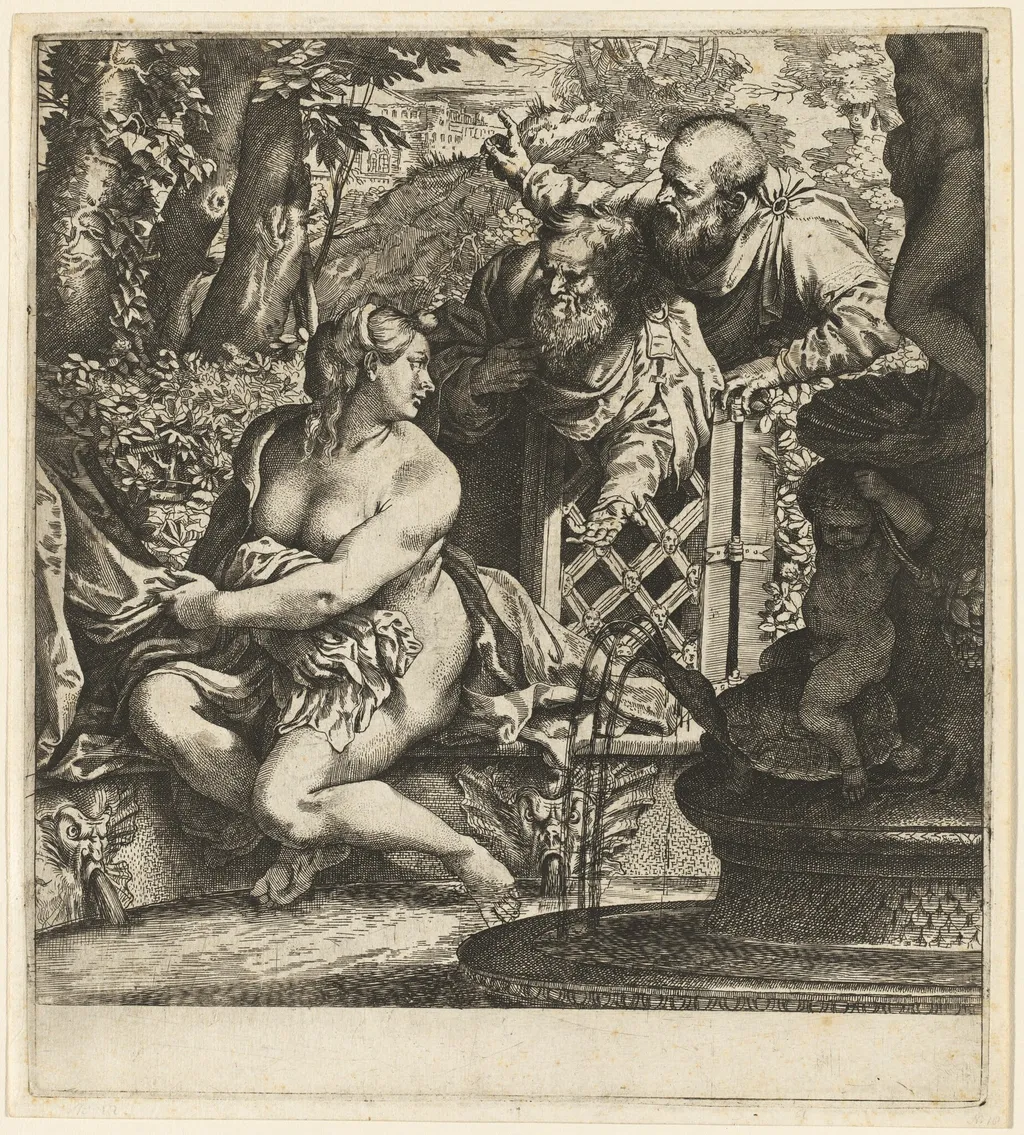
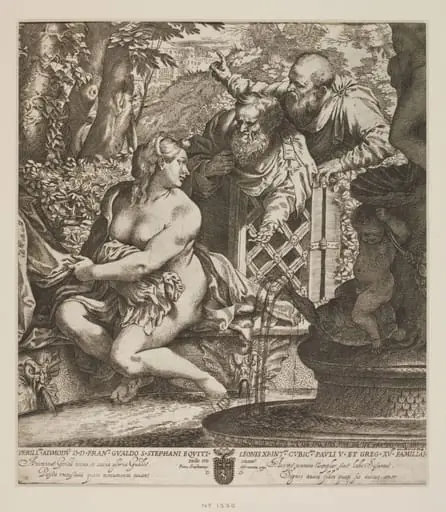
Susanna and the Elders is an ink print by the Renaissance artist Annibale Carracci. It dates from 1592 and is held in the collection of the National Gallery of Art.
About this work
Overview
Annibale Carracci’s print *Susanna and the Elders*, executed around 1592, combines etching and engraving to render a biblical episode in monochrome.
Annibale Carracci’s print *Susanna and the Elders*, executed around 1592, combines etching and engraving to render a biblical episode in monochrome. The composition presents a solitary woman seated in a garden, partially covered, while two older men peer at her from behind a low fence. The work exemplifies Carracci’s early engagement with printmaking as a means of disseminating his figural studies beyond painted panels.
Subject & Meaning
The image illustrates the story from the Book of Daniel in which Susanna, bathing in a private setting, is observed by two lecherous elders who later accuse her of impropriety. Carracci captures Susanna’s composed yet guarded demeanor, contrasting it with the furtive glances of the men, thereby emphasizing themes of innocence under threat and the moral tension inherent in the narrative.
Technique & Style
Created through a combination of etching—where acid bites lines into a copper plate—and engraving, which involves cutting sharper lines with a burin, the print displays a crisp, linear quality. Carracci’s handling of line delineates the folds of the cloth, the musculature of the figure, and the intricate foliage, reflecting his synthesis of Northern graphic precision with the dynamism of Italian Baroque drawing.
History & Provenance
The print was produced during Carracci’s Bologna period, shortly before his relocation to Rome, and circulated among collectors and artists interested in his reformist approach to classicism. Surviving impressions are held in several European institutions, indicating that the work was widely distributed and valued as a study of narrative composition and anatomical rendering.
Context
*Susanna and the Elders* belongs to a long tradition of treating the biblical episode in Renaissance and Baroque art, a subject that allowed artists to explore the nude female form within a moral framework. Carracci’s rendition reflects his broader project of merging classical restraint with the emerging Baroque emphasis on movement and emotional immediacy, positioning the print at a crossroads of northern and southern European artistic currents.
Artist & collection
Artist
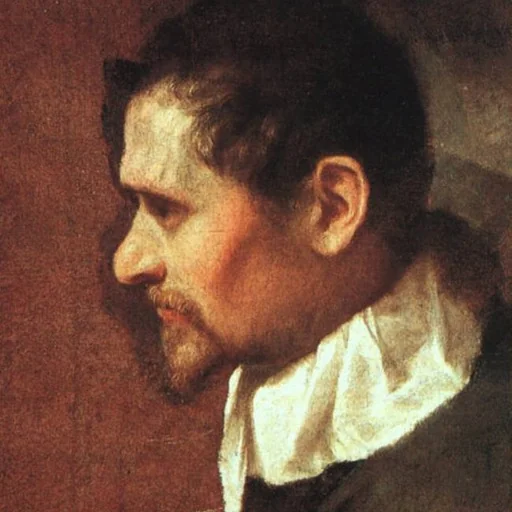
Annibale Carracci ( kə-RAH-chee, UK also kə-RATCH-ee, Italian: ; November 3, 1560 – July 15, 1609) was an Italian painter and instructor, active in Bologna and later in Rome.

![Temporalis Aeternitas [Second Version], by Italian 17th Century](https://artifactworldgallery.com/img/italian-17th-century--temporalis-aeternitas-second-version--2b55857961773f67-w320.webp)