Artwork
The Annunciation
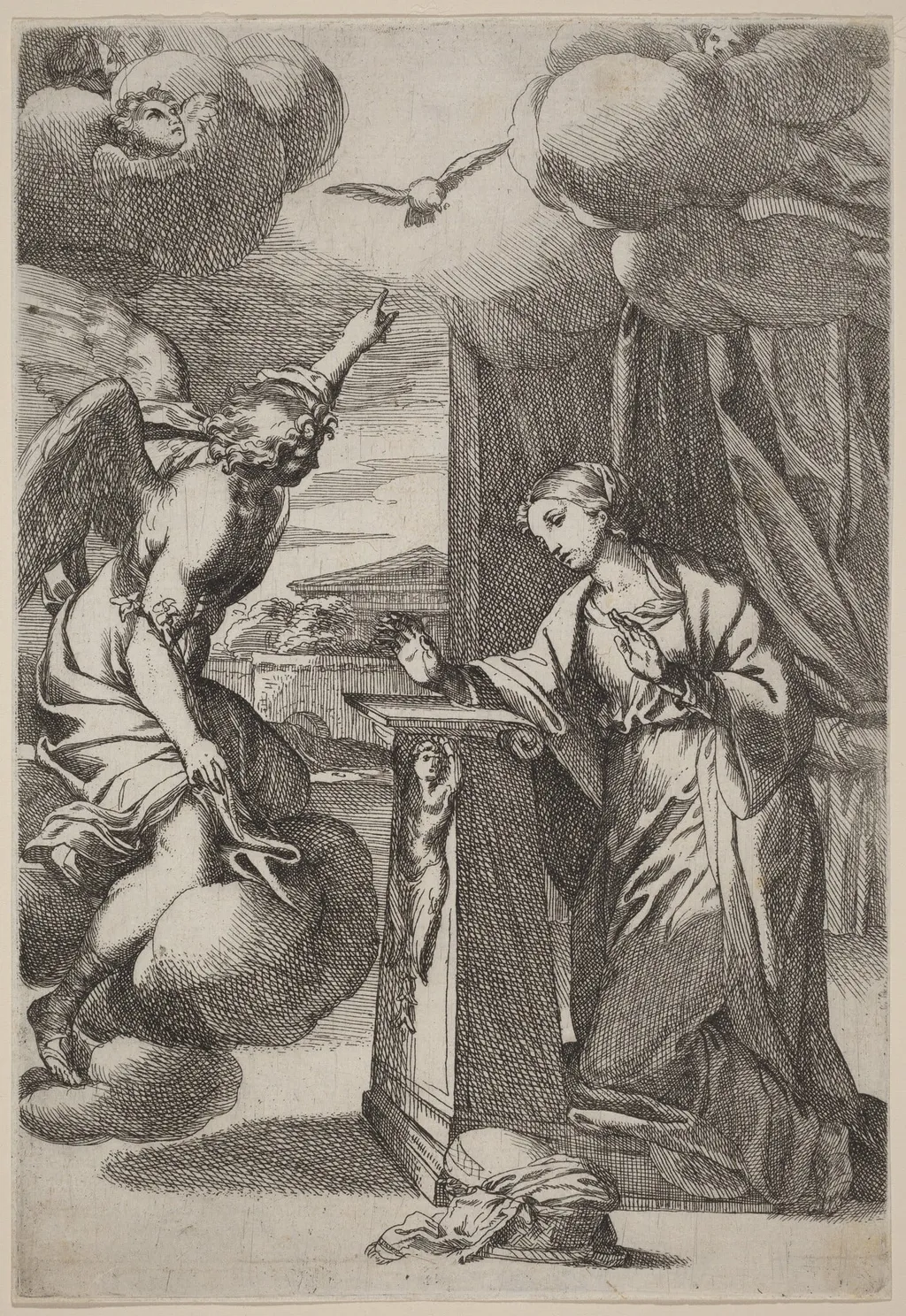
The Annunciation is an ink print by the Baroque artist Carlo Maratta. It dates from 1669 and is held in the collection of the National Gallery of Art.
About this work
Overview
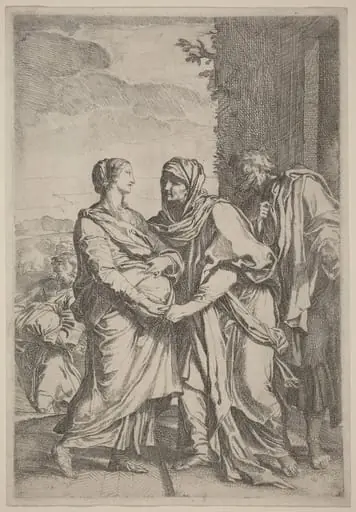
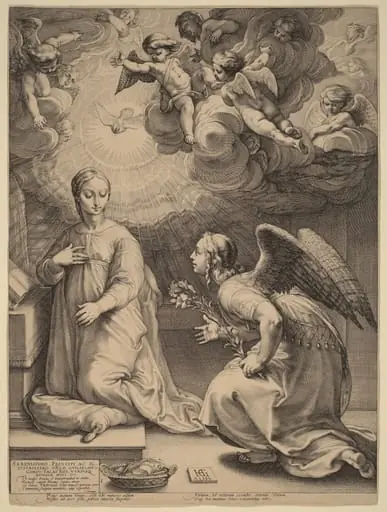
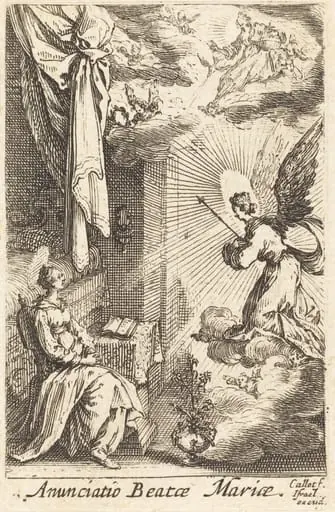
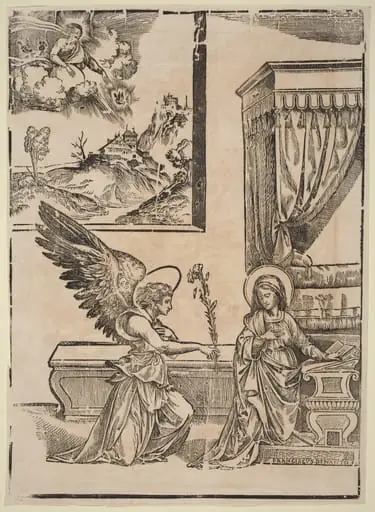
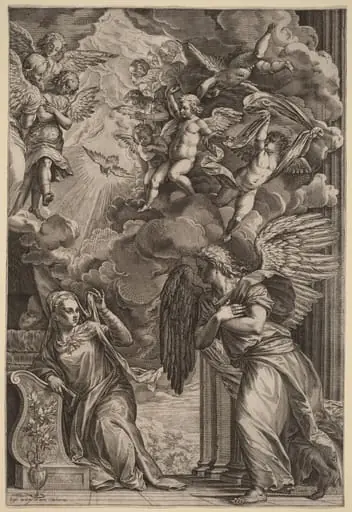
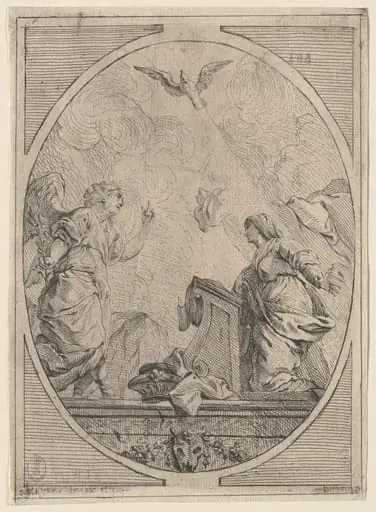
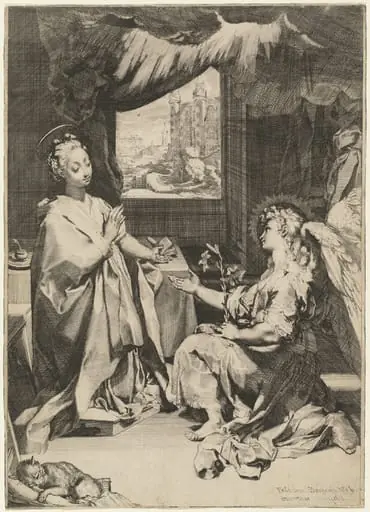
Created in 1669, this etching by Carlo Maratta portrays the biblical moment of the Annunciation. Rendered in fine linear detail, the composition centers on the angel Gabriel and the Virgin Mary, separated by a quiet spatial divide. The work belongs to the tradition of religious printmaking in mid-seventeenth-century Italy, where clarity and emotional restraint were valued over theatricality.
Subject & Meaning
Gabriel’s outstretched arm and upward gaze signal divine communication, while Mary’s clasped hands and lowered eyes reflect humble acceptance.
The scene captures the moment the angel Gabriel announces to Mary that she will bear the Son of God. Gabriel’s outstretched arm and upward gaze signal divine communication, while Mary’s clasped hands and lowered eyes reflect humble acceptance. A cherub’s face emerges from a cloud above, suggesting heavenly presence without overt spectacle. The quietude of the figures underscores the sacredness of the event through stillness rather than drama.
Technique & Style
Maratta employed etching to achieve fine, controlled lines that define form with subtlety. Delicate hatching and soft contours model the figures’ drapery and facial features, enhancing the sense of intimacy. The background landscape is rendered with minimal detail, guiding focus to the central figures. The medium’s precision supports a contemplative tone, aligning with the devotional purpose of the image.
History & Provenance
The print was produced during Maratta’s mature period in Rome, when he was active in ecclesiastical commissions. Though few records of its early ownership survive, it was likely circulated among religious patrons and collectors interested in devotional imagery. Its survival in multiple institutional collections suggests continued appreciation in the centuries following its creation.
Context
This work emerged in the context of Counter-Reformation Italy, where the Church encouraged clear, reverent religious imagery to inspire piety. While Baroque art often emphasized movement and emotion, Maratta’s approach favored calm clarity, reflecting his classical training and alignment with Roman academic ideals. The etching fits within a broader tradition of prints made for private devotion rather than public display.
Legacy
Maratta’s etching contributed to the enduring appeal of the Annunciation in print form, influencing later artists who sought to balance spiritual gravity with compositional restraint. Though less widely known than his paintings, this work exemplifies his skill in translating sacred narrative into intimate, finely wrought graphics, preserving his influence beyond the canvas.
Artist & collection