Artwork
Philosophy
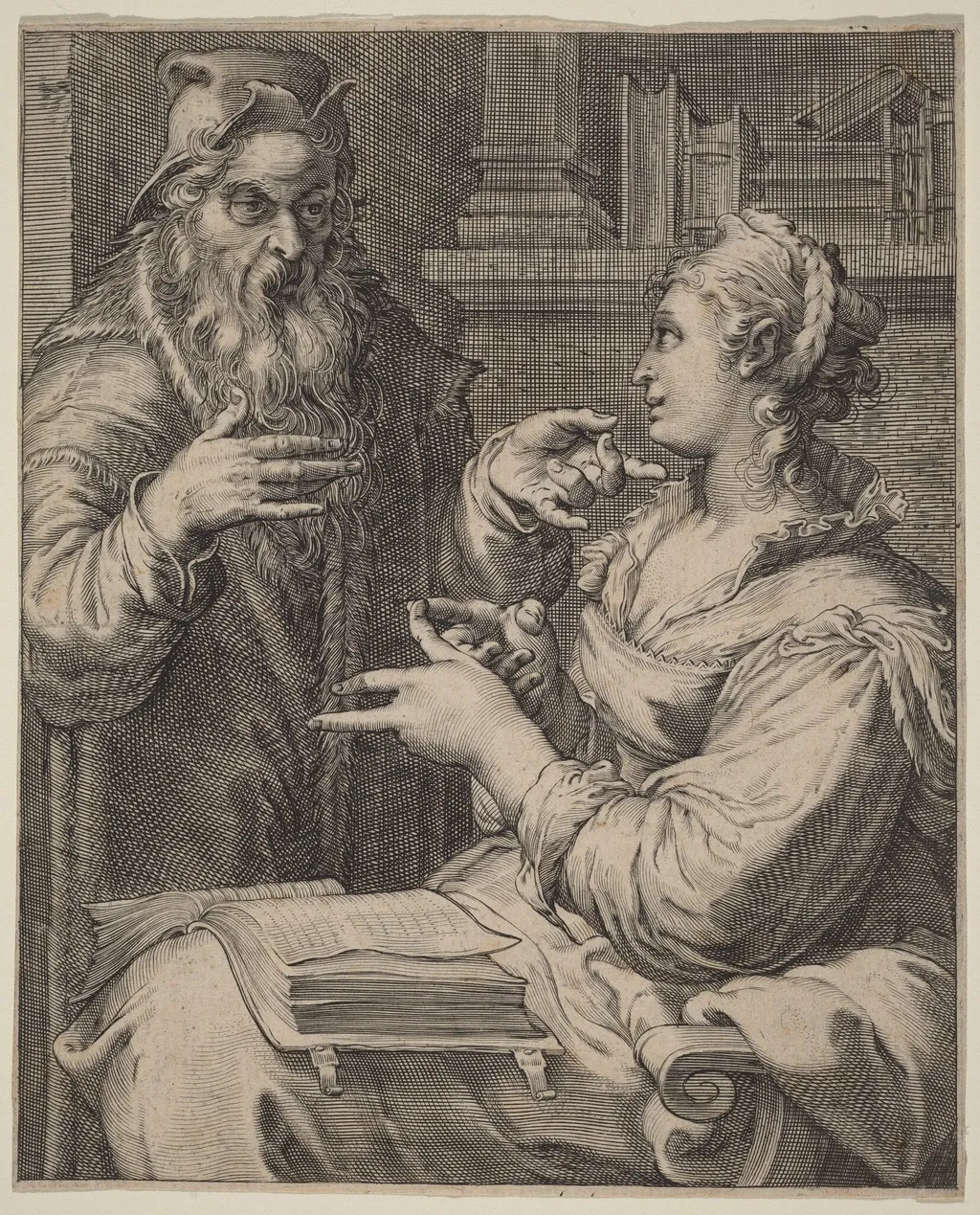
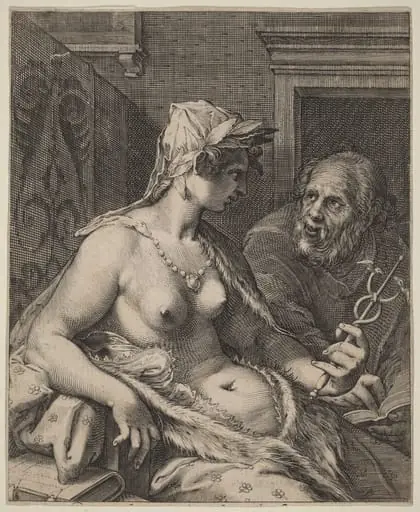
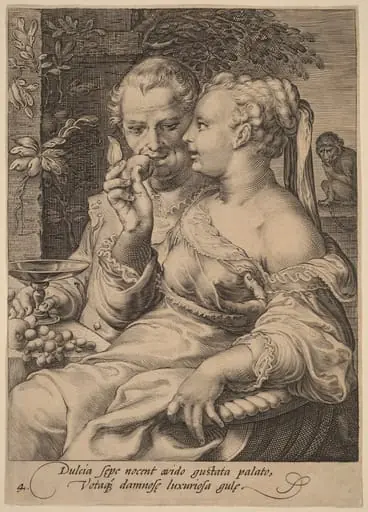
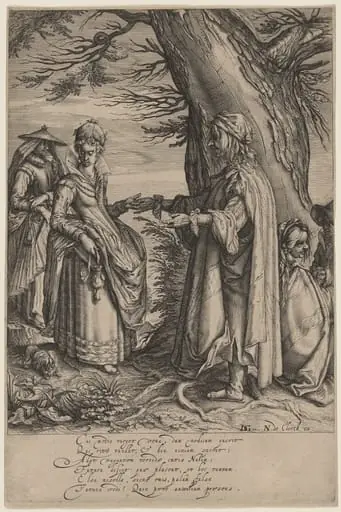
Philosophy is an ink print by the Renaissance artist Cornelis Jacobsz Drebbel. It dates from 1597 and is held in the collection of the National Gallery of Art.
About this work
Overview
The work belongs to the tradition of Northern European printmaking, where detailed engravings served as vehicles for philosophical and moral themes.
Created around 1597 by Cornelis Jacobsz Drebbel, this engraving on laid paper depicts a quiet exchange between two figures. Rendered in fine black-and-white lines, the composition centers on a bearded man and a woman, their gestures and expressions conveying a moment of intellectual dialogue. The work belongs to the tradition of Northern European printmaking, where detailed engravings served as vehicles for philosophical and moral themes.
Subject & Meaning
The figures represent an archetypal encounter between teacher and learner. The man, with his clasped hands and intense gaze, appears to be instructing, while the woman, her palms open and gaze attentive, embodies receptive contemplation. The absence of context or setting emphasizes the abstract nature of their interaction, suggesting an idealized moment of philosophical transmission rather than a specific historical event.
Technique & Style
Drebbel employed engraving, a method involving incised lines on a metal plate, to achieve precise, controlled detail. The texture of the man’s beard and the soft fall of the woman’s hair are rendered with fine, deliberate strokes. The background is minimal—a draped cloth—allowing the viewer’s focus to remain on the nuanced expressions and gestures, characteristic of late 16th-century Northern printmaking.
History & Provenance
The print is attributed to Drebbel, a Dutch inventor and artist active in the late 1500s, known more for his scientific work than his graphic output. Few of his engravings survive, making this piece a rare example of his artistic hand. Its early date places it among the earliest Dutch prints to treat philosophy as a visual subject, though its original commission or ownership remains undocumented.
Context
In late 16th-century the Netherlands, prints often illustrated humanist ideals, reflecting a cultural emphasis on reason and education. This image aligns with broader trends in Northern Europe where allegorical scenes of learning were circulated among educated audiences. The quiet intimacy of the scene contrasts with more dramatic religious or mythological prints of the period, suggesting a shift toward personal intellectual engagement.
Legacy
Though Drebbel’s reputation rests primarily on his scientific inventions, this engraving endures as a subtle testament to the visual language of philosophy in the Renaissance. Its restrained composition and focus on dialogue influenced later depictions of intellectual exchange in print, offering a model for representing thought as a shared, quiet act rather than a grand spectacle.
Own this work as a print
Artist & collection