Artwork
Study of Trees
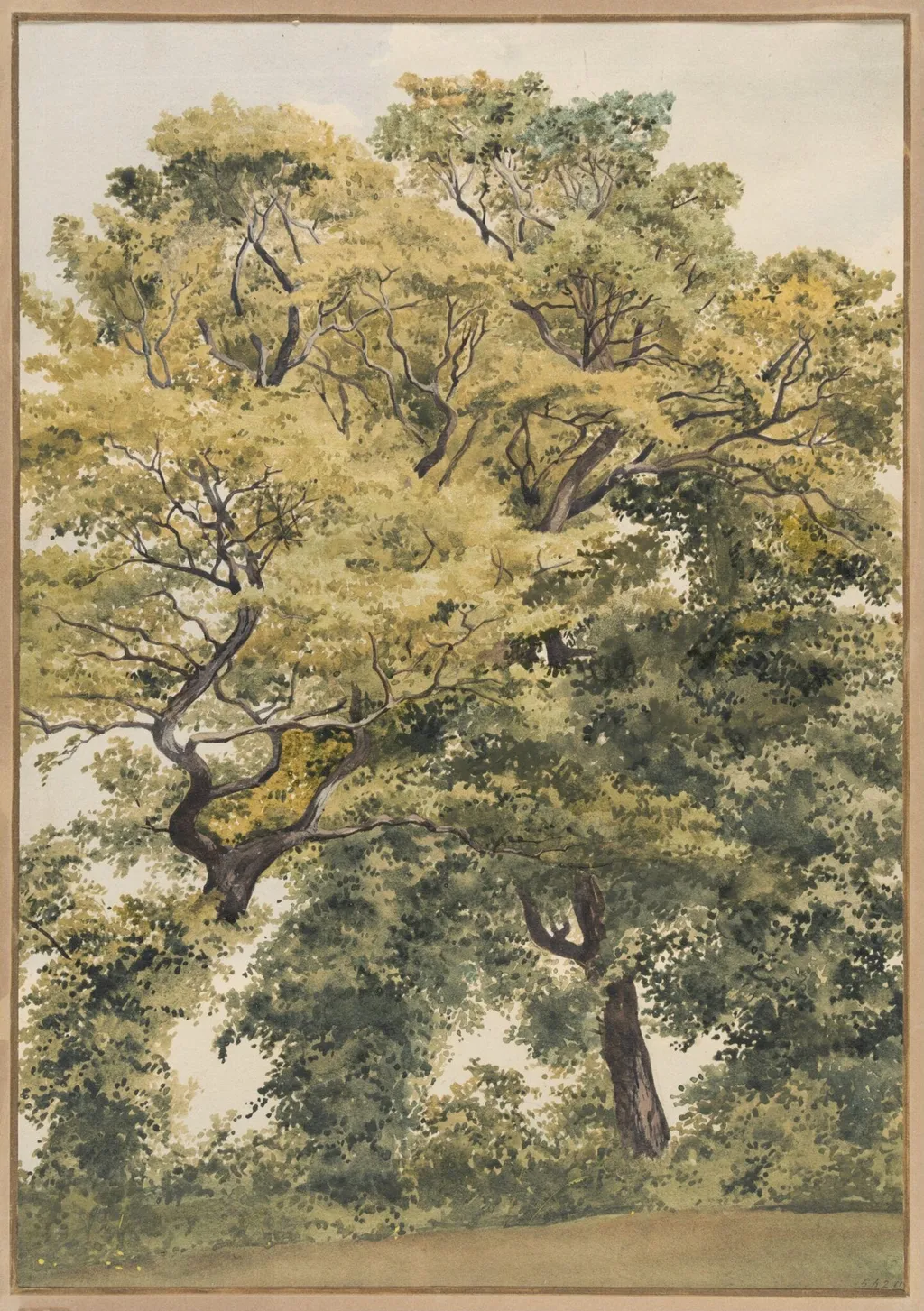
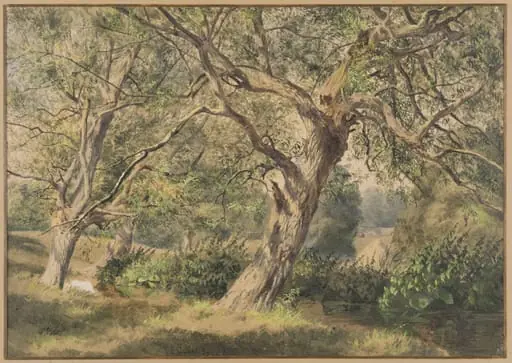
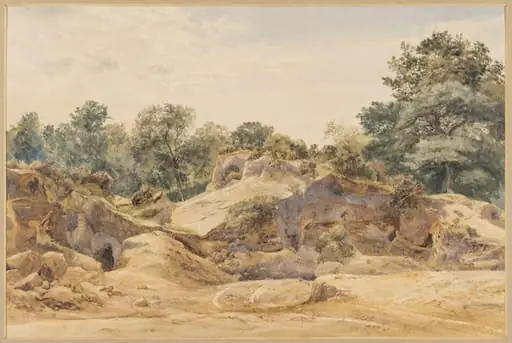
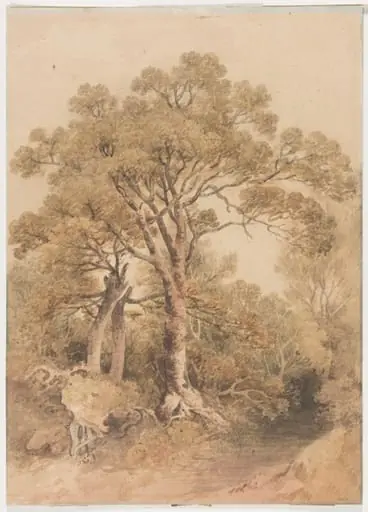
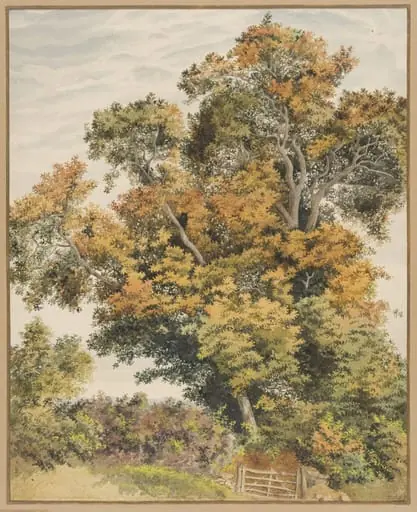
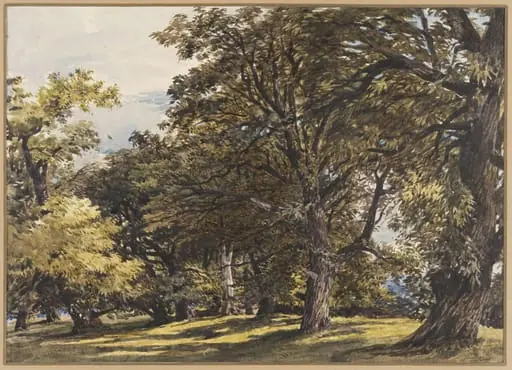
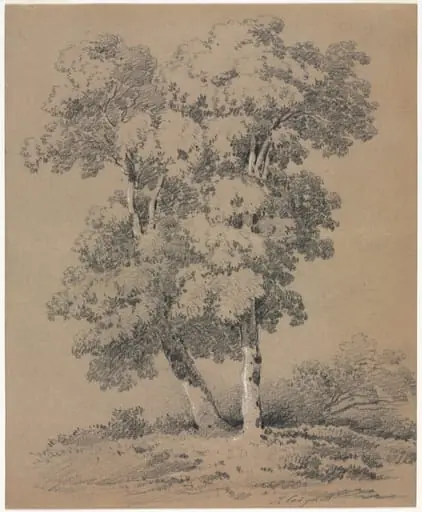
Study of Trees is a watercolor work on paper by the British Romanticist artist Thomas Frederick Collier. It dates from 1854 and is held in the collection of the Victoria and Albert Museum.
About this work
Overview
Executed in transparent pigments on paper, the work reflects a quiet observational approach common in mid-19th-century British landscape studies.
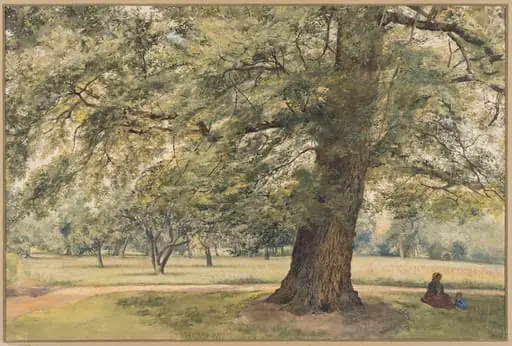
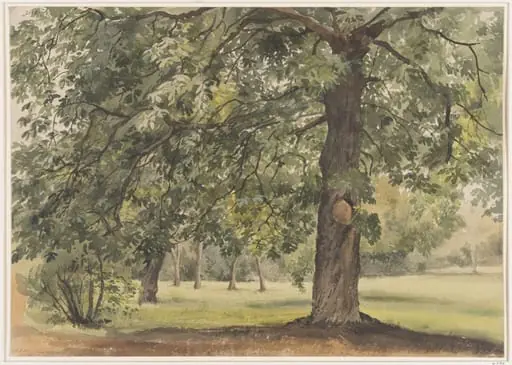
Created around 1854, this watercolour by Thomas Frederick Collier captures a dense cluster of trees in naturalistic detail. Executed in transparent pigments on paper, the work reflects a quiet observational approach common in mid-19th-century British landscape studies. It is part of the Victoria and Albert Museum’s collection, where it serves as an example of detailed botanical recording through watercolour.
Subject & Meaning
The painting presents a thicket of trees without human figures or architectural elements, focusing solely on the organic forms of bark and foliage. The absence of a defined horizon or sky suggests an intimate, immersive view of woodland undergrowth. Its emphasis on texture and density implies an interest in the vitality and complexity of natural growth, rather than idealized scenery.
Technique & Style
Collier employed light washes of green and yellow to suggest the layered canopy, allowing the paper’s white surface to function as ambient light. Brown tones in the trunks emerge through gaps in the foliage, creating depth without heavy outlines. The technique is restrained, relying on the transparency of watercolour to convey luminosity and subtle variation in leaf tone.
History & Provenance
The work entered the Victoria and Albert Museum’s collection as part of its broader acquisition of 19th-century British watercolours. Its origin as a study suggests it was likely made outdoors or from direct observation, consistent with the period’s growing emphasis on empirical naturalism. No earlier ownership records are publicly documented.
Context
In the 1850s, British artists increasingly turned to nature as a subject worthy of careful study, separate from grand historical or romantic narratives. Collier’s work aligns with this trend, reflecting the influence of scientific illustration and the rise of amateur naturalism. Watercolour was a favoured medium for such intimate, portable field studies.
Legacy
Though not widely exhibited, the painting contributes to the understanding of how Victorian artists engaged with the natural world through direct observation. It represents a quiet but significant strand of British art that valued precision and sensitivity over dramatic effect, influencing later generations interested in ecological representation.
Artist & collection
Artist
Thomas Frederick Collier painted quiet, detailed watercolours of English trees and landscapes in the 1850s.