Artwork
Indian knife
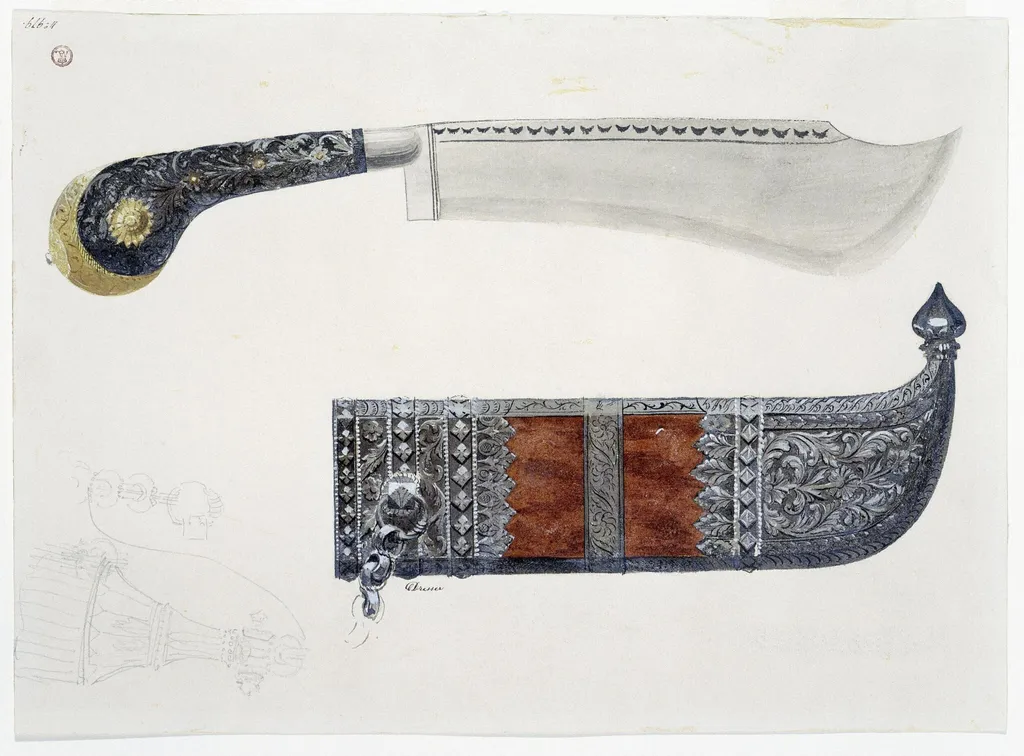
Indian knife is a watercolor work on paper by the Impressionist artist Christopher Dresser. It dates from 1851 and is held in the collection of the Victoria and Albert Museum.
About this work
This watercolour is titled "Indian knife" by Christopher Dresser.
It was created in 1851 as part of Dresser's training at the Government Schools of Design.
The drawing is significant because it shows the influence of design reform efforts on Dresser's work, and it was made during the Great Exhibition of 1851.
You can learn more about this style of drawing by looking into the movement: Realism.
Overview
This watercolour, titled “Indian knife,” was produced in 1851 by Christopher Dresser while he was a student at the Government Schools of Design, Somerset House. It records a decorative knife displayed in the Indian Court of the Great Exhibition, serving as a study piece for the design curriculum that emphasized close observation of objects.
Subject & Meaning
The drawing captures the form and ornamentation of a nineteenth‑century Indian knife, illustrating the exotic aesthetic that fascinated Victorian designers. By rendering the piece in detail, Dresser highlighted the cross‑cultural appeal of such objects and the emerging taste for eclectic, globally sourced motifs in British design circles.
Technique & Style
Executed in transparent watercolour on paper, the study demonstrates precise line work and careful shading to convey material texture and decorative pattern. The approach reflects the realist tradition of accurate, observational drawing that was central to the Schools of Design’s training program.
History & Provenance
Created during Dresser’s apprenticeship between 1847 and 1854, the work aligns with the reformist agenda of Henry Cole, Richard Redgrave and Owen Jones, who promoted systematic study of contemporary and historic objects. The sketch remained within Dresser’s early portfolio, documenting his exposure to the Great Exhibition’s international displays.
Context
The Great Exhibition of 1851 showcased artifacts from across the empire, and the Indian Court presented a range of ornamental metalwork. Dresser’s assignment to copy such items was part of a broader educational strategy that encouraged students to absorb diverse visual vocabularies, fostering the eclectic synthesis that would characterize his later designs.
Artist & collection
Artist
Christopher Dresser drew precise, scientific pictures in the 1850s England. His Indian knife watercolor shows a straight-edged blade with bone handle and steel tip, labeled in neat script. The botanical lecture drawing…

 A collection of weapons
 Study of a Helmet, Breastplate, and Rapier
 Untitled
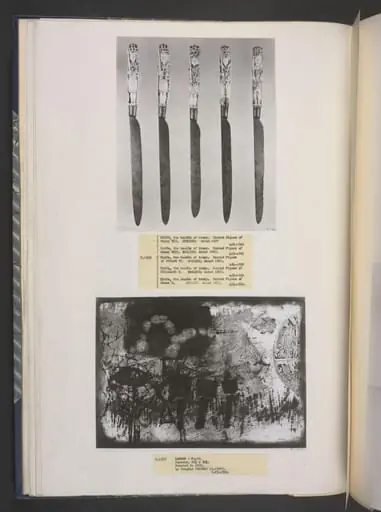 London - No.16
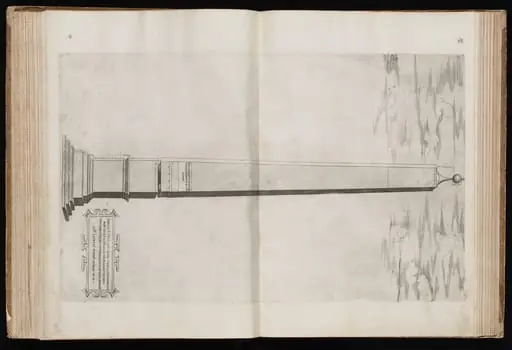 The Vatican Obelisk
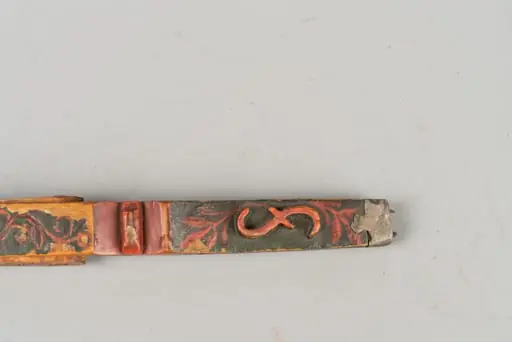 Obiect compozit din lemn de formă alungită, format din două stinghii articulate printr-o încastrare alungită paralelă care îi permite frângerea prin intermediul unui cui/pene din lemn, în vederea formării unei pârghii cu ajutorul căreia se răsucește țesătura pe sulul dinainte al războiului de țesut, pentru menținerea tensionată a acesteia. Obiectul prezintă la ambele capete canturi metalice cu câte două gheare care facilitează fixarea pârghiei pe sulul de lemn al războiului de țesut. Are suprafața decorată prin incizare și pictare cu pigmenți, cu motive vegetale. Pe una dintre fețele laterale piesa poartă înscris prin incizare anul confecționării acesteia, "A18 79". Cromatica: roșu, verde.
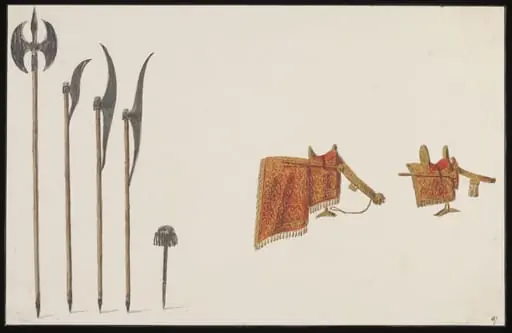 Saddles and battle-axes
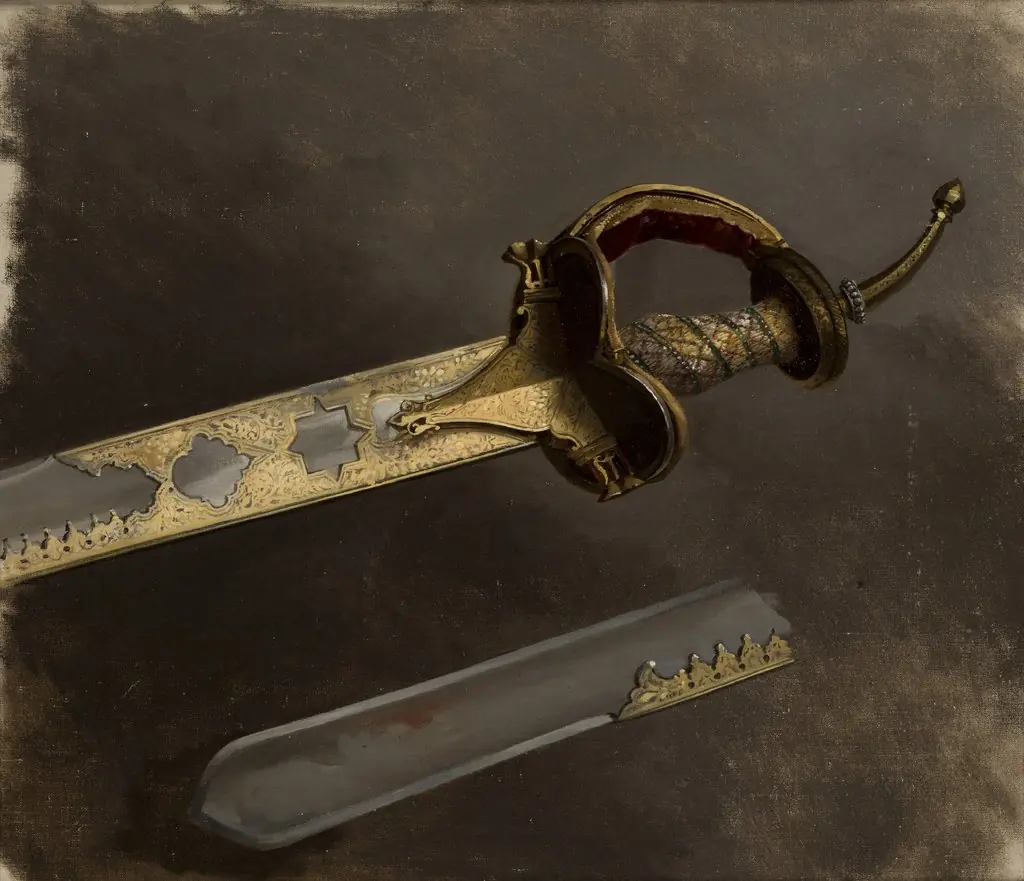 Study of a Sabre
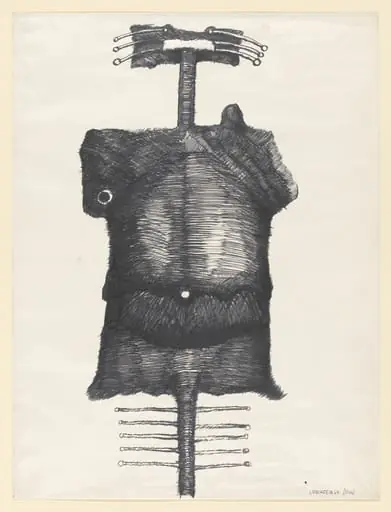 Untitled
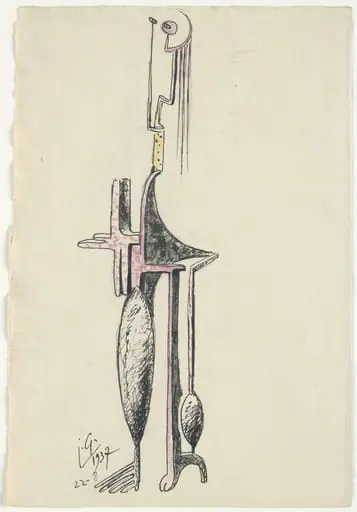 Untitled
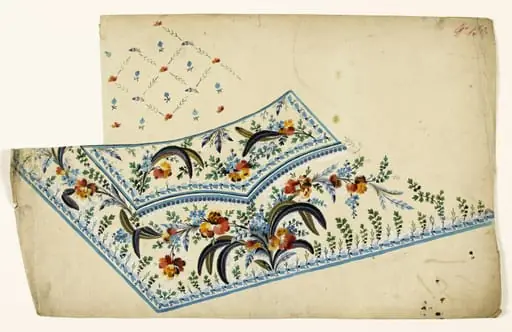 Composition de fleurs et de plumes en bouquets, frises de perles et de fleurs bleues, croisillons de plumes et de fleurs à semis de fleurs, projets de broderies de gilet, XVIIIème siècle
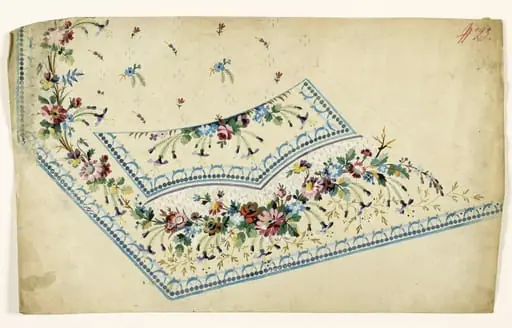 Composition de fleurs en guirlandes et en semis et frises de perles bleues, projets de broderies de gilet, XVIIIème siècle