Artwork
The Vatican Obelisk
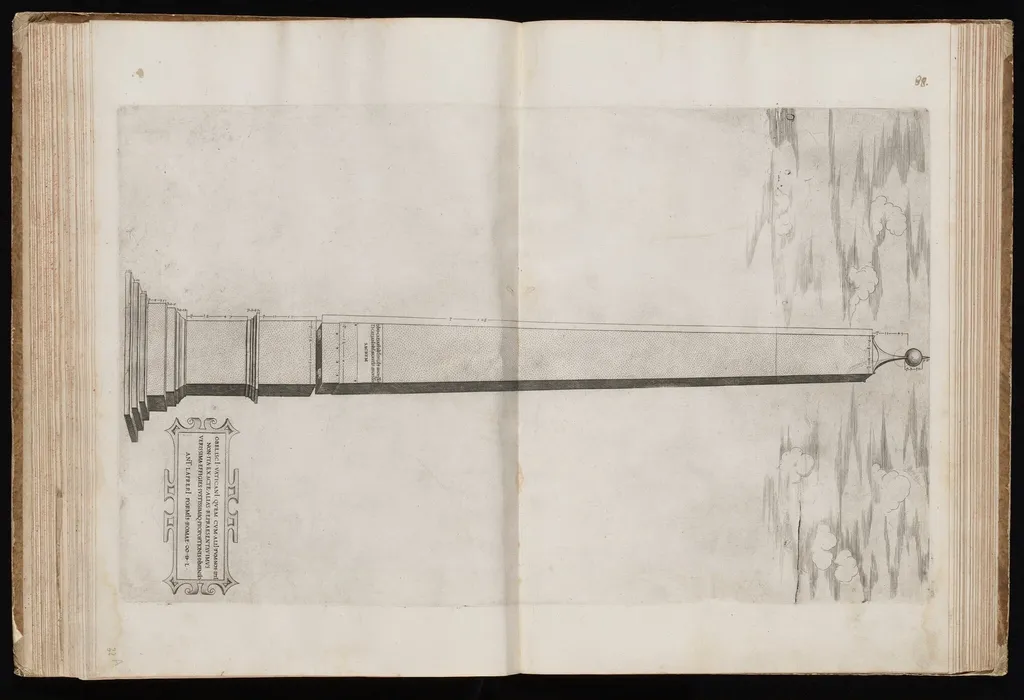
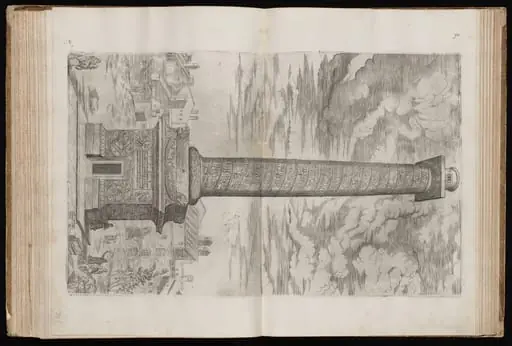
The Vatican Obelisk is an ink print by the Renaissance artist Italian 16th Century. It dates from 1550 and is held in the collection of the National Gallery of Art.
About this work
Overview
Rendered with sharp, controlled lines, the image emphasizes the monument’s verticality through scale contrast and meticulous shading.
This 16th-century Italian engraving captures the Vatican Obelisk in precise linear detail, measuring 50.6 by 30.7 centimeters. The artist remains unidentified, and the work bears no signature. Rendered with sharp, controlled lines, the image emphasizes the monument’s verticality through scale contrast and meticulous shading. The technique relies on cross-hatching to model light and shadow, giving the stone form and spatial presence without color.
Subject & Meaning
The subject is the ancient Egyptian obelisk relocated to St. Peter’s Square in Rome during the Renaissance. Its placement in a religious context transformed its meaning from a pagan symbol to a Christian landmark. The small human figures at its base underscore the monument’s imposing scale and its role as a focal point in the urban and spiritual landscape of Vatican City.
Technique & Style
The engraving employs fine, intersecting lines to build tone and texture, particularly in the sky and ground, using cross-hatching to suggest depth and atmospheric recession. The obelisk’s surface is rendered with clean, parallel strokes that emphasize its polished stone texture. The composition is tightly focused, eliminating extraneous detail to heighten the monument’s dominance and structural clarity.
History & Provenance
Created during the mid-1500s, the print likely served as a documentary record or study for architects and antiquarians interested in Rome’s ancient monuments. Its survival suggests circulation among scholarly or ecclesiastical circles. Though unsigned, its technical precision aligns with the precisionist traditions of Italian printmaking of the period, possibly linked to workshop practices in Rome.
Context
The obelisk itself was moved by Pope Sixtus V in 1586, an engineering feat celebrated across Europe. This engraving may have been produced shortly before or after that event, reflecting contemporary fascination with antiquity and papal restoration projects. As a printed image, it contributed to the wider dissemination of Roman antiquities, aiding both scholarly study and public perception of the city’s historical continuity.
Legacy
Though not attributed to a known master, the engraving stands as a representative example of Renaissance topographical printmaking. Its clarity and restraint influenced later documentation of monuments, serving as a model for architectural surveys. The work remains a quiet but significant artifact of how early modern Europe visually engaged with its classical past.
Artist & collection

Artist
A 16th-century Italian sculptor left us small bronze works in dark brown and gold.