Artwork
La découverte du nouveau monde
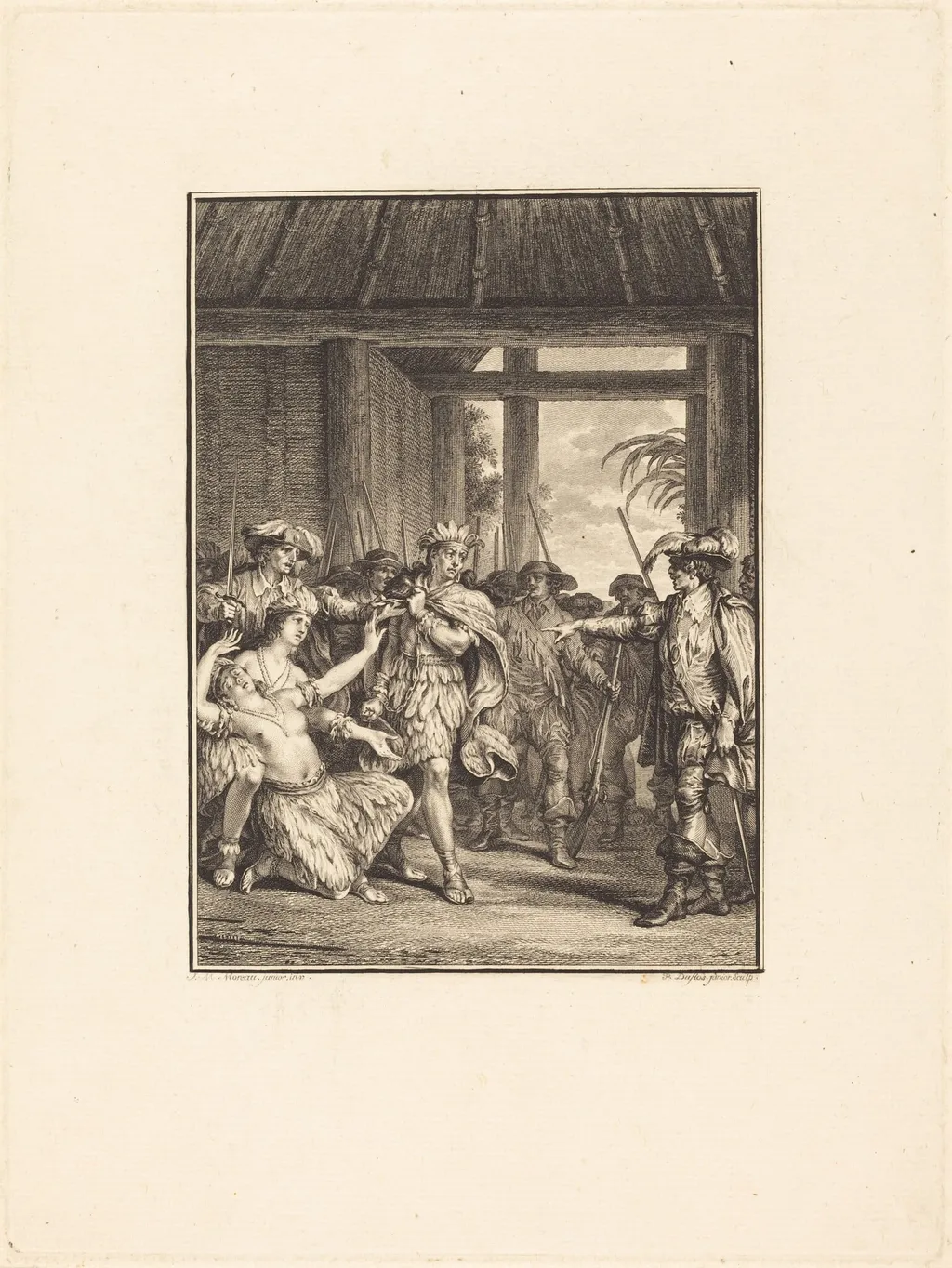
La découverte du nouveau monde is an ink print by the Baroque artist Pierre Duflos. It dates from 1779 and is held in the collection of the National Gallery of Art.
About this work
Overview
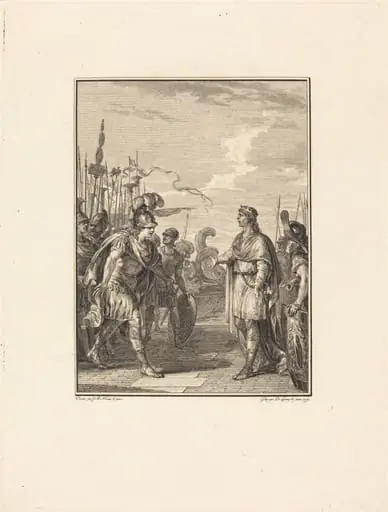
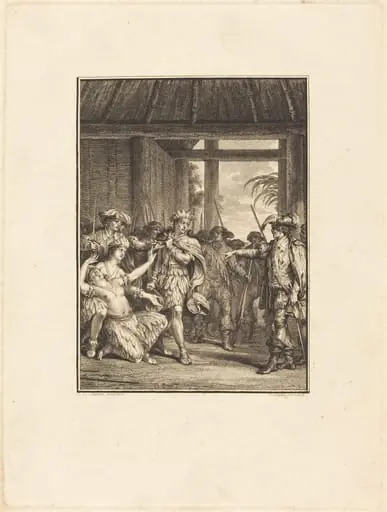
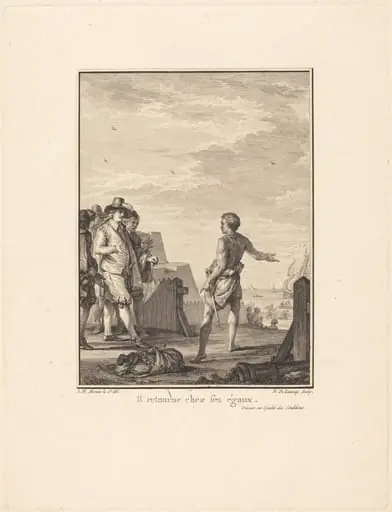
Pierre Duflos’s 1779 print, titled La découverte du nouveau monde, is an intricate engraving that depicts a ceremonial gathering. Central to the composition is a figure adorned with a feathered headdress and a sword, surrounded by attendants in period attire. A modest thatched-roof structure and sparse foliage frame the scene, creating a layered backdrop of domestic and ceremonial space.
Subject & Meaning
The work portrays an imagined encounter between European explorers and indigenous peoples, emphasizing the exoticism attributed to the ‘New World.’ The central figure’s elaborate costume and weapon suggest a leader or ritual participant, while the surrounding figures convey a sense of hierarchy and cultural exchange, reflecting eighteenth‑century European fascination with discovery and conquest.
Technique & Style
The meticulous rendering of surface qualities aligns with late Baroque sensibilities, where dramatic contrast and elaborate ornamentation were prized.
Executed as a fine‑line engraving, Duflos employs dense cross‑hatching to render the textures of fabrics, feathers, and architectural details. The meticulous rendering of surface qualities aligns with late Baroque sensibilities, where dramatic contrast and elaborate ornamentation were prized. The print’s crowded composition and rhythmic line work convey movement and depth despite its two‑dimensional medium.
History & Provenance
Created in 1779, the print emerged during a period of heightened interest in colonial narratives across France. While specific ownership records are scarce, the piece was likely circulated among collectors of travel‑themed prints, serving both decorative and educational purposes in salons that prized visual accounts of distant lands.
Artist & collection