Artwork
Diogenes and Alexander
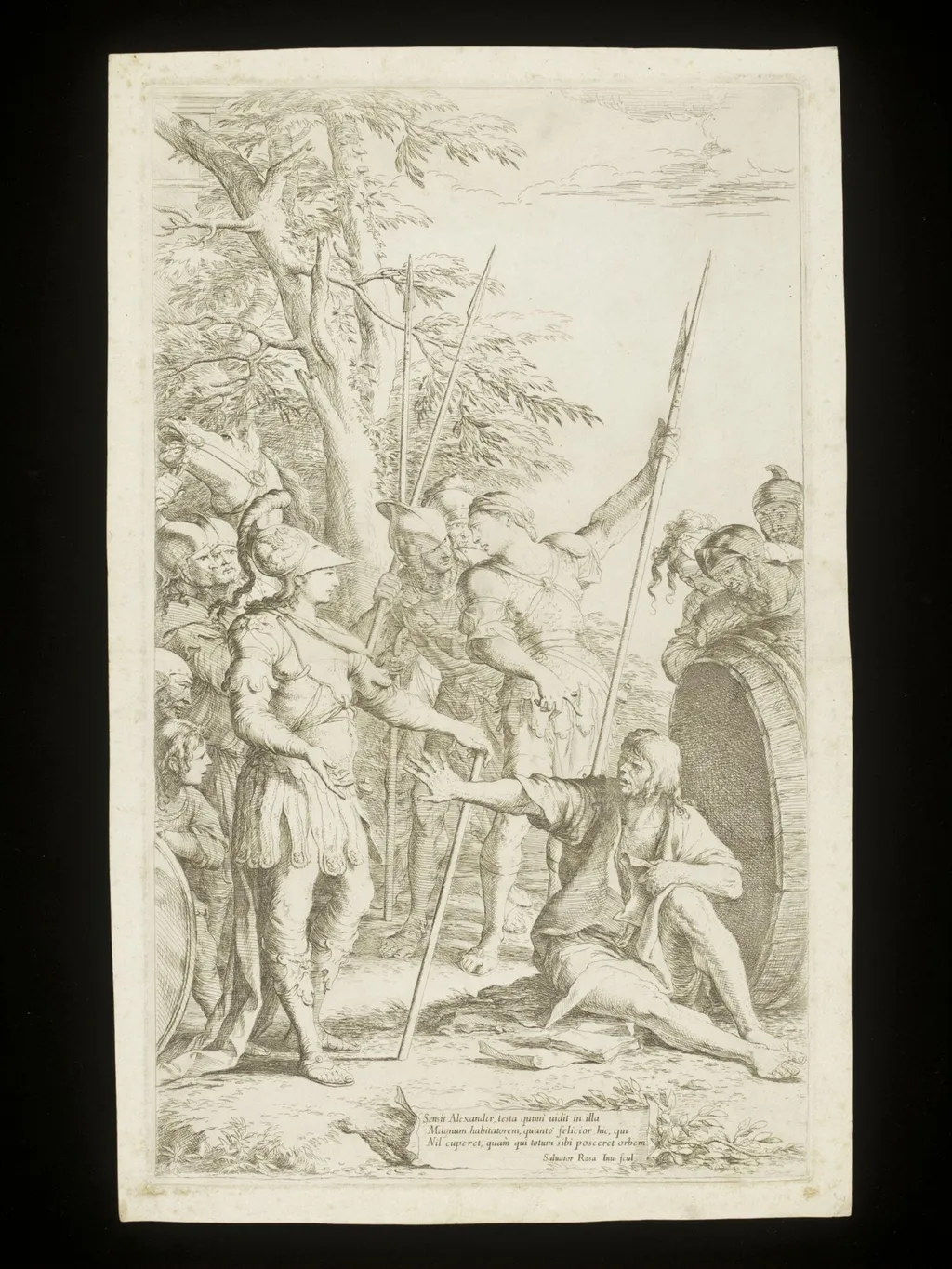
Diogenes and Alexander is a print by the Baroque artist Salvator Rosa. It dates from 1662 and is held in the collection of the Victoria and Albert Museum.
About this work
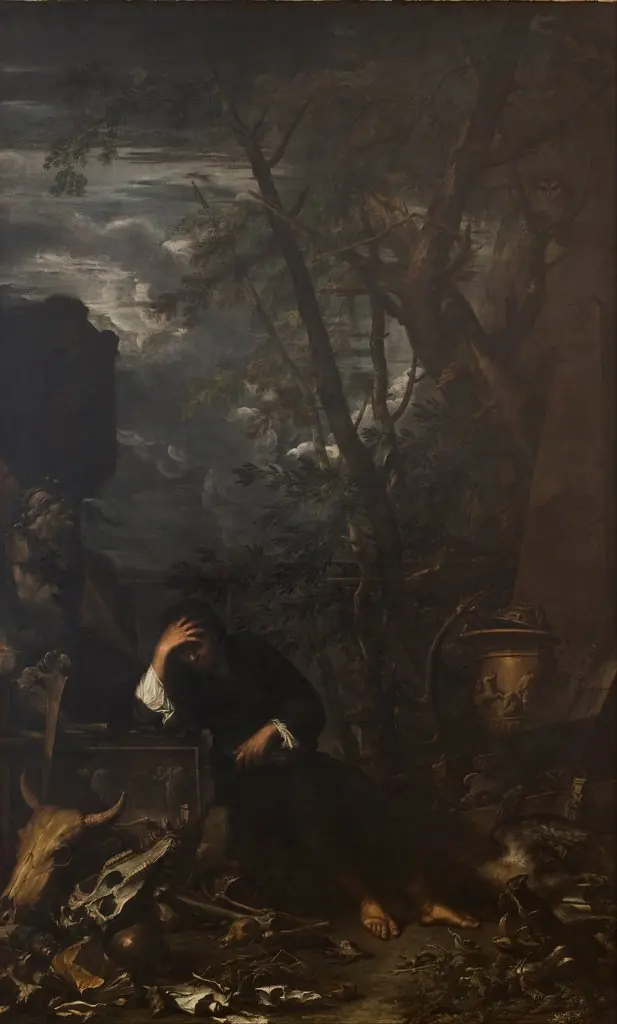
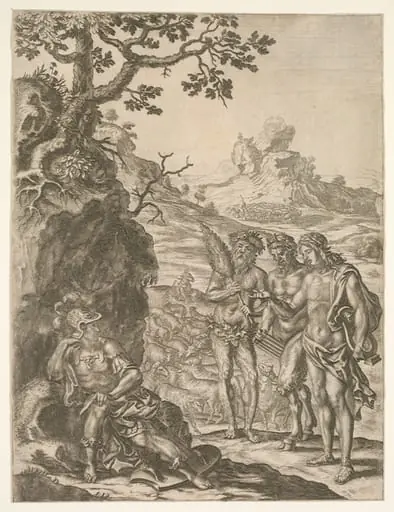
Diogenes, the Greek thinker, sits in the dirt while Alexander the Great stands over him.
This print shows an old idea: power versus truth. Diogenes, the Greek thinker, sits in the dirt while Alexander the Great stands over him. Both men lived long ago, but their clash still feels real.
Rosa made this in 1662, late in his life. He loved ancient stories and liked to etch them. This print proves he could turn philosophy into drama.
Next, look up Baroque art at the Victoria and Albert Museum.
Overview
Salvator Rosa, born near Naples in 1615, was a versatile artist known for his etchings, drawings, and paintings. His work often drew from classical antiquity, blending historical narrative with emotional intensity. This 1662 print, created late in his career, depicts a legendary encounter between Diogenes and Alexander the Great. Rosa’s mastery of etching allowed him to translate philosophical themes into visually compelling scenes, reflecting his enduring interest in moral and historical subjects.
Subject & Meaning
The print captures the famed meeting between Diogenes, the Cynic philosopher living in voluntary poverty, and Alexander the Great, ruler of a vast empire. Diogenes, seated in the dirt, ignores the emperor’s presence, while Alexander looms above him. The scene embodies a contrast between worldly power and intellectual independence. Rosa presents this not as a mere historical anecdote but as a timeless meditation on authority, humility, and the value of truth over dominance.
Technique & Style
Rosa employed etching with bold, expressive lines to convey drama and texture. The contrast between Diogenes’ hunched, earth-bound form and Alexander’s upright, imposing posture is heightened through chiaroscuro and dynamic composition. His brushwork in the etching is vigorous, emphasizing the emotional tension rather than idealized detail. This approach aligns with Baroque sensibilities, prioritizing movement and psychological depth over classical restraint.
History & Provenance
Created in 1662, this print belongs to Rosa’s mature period, when his fascination with classical themes had fully matured. It was likely produced for a learned audience familiar with Stoic and Cynic philosophy. While its early ownership is undocumented, the print circulated among collectors of intellectual and artistic prints in 17th-century Europe. Its survival in multiple institutional collections attests to its enduring resonance among connoisseurs of moral allegory.
Context
In mid-17th-century Europe, classical antiquity offered a framework for reflecting on contemporary power structures. Rosa’s choice of Diogenes and Alexander resonated in an era marked by absolutist monarchies and philosophical inquiry. His prints were part of a broader trend among artists and writers who used ancient stories to critique or question authority. This work fits within a network of Baroque imagery that valued moral complexity over decorative harmony.
Legacy
Rosa’s etching of Diogenes and Alexander influenced later artists interested in philosophical allegory and the dignity of the individual against power. Though less celebrated than his landscapes, this print remains a key example of his ability to fuse narrative with moral gravity. It continues to be studied for its visual economy and its enduring commentary on the tension between material success and spiritual autonomy.
Artist & collection
Artist
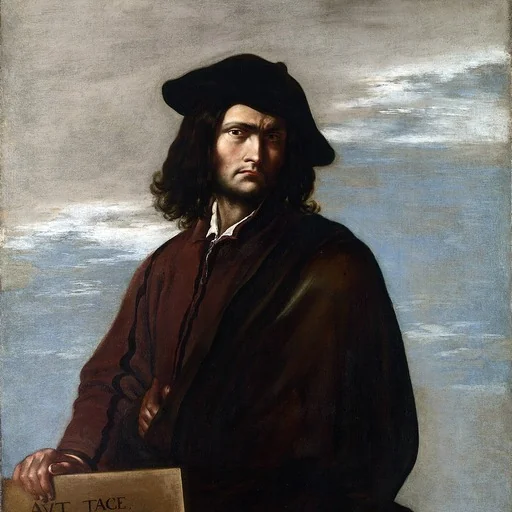
Salvator Rosa (1615 – 15 March 1673) is best known today as an Italian Baroque painter, whose romanticised landscapes and history paintings, often set in dark and untamed nature, exerted considerable influence from the 17th century into…