Artwork
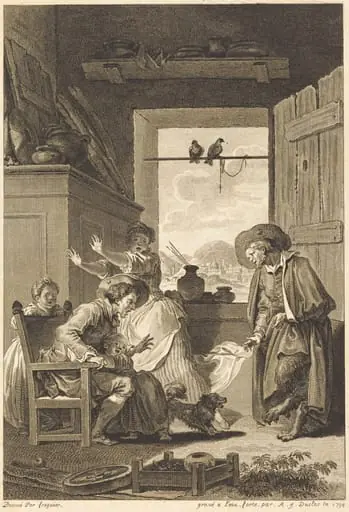
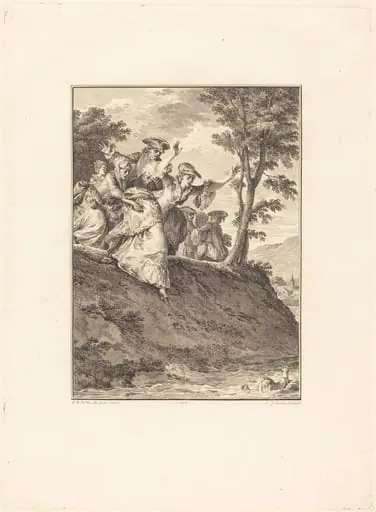
Elle s'élance après lui
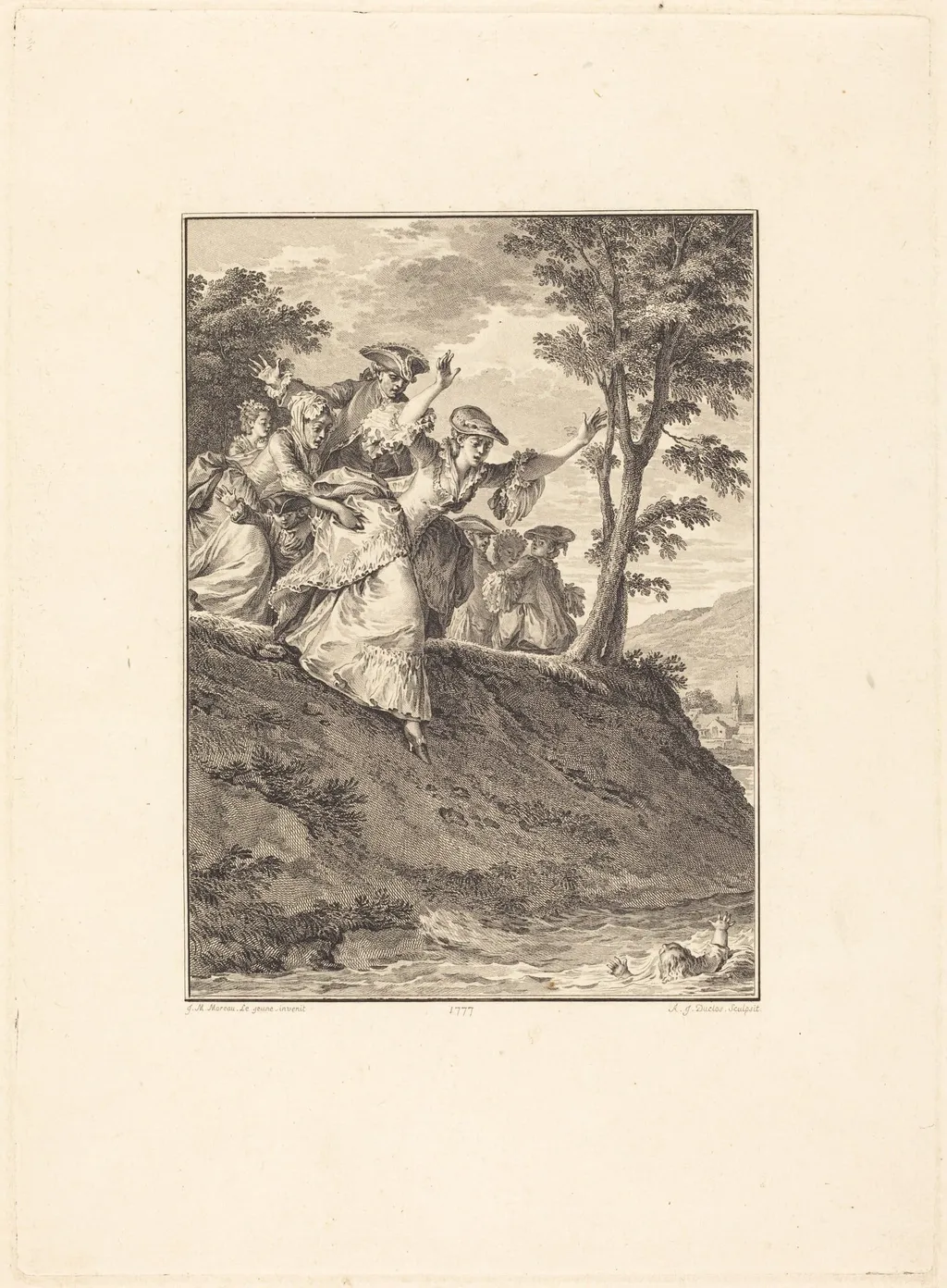
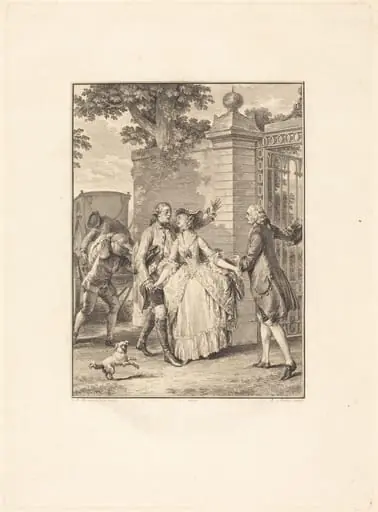
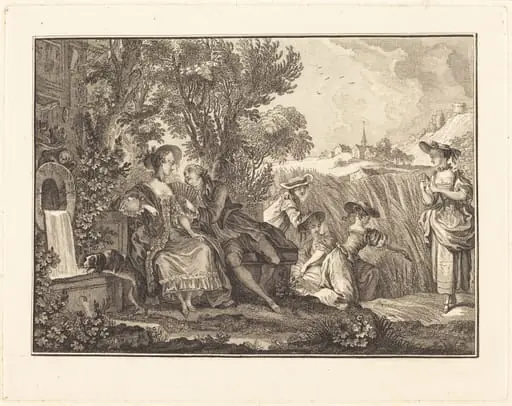
Elle s'élance après lui is an ink print by the Romanticist artist Antoine-Jean Duclos. It dates from 1777 and is held in the collection of the National Gallery of Art.
About this work
Overview
The composition includes trees, distant hills, and a body of water with animals, all rendered with fine linear detail characteristic of the medium.
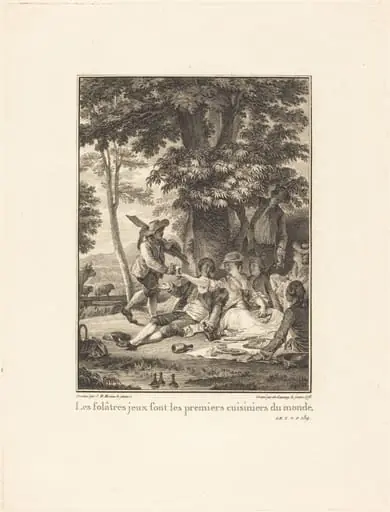
Elle s'élance après lui is an 1777 print by Antoine-Jean Duclos, executed in etching and engraving. It captures a moment of motion among a group of figures on a gentle slope, with a woman in motion as the central focus. The composition includes trees, distant hills, and a body of water with animals, all rendered with fine linear detail characteristic of the medium. The scene suggests narrative tension without explicit context.
Subject & Meaning
The image portrays a woman in dynamic motion, seemingly pursuing or responding to someone just out of frame. Others nearby observe or remain still, creating a contrast between action and stillness. The title, translating to 'She dashes after him,' implies a personal or emotional pursuit, though the story remains ambiguous. The scene evokes fleeting human interaction rather than a specific historical event.
Technique & Style
Duclos employed etching and engraving to achieve fine, controlled lines that define texture and movement. The woman’s flowing garments and the ripple of water are rendered with delicate hatching, while the landscape recedes through lighter, sparser marks. The precision of the technique enhances the sense of immediacy, allowing subtle shifts in light and shadow to guide the viewer’s eye toward the central figure.
History & Provenance
Created in 1777, the print emerged during a period when French artists increasingly turned to intimate, anecdotal subjects in printmaking. Duclos, known for his reproductive and original engravings, likely produced this as an independent work rather than an illustration. Its early circulation among collectors suggests it was valued for its expressive detail and narrative suggestion.
Context
In late 18th-century France, prints like this reflected a growing interest in scenes of everyday emotion and naturalistic behavior, influenced by Rococo sensibilities and early Enlightenment ideals. While not overtly political, such images offered quiet commentary on personal relationships and movement within the landscape, contrasting with grand historical or mythological themes common in painting.
Legacy
Though not widely reproduced in modern scholarship, Elle s'élance après lui exemplifies the expressive potential of small-scale printmaking in the pre-Revolutionary era. Its focus on a single, unexplained moment of motion aligns with emerging tastes for psychological nuance in visual art, influencing later generations of printmakers who prioritized atmosphere over narrative clarity.
Artist & collection