Artwork
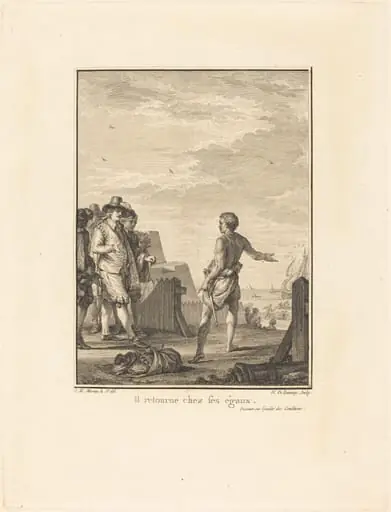
Discours sur l'égalité des conditions: Il retourne chez ses égaux
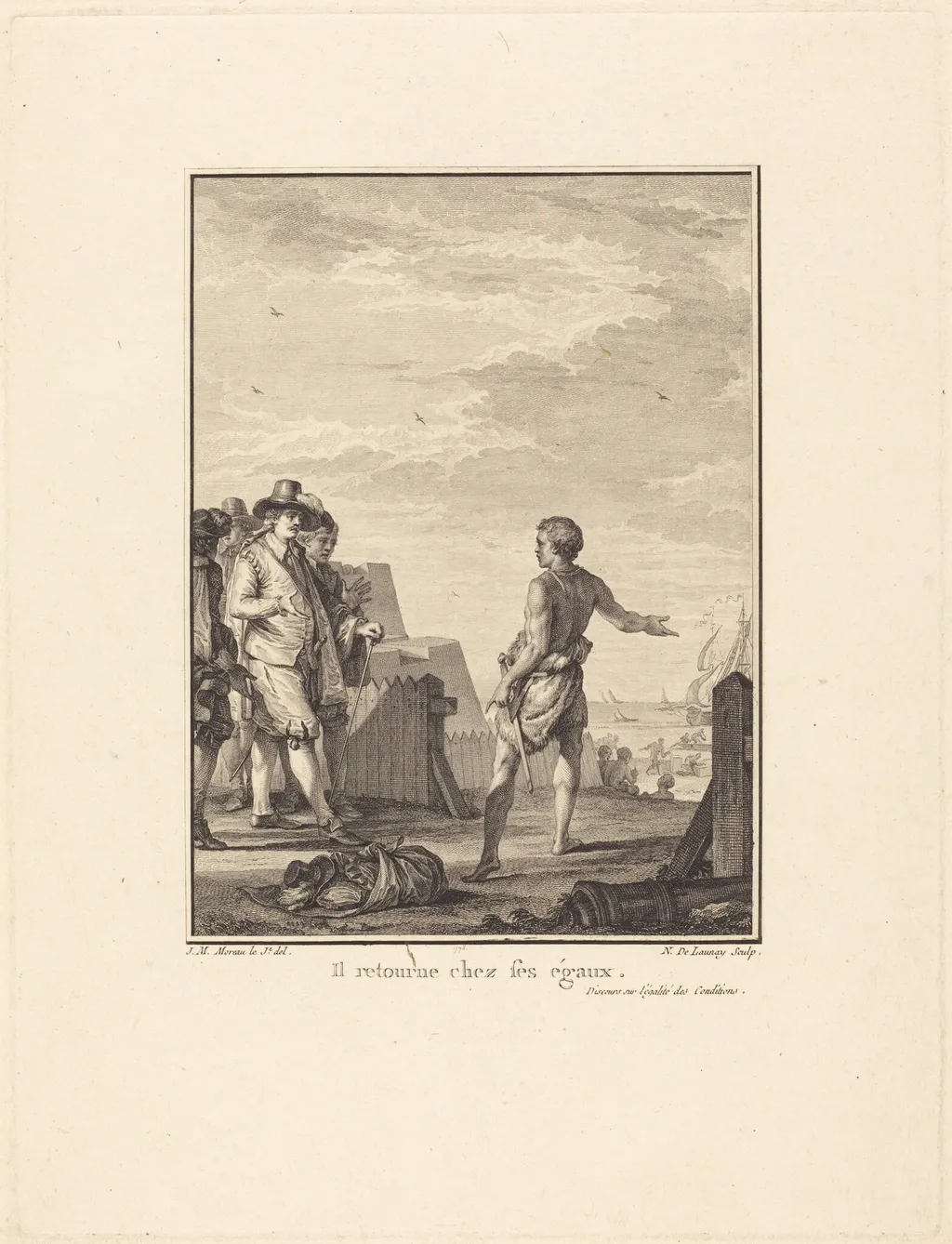
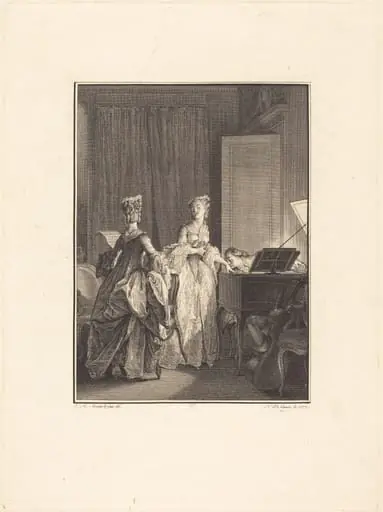
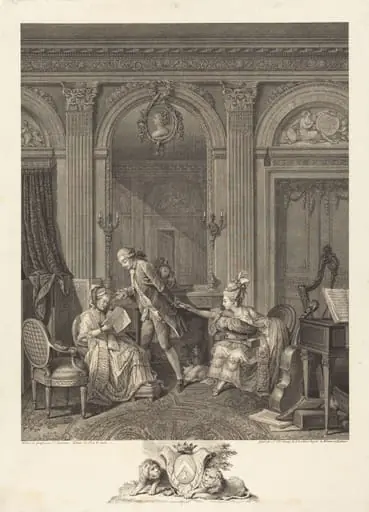
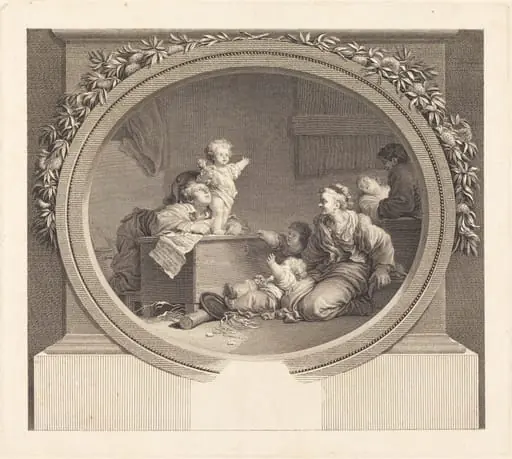
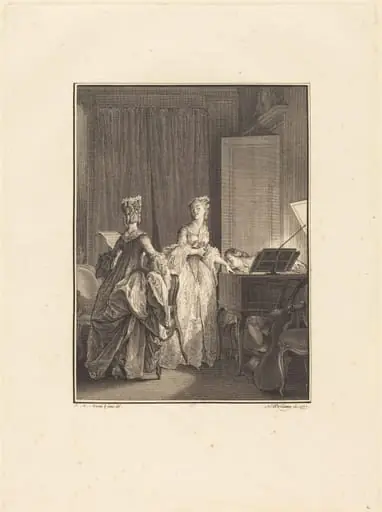
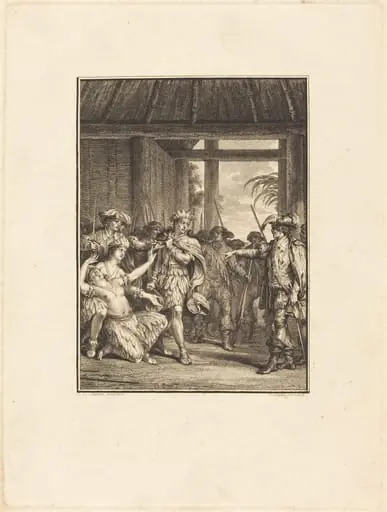
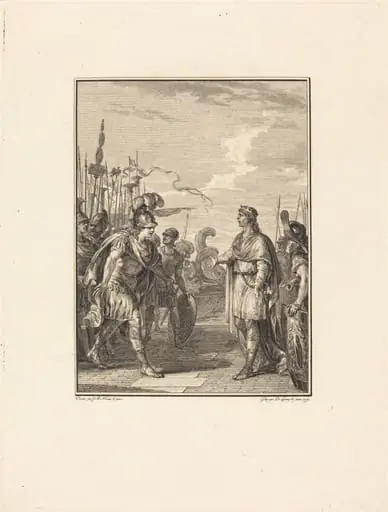
Discours sur l'égalité des conditions: Il retourne chez ses égaux is an ink print by the Romanticist artist Nicolas Delaunay. It dates from 1778 and is held in the collection of the National Gallery of Art.
About this work
Overview
Created in 1778 by Nicolas Delaunay, this print combines etching and engraving to depict a solitary figure on a shoreline. The work is part of a series reflecting Enlightenment-era themes of social equality and return to simplicity. Its muted tonal range and restrained composition emphasize introspection over narrative drama, distinguishing it from more theatrical contemporary prints.
Subject & Meaning
The image evokes a return to communal roots, possibly symbolizing a rejection of social stratification in favor of equality among peers.
The central figure, dressed in minimal attire and carrying a small bag, stands alone on the shore, facing the sea. His posture suggests contemplation rather than action. Behind him, a cluster of figures near a structure and distant boats imply a community and means of departure. The image evokes a return to communal roots, possibly symbolizing a rejection of social stratification in favor of equality among peers.
Technique & Style
Delaunay employed fine lines and cross-hatching to model form and atmosphere, using the tonal gradations of etching to differentiate sky, water, and land. The man’s figure is rendered with sharper detail than the background, guiding the viewer’s focus. The absence of bold contrasts and vibrant color reinforces a subdued, meditative mood, characteristic of late 18th-century graphic art engaged with philosophical ideas.
History & Provenance
The print was produced in Paris during a period of growing public discourse on social hierarchy. It was likely circulated among intellectual circles as a visual companion to writings on equality. No early ownership records are widely documented, but its survival in institutional collections suggests it was preserved as a thoughtful commentary rather than a popular image.
Context
Emerging amid Enlightenment debates on natural rights and social contract theory, the image aligns with critiques of aristocratic privilege. Though not overtly political, its imagery of a solitary individual returning to a collective setting resonates with Rousseauian ideals. The beach setting, common in pastoral allegories, serves as a neutral ground where social distinctions dissolve.
Legacy
Delaunay’s print did not achieve widespread fame during its time but remains a quiet example of how graphic arts engaged with philosophical currents. It is occasionally referenced in studies of visual rhetoric in pre-Revolutionary France, valued for its understated symbolism and technical precision rather than its public impact.
Artist & collection