Artwork
A Mill at Tewkesbury
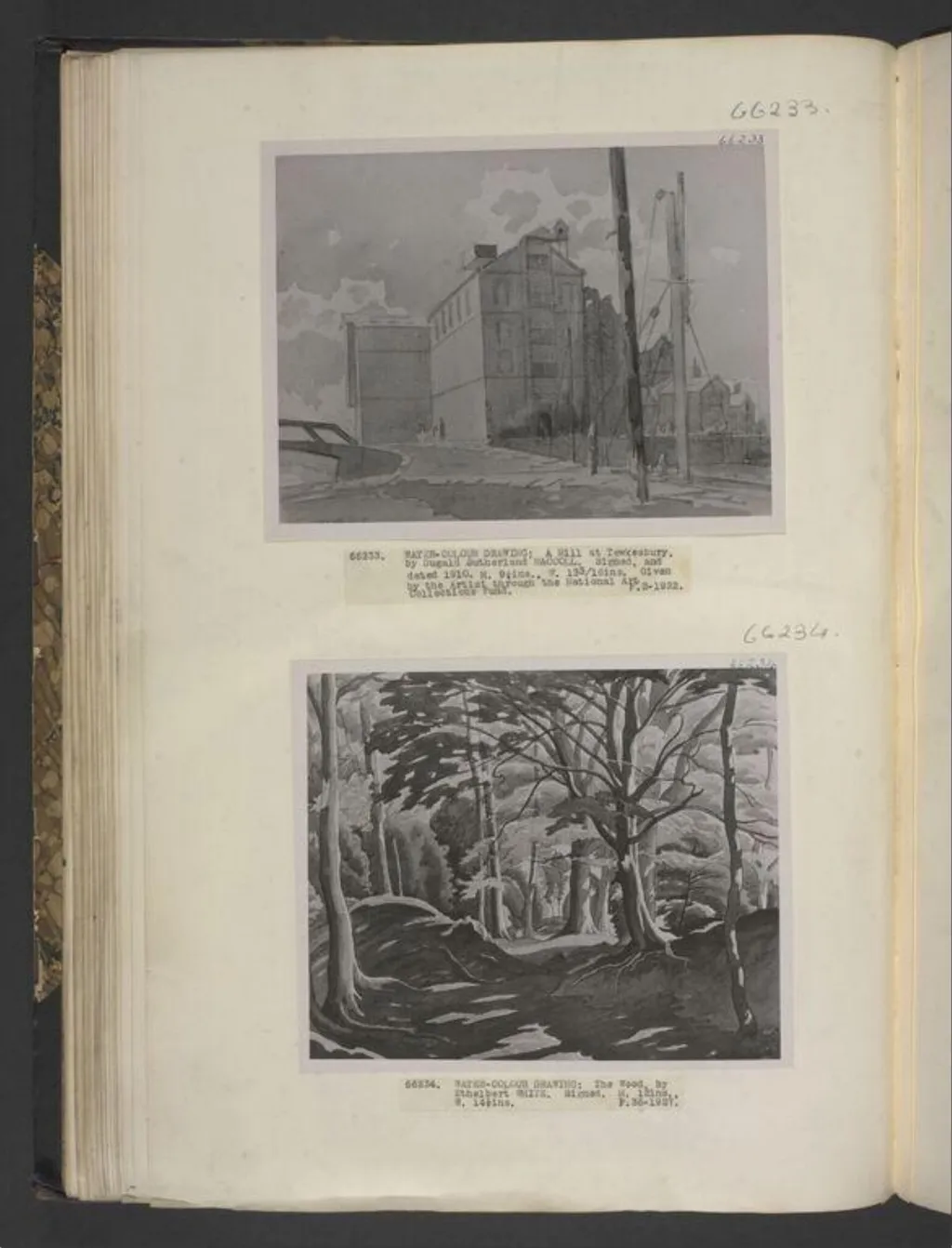
A Mill at Tewkesbury is a watercolor work on paper by the Impressionist artist Dugald Sutherland MacColl. It dates from 1910 and is held in the collection of the Victoria and Albert Museum.
About this work
Overview
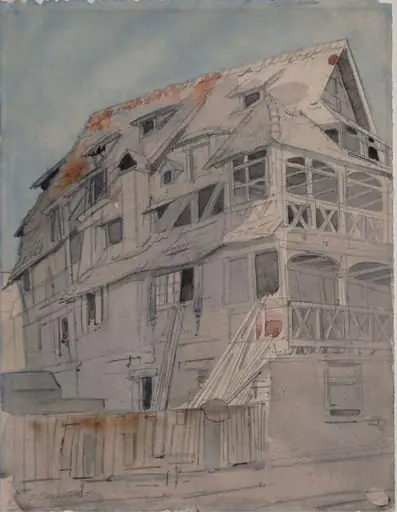
A Mill at Tewkesbury is a watercolour painting created by Dugald Sutherland MacColl in 1910, bearing the artist's signature and date. The work primarily depicts a mill, set against a grey, cloudy sky, with accompanying elements including trees and an empty road.
Subject & Meaning
The mill serves as the central subject, meticulously rendered with visible windows, doors, and structural details. The surrounding environment, though detailed, plays a subordinate role, suggesting the mill's prominence might symbolize industrial or rural significance.
Technique & Style
The painting showcases meticulous attention to detail, evident in the mill's architecture, the intricacy of tree branches and leaves, and the textured suggestion of a cloudy sky. These elements reflect MacColl's skill in watercolour, balancing precision with the medium's inherent fluidity.
History & Provenance
Painted in 1910, the work is signed and dated by the artist. Specific provenance details are not provided, though it is noted that the Victoria and Albert Museum holds works by MacColl, potentially offering contextual insights into his oeuvre.
Context
Created during a period when watercolour was a popular medium for landscape and architectural subjects, A Mill at Tewkesbury fits within the tradition of detailed, observant watercolour painting prevalent in early 20th-century British art.
Artist & collection
Artist
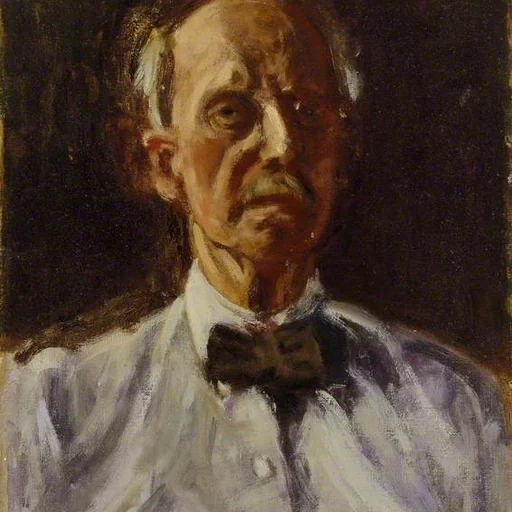
Dugald Sutherland MacColl was a Scottish watercolour painter, art critic, lecturer and writer. He was keeper of the Tate Gallery for five years.