Artwork
Rosa Sera
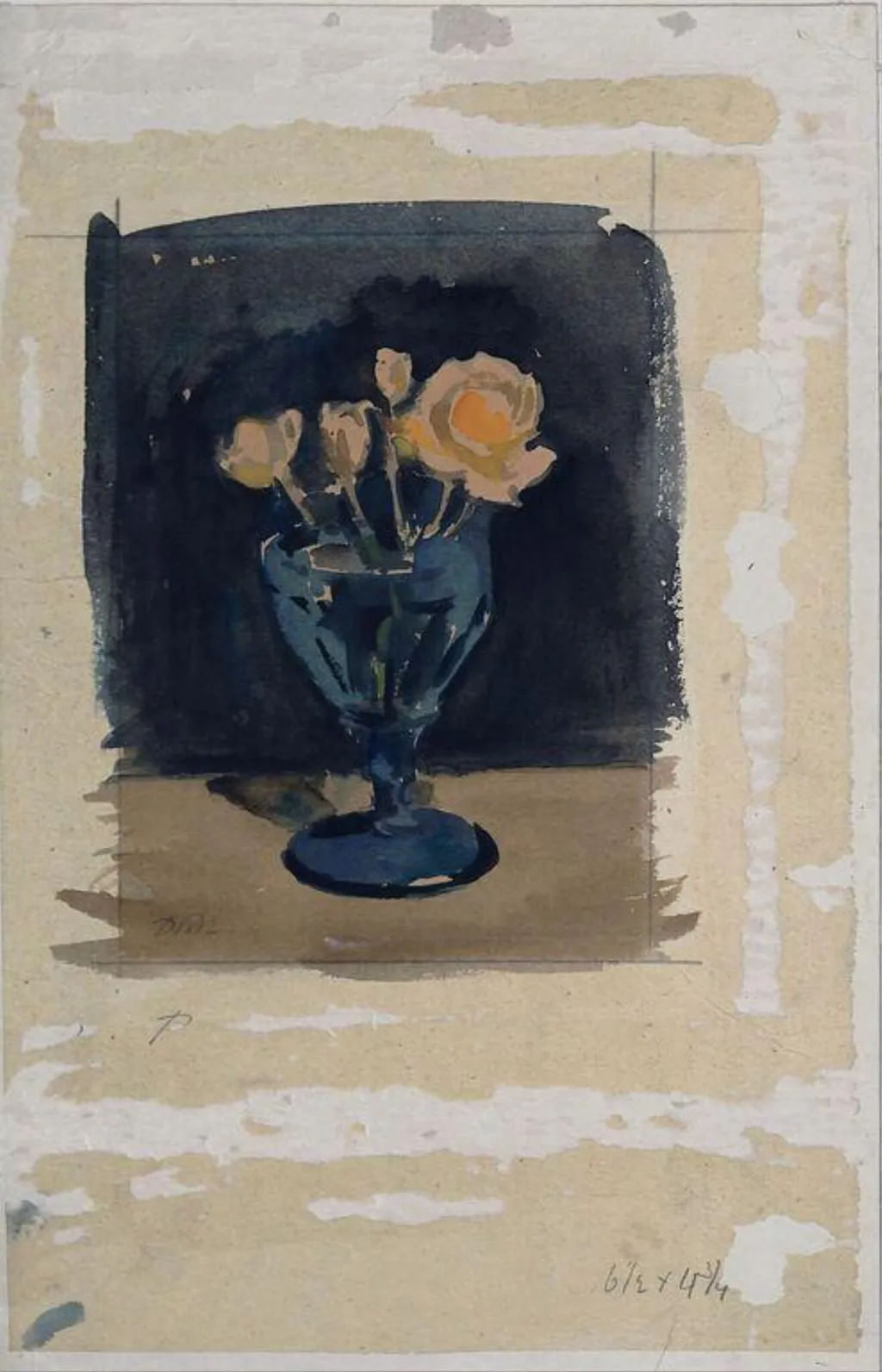
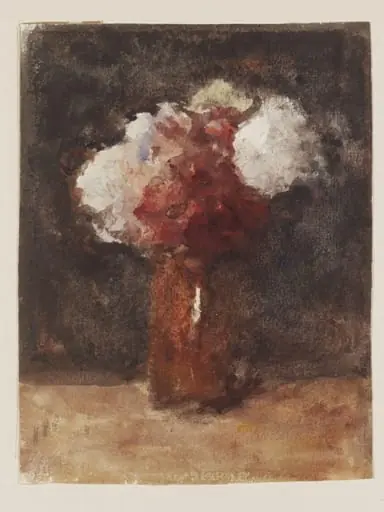
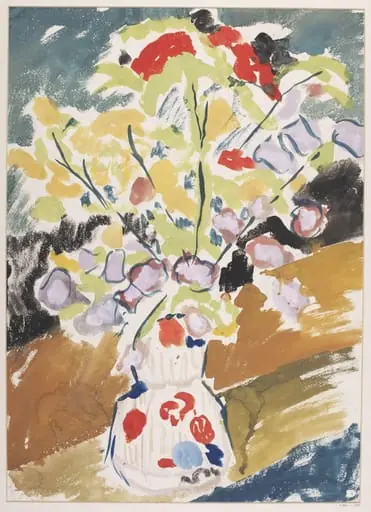
Rosa Sera is a watercolor work on paper by the Impressionist artist Dugald Sutherland MacColl. It dates from 1919 and is held in the collection of the Victoria and Albert Museum.
About this work
Overview
Set against a deep, unmodulated background and a rough, light-brown surface, the work captures a quiet moment with minimal elements.
Painted in 1919, *Rosa Sera* is a watercolour by Dugald Sutherland MacColl, signed and dated by the artist. The composition centers on three roses—a pair of pale yellow and one orange—arranged in a dark vessel. Set against a deep, unmodulated background and a rough, light-brown surface, the work captures a quiet moment with minimal elements. The paper’s stained, uneven edges suggest the medium’s fluidity and the artist’s unguarded approach.
Subject & Meaning
The subject is a simple still life: three roses in a vase, devoid of ornament or context. Their muted hues and solitary placement evoke a sense of stillness, perhaps reflecting post-war introspection. The absence of narrative or symbolic detail invites contemplation of transience and quiet beauty. The dark vessel and background amplify the roses’ fragility, grounding the scene in somber elegance rather than floral celebration.
Technique & Style
MacColl employed loose, rapid brushwork, particularly in the background and table, allowing watercolour to bleed and pool naturally. The dark vase is rendered with dense washes, creating a void that isolates the lighter petals. The table’s texture is suggested through uneven washes, not detailed rendering. The paper’s staining reveals the medium’s transparency and the artist’s acceptance of its unpredictable qualities, aligning with his preference for spontaneous, unpolished effects.
History & Provenance
Created in 1919, *Rosa Sera* emerged during a period when MacColl was increasingly focused on intimate, domestic subjects. It was likely painted in his London studio, where he often worked from arranged still lifes. The work remained in private hands for much of the 20th century before entering a public collection. Its modest scale and unassuming nature contributed to its limited exhibition history until recent scholarly interest in his watercolours.
Context
In the aftermath of the First World War, many British artists turned from grand narratives to quiet, personal observations. MacColl, influenced by Aesthetic Movement ideals and Japanese prints, favored restrained compositions and tonal harmony. *Rosa Sera* reflects this shift—its simplicity, emphasis on light and shadow, and rejection of ornament align with contemporary trends in watercolour that valued mood over detail.
Legacy
Though not widely exhibited in its time, *Rosa Sera* exemplifies MacColl’s contribution to early 20th-century British watercolour. Its unembellished aesthetic and technical honesty have since been recognized as part of a broader movement toward modernist restraint in domestic subjects. The work continues to be studied for its subtle interplay of tone and its quiet defiance of decorative conventions in watercolour painting.
Own this work as a print
Artist & collection
Artist
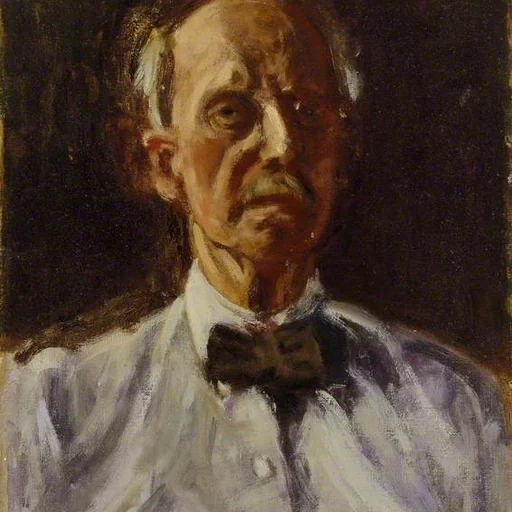
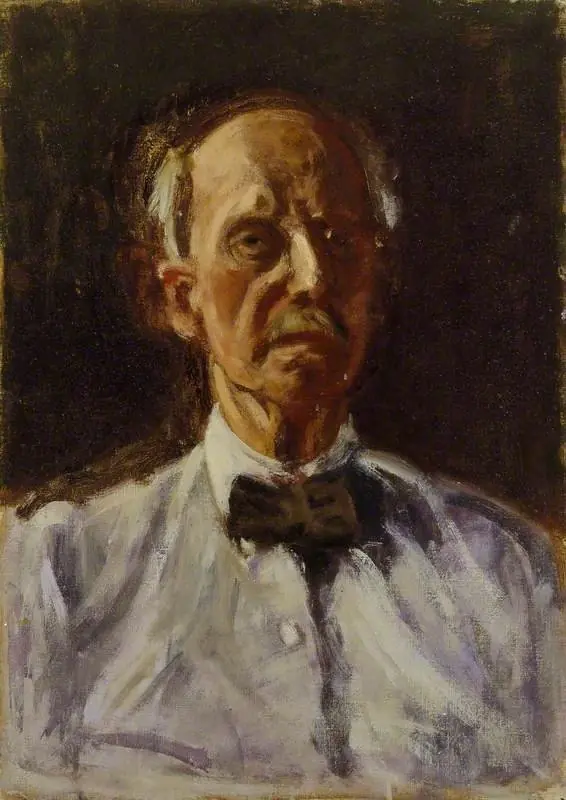
Dugald Sutherland MacColl was a Scottish watercolour painter, art critic, lecturer and writer. He was keeper of the Tate Gallery for five years.

![Roses in a Bottle [recto], by Paul Cezanne](https://artifactworldgallery.com/img/paul-cezanne--roses-in-a-bottle-recto--7d8cab3439e09800-w320.webp)