Artwork
Décoration de sallon pour Brunoy (Design for the Interior of the Château de Brunoy)
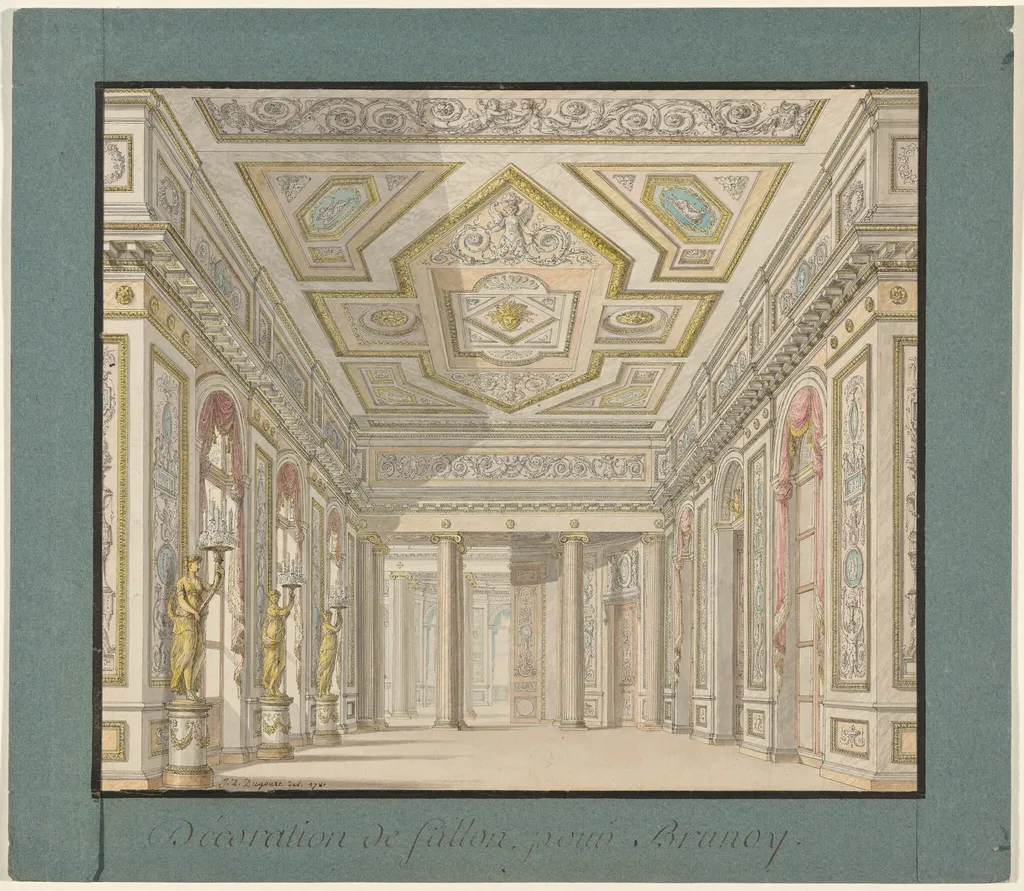
Décoration de sallon pour Brunoy (Design for the Interior of the Château de Brunoy) is a watercolor drawing by the Romanticist artist Jean Démosthène Dugourc. It dates from 1781 and is held in the collection of the National Gallery of Art.
About this work
Overview
Created in 1781 by Jean Démosthène Dugourc, this drawing serves as a design proposal for the salon of the Château de Brunoy.
Created in 1781 by Jean Démosthène Dugourc, this drawing serves as a design proposal for the salon of the Château de Brunoy. Executed in pen and black ink with watercolor on laid paper, it was later mounted on an older album sheet. The work reflects the decorative ambitions of French aristocratic interiors in the late eighteenth century, presenting a detailed vision of architectural ornamentation rather than a finished painting.
Subject & Meaning
The drawing depicts an idealized interior space with tall white columns, gilded moldings, and niches housing statues in flowing robes. The ceiling features a starburst motif rendered in delicate gold and pale hues, while the walls are adorned with painted panels of ornamental patterns. These elements convey a vision of refined elegance, intended to project cultural sophistication and aristocratic taste within a private reception room.
Technique & Style
Dugourc employed layered watercolor washes over precise ink outlines to achieve subtle tonal transitions and luminous effects. Glazing techniques allowed for the soft blending of pale colors, enhancing the illusion of gilded surfaces without using actual gold leaf. The precision of the penwork defines architectural structure, while the watercolor suggests material qualities—marble, metal, and fabric—through restrained, atmospheric application.
History & Provenance
The drawing was produced as a preparatory design for interior renovations at the Château de Brunoy, a property associated with French nobility. It entered the collection of the National Gallery of Art in Washington, D.C., where it remains part of a broader archive of French decorative arts drawings. Its preservation on an older album sheet suggests it was once part of a collector’s compilation of architectural designs.
Context
In the decades before the French Revolution, aristocratic patrons commissioned elaborate interior schemes to express status through visual harmony and classical references. Dugourc’s design aligns with the neoclassical trend, favoring symmetry, restrained ornament, and mythological allusions. Such drawings were often presented to clients as proposals, bridging the gap between architect, decorator, and patron.
Legacy
Though the Château de Brunoy’s interior was never fully realized as envisioned, this drawing endures as a record of late eighteenth-century decorative aspirations. It illustrates the role of the designer as both artist and planner, capturing the aesthetic ideals of a vanishing social order. Today, it contributes to scholarly understanding of how interiors were conceived before construction.
Artist & collection

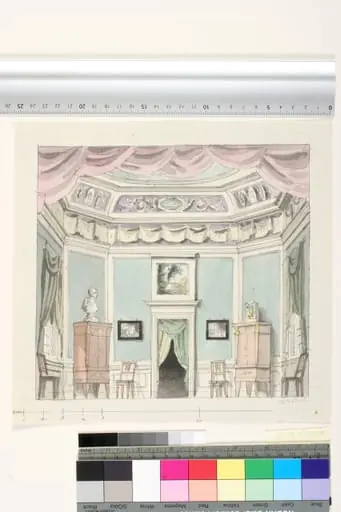 Stuedekoration
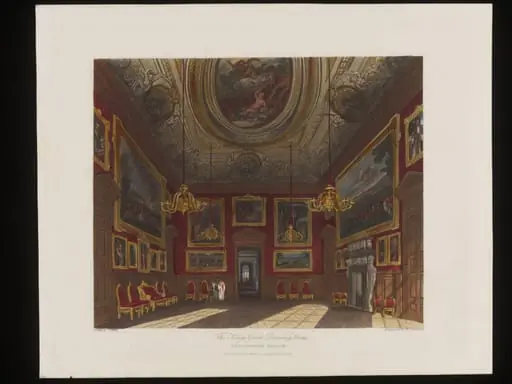 View of the King's Great Drawing Room
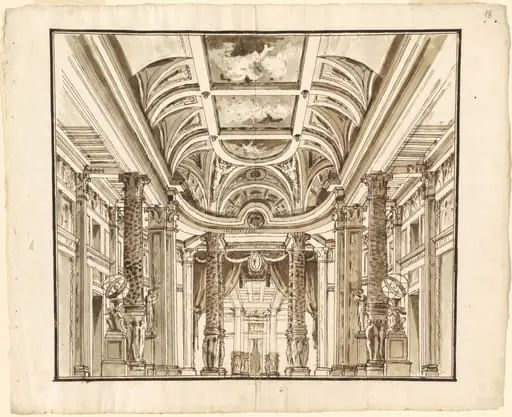 Fantasy of a Great Hall with Basketweave Columns
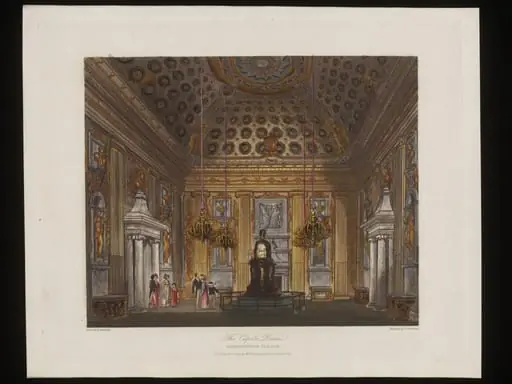 View of the Cupola Room
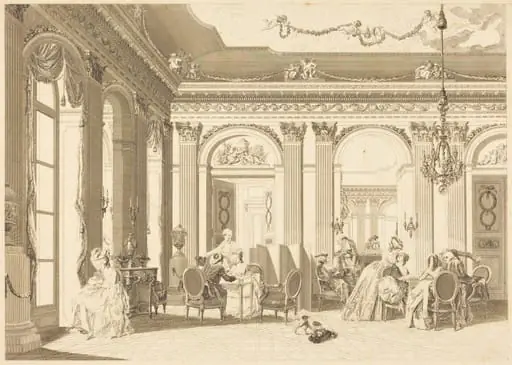 L'assemblee au salon
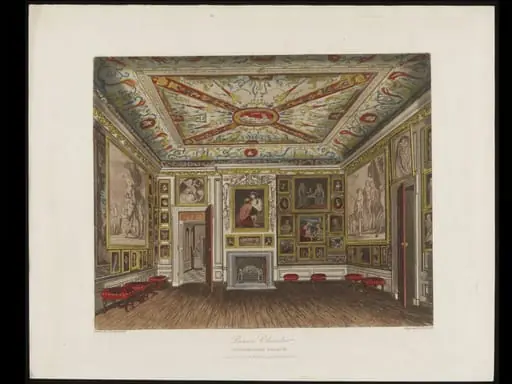 View of the Presence Chamber
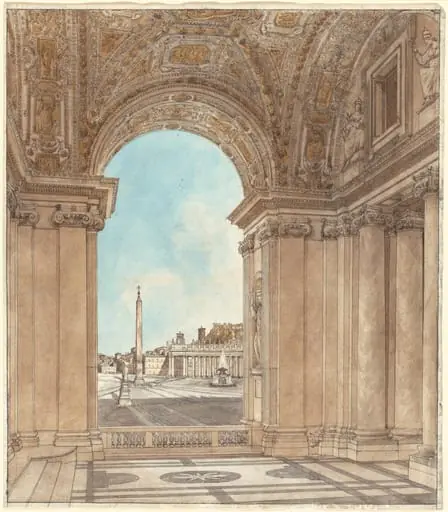 The Piazza of Saint Peter's Seen through an Arch of the Basilica
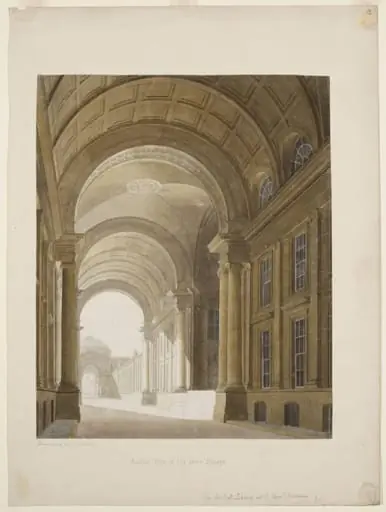 View across the Bridge of Magnificence
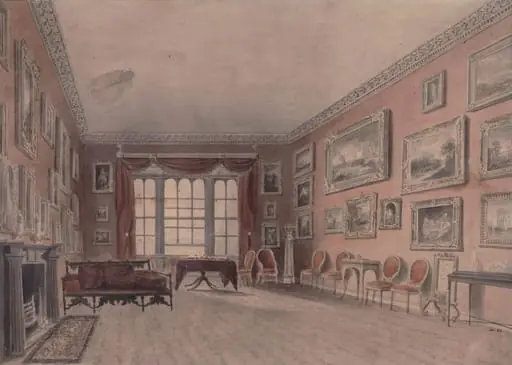 The Gallery at the Browsholme, near Clitheroe
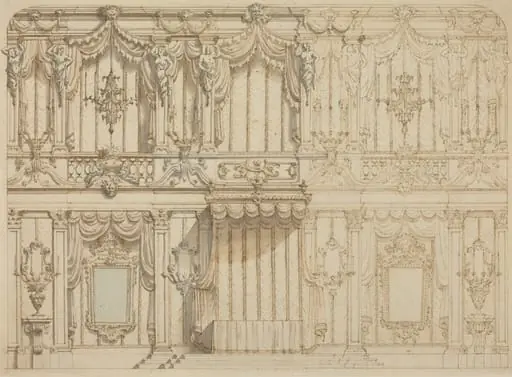 Design for a State Bedroom
![Design for a Wall of a Music Room [recto], by Italian 18th Century](https://artifactworldgallery.com/img/italian-18th-century--design-for-a-wall-of-a-music-room-recto--1582534309a804bd-w320.webp) Design for a Wall of a Music Room [recto]
Design for a Wall of a Music Room [recto]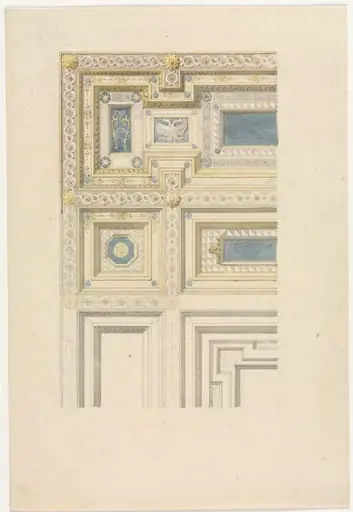 Design for Ornamental Ceiling