Artwork
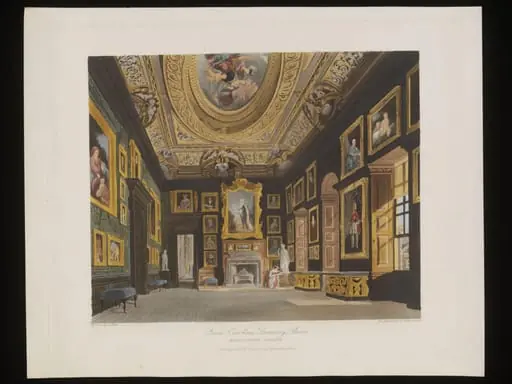
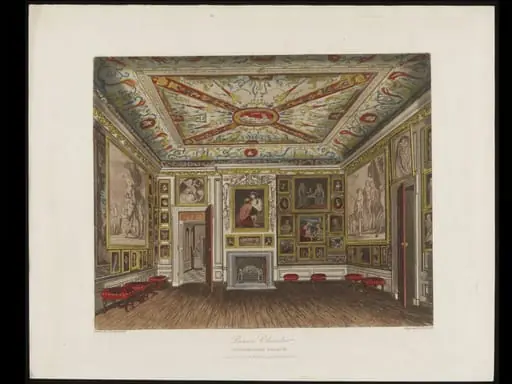
View of the King's Great Drawing Room
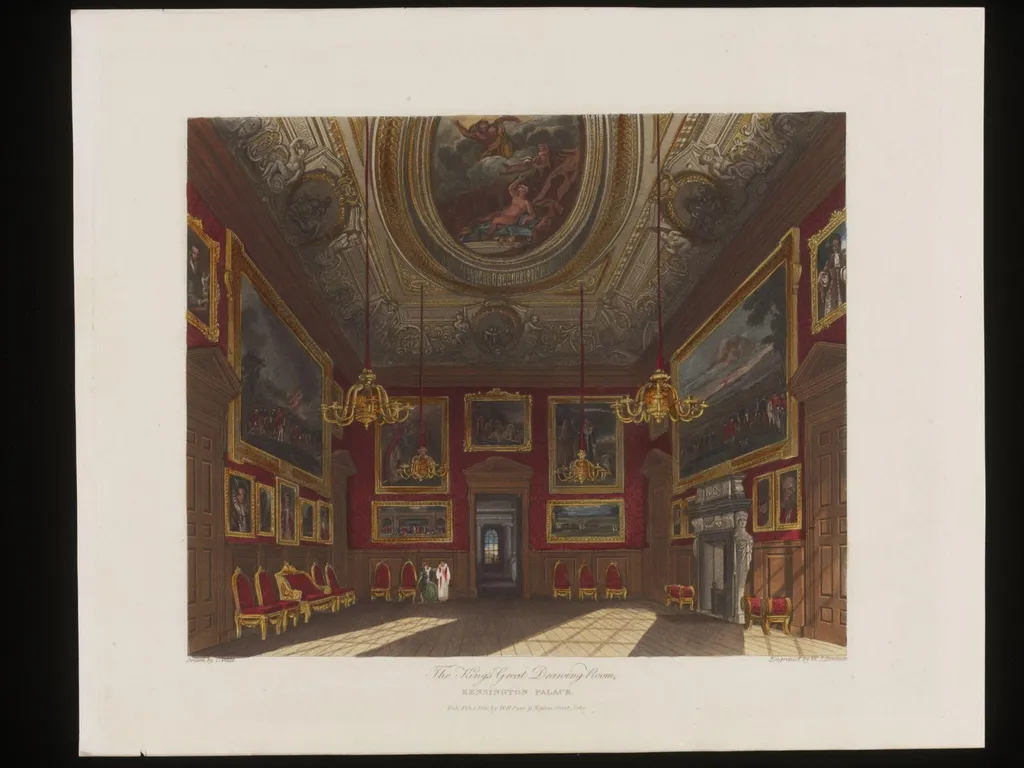
View of the King's Great Drawing Room is a print by the Romanticist artist William Kent. It is held in the collection of the Victoria and Albert Museum.
About this work
The print is part of a larger project, The history of the royal residences, which aimed to document the interior and exterior views of royal palaces.
This print is titled View of the King's Great Drawing Room. It was created by William Kent in 1816.
The print is part of a larger project, The history of the royal residences, which aimed to document the interior and exterior views of royal palaces. This project was produced by William Henry Pyne between 1816 and 1819 and featured illustrations by well-known watercolour artists.
To learn more about the style and context of this print, look up the movement: Romanticism.
Overview
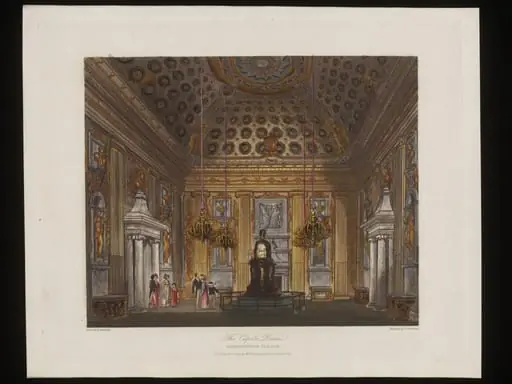
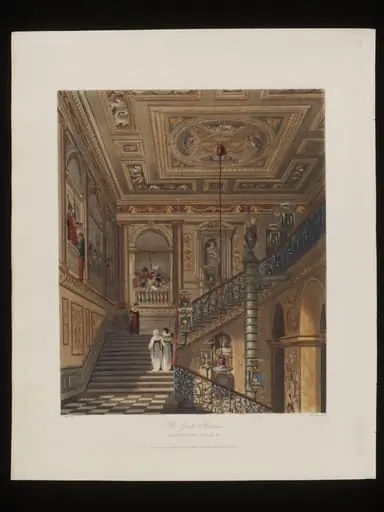
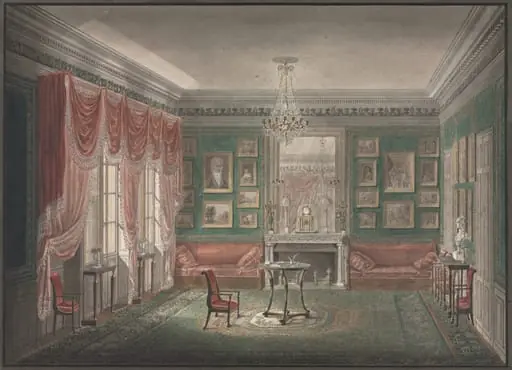
This aquatint print, titled View of the King's Great Drawing Room, is one of one hundred illustrations produced for William Henry Pyne’s three-volume publication The History of the Royal Residences (1816–1819). Commissioned to document the interiors of royal palaces, the print was based on watercolours by specialist artists and rendered as hand-coloured aquatints. It depicts a room at Kensington Palace, capturing its architectural detail and furnishings as they appeared in the mid-1810s, shortly after the palace’s 18th-century renovations.
Subject & Meaning
The print portrays the Great Drawing Room at Kensington Palace, a space transformed under King George I’s patronage in the 1720s. Designed by William Kent, the room reflects early 18th-century Palladian ideals—elegant proportions, restrained ornamentation, and classical references. By 1816, the room served as a formal reception space, its depiction in Pyne’s publication preserving its appearance before later alterations. The image functions as a historical record, emphasizing the palace’s role as a seat of courtly life rather than a private residence.
Technique & Style
The image was produced as an aquatint, a printmaking method popular in the early 19th century for its ability to mimic watercolour washes. Hand-coloured after printing, it achieved subtle tonal gradations and a soft, atmospheric quality. The composition is precise and orderly, reflecting the architectural clarity of Palladian design. Details of furniture, drapery, and wall treatments are rendered with documentary intent, prioritizing accuracy over dramatic effect, aligning with the project’s goal of historical preservation.
History & Provenance
The print originates from Pyne’s ambitious but financially burdensome publication, which sought to chronicle royal residences through commissioned artwork. Though the project was not commercially successful at the time, its plates became vital references for later scholars. The depiction of the Great Drawing Room draws on William Kent’s earlier interior designs from the 1720s, commissioned by George I over the more established Sir James Thornhill. Kent’s appointment, possibly due to cost and aesthetic alignment with the king’s tastes, marked a turning point in his career.
Context
The print emerged during a period of renewed interest in Britain’s architectural heritage, coinciding with Romanticism’s fascination with history and decay. While Romanticism often idealized ruins and nature, Pyne’s project offered a counterpoint: the preservation of intact, lived-in spaces. Kensington Palace, though no longer a primary royal residence, retained symbolic value. The publication catered to antiquarian audiences and aristocratic patrons interested in lineage, taste, and the material culture of monarchy.
Legacy
Pyne’s illustrated volumes remain among the most detailed visual records of British royal interiors from the early 19th century. The aquatint of the Great Drawing Room provides insight into the evolution of courtly space and the transition from Baroque grandeur to Palladian restraint. Though William Kent’s original designs were later modified, this print preserves their form before subsequent alterations. Today, it serves as a key resource for historians of interior design and royal patronage.
Artist & collection
Artist
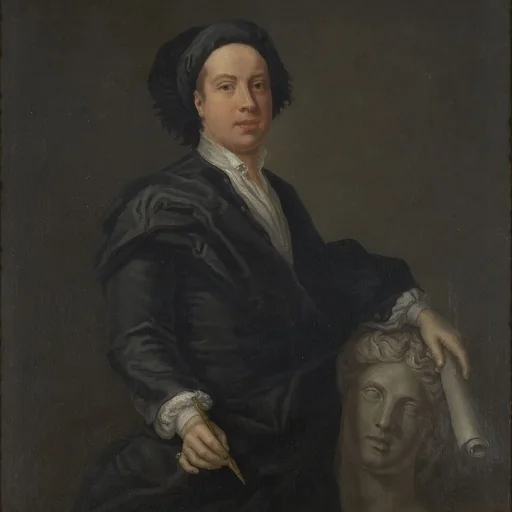
William Kent (c. 1685 – 12 April 1748) was an English architect, landscape architect, painter and furniture designer of the early 18th century. He began his career as a painter, and became Principal Painter in Ordinary…