Artwork
Saint John on Patmos
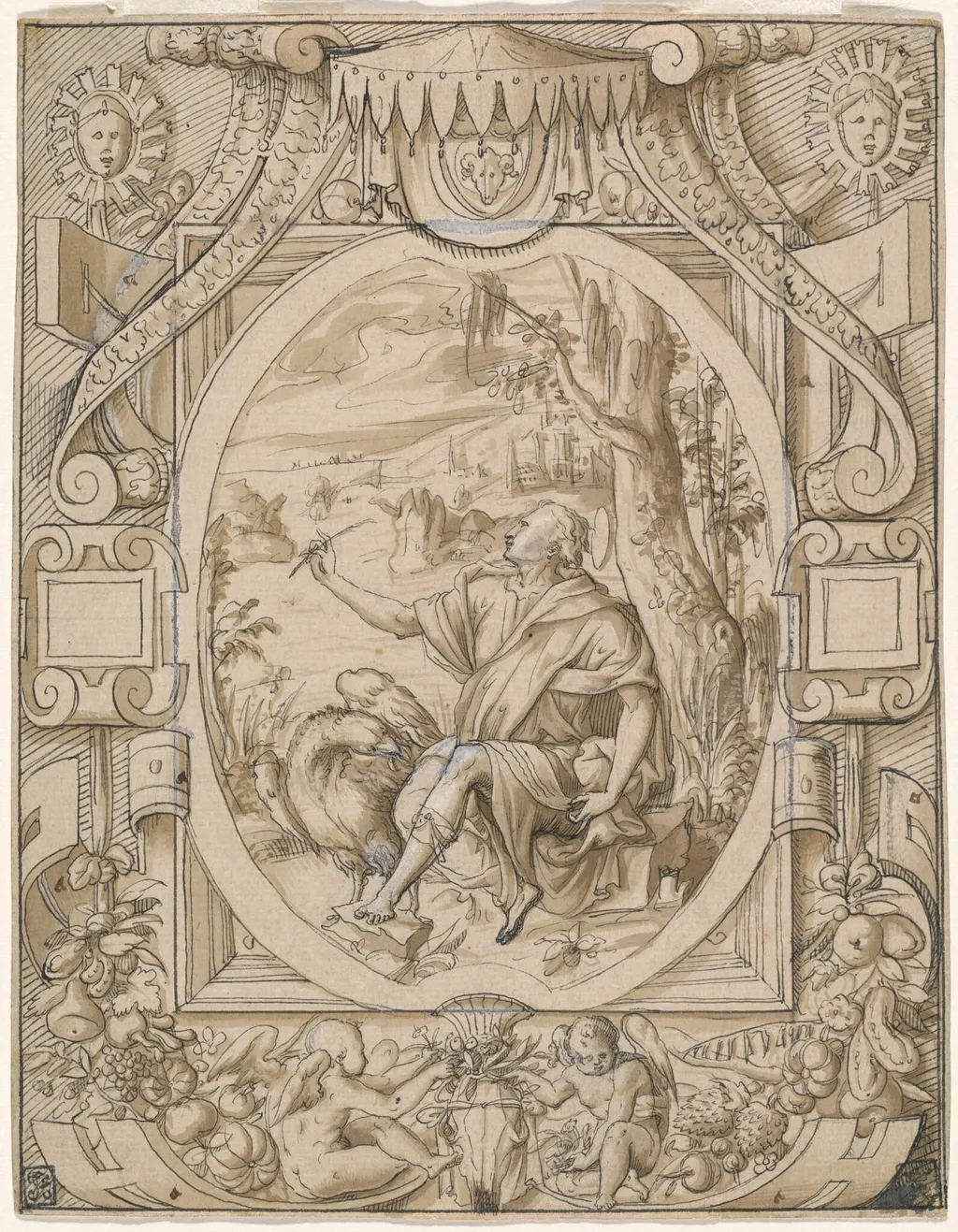
Saint John on Patmos is an ink drawing by the Renaissance artist Geoffroy Dumonstier. It dates from 1547 and is held in the collection of the National Gallery of Art.
About this work
Overview
Created around 1547, this drawing by Geoffroy Dumonstier portrays Saint John the Evangelist during his exile on the island of Patmos.
Created around 1547, this drawing by Geoffroy Dumonstier portrays Saint John the Evangelist during his exile on the island of Patmos. Executed on laid paper, the work combines pen, black ink, and a brown wash applied over a foundation of black chalk, with selective highlights added in white gouache. The composition is framed by faint border lines drawn by the artist, giving the piece a self‑contained, manuscript‑like quality.
Subject & Meaning
The image presents the apostle seated amid a verdant setting punctuated by architectural fragments, suggesting a contemplative retreat. John is clothed in a modest tunic and cloak, his head encircled by a halo, and his right hand is lifted in a gesture that implies divine inspiration or the act of writing. The tranquil atmosphere underscores themes of revelation and spiritual reflection associated with the biblical Revelation narrative.
Technique & Style
Dumonstier employs a layered approach: initial sketches in black chalk are overpainted with ink and a brown wash, creating tonal depth, while delicate hatching defines texture in foliage and stone. White gouache is applied to correct lines and accentuate luminous areas, particularly the halo and highlights on the figure’s garment. The combination of precise line work and expressive washes reflects a transitional Renaissance sensibility, balancing meticulous draftsmanship with atmospheric modeling.
History & Provenance
The drawing is attributed to the mid‑16th‑century French school, a period when devotional images were often produced for private contemplation. While specific ownership records are scarce, the work’s material qualities and stylistic traits align it with other surviving Dumonstier drawings circulated among collectors of religious miniatures during the late Renaissance.
Artist & collection


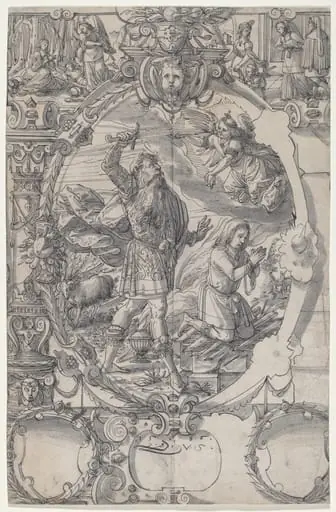 The Sacrifice of Abraham
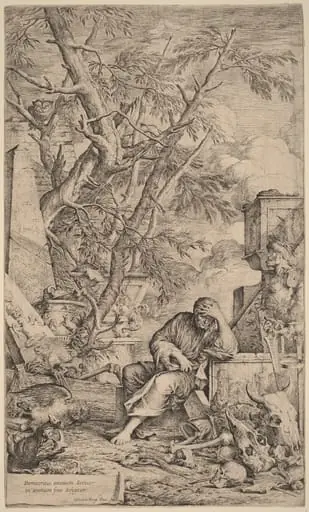 Democritus in Meditation
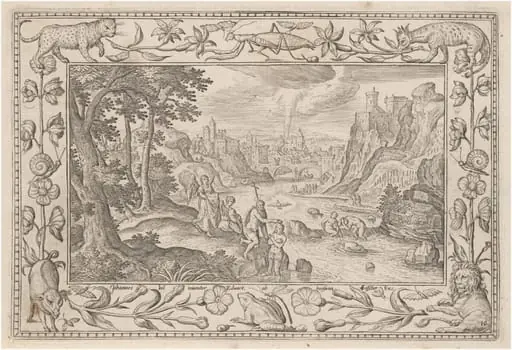 The Baptism of Christ
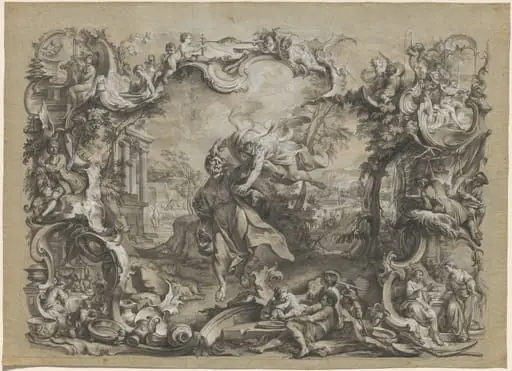 The Angel Carrying off Habakkuk by His Hair, Surrounded by an Elaborate Rococo Frame
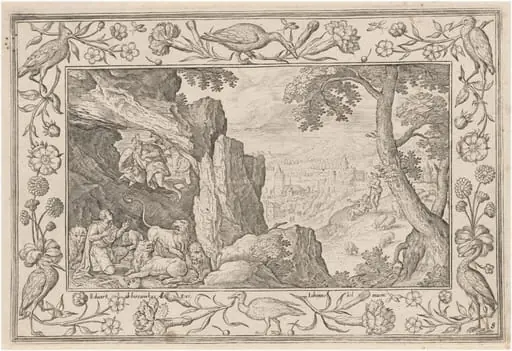 Daniel in the Lion’s Den
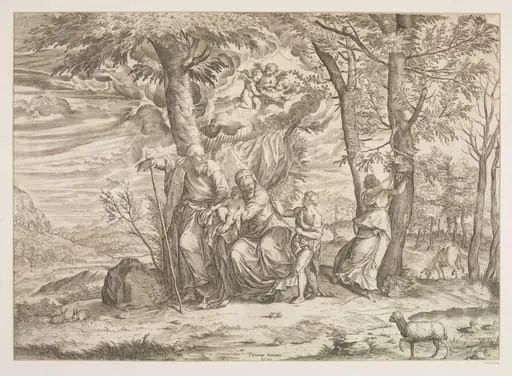 Holy Family
![Temporalis Aeternitas [Second Version], by Italian 17th Century](https://artifactworldgallery.com/img/italian-17th-century--temporalis-aeternitas-second-version--2b55857961773f67-w320.webp) Temporalis Aeternitas [Second Version]
Temporalis Aeternitas [Second Version]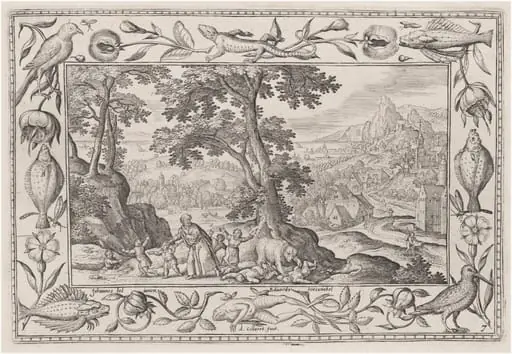 The Mocking Children Cursed by Elijah and Eaten by a She-Bear
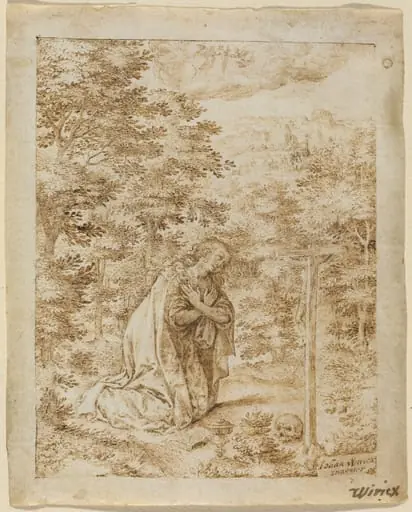 Mary Magdalene Praying in the Wilderness