Artwork
The Angel Carrying off Habakkuk by His Hair, Surrounded by an Elaborate Rococo Frame
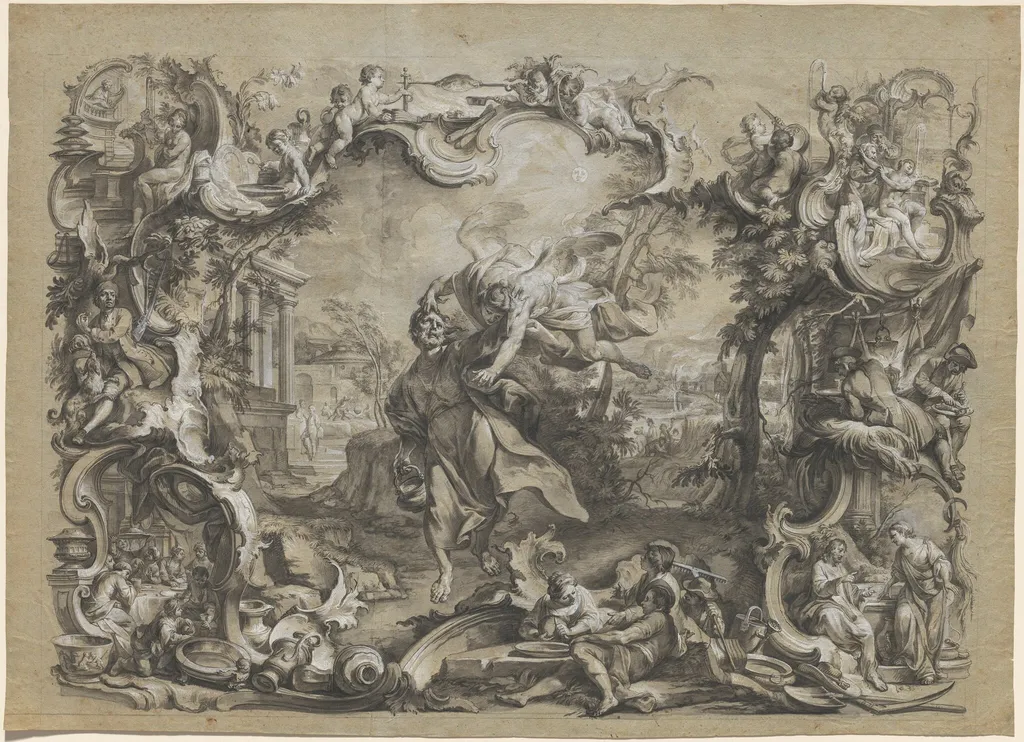
The Angel Carrying off Habakkuk by His Hair, Surrounded by an Elaborate Rococo Frame is an ink drawing by the Romanticist artist Johann Wolfgang Baumgartner. It dates from 1750 and is held in the collection of the National Gallery of Art.
About this work
Overview
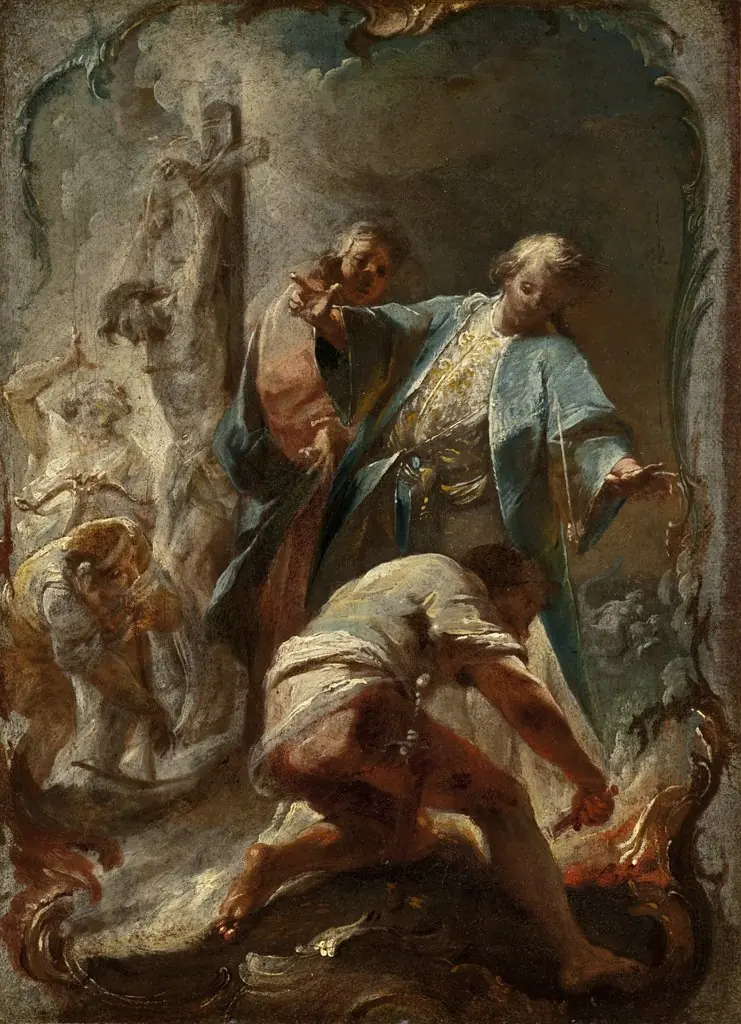
Created around 1750, this drawing by Johann Wolfgang Baumgartner portrays an angel seizing the prophet Habakkuk by his hair. The composition is framed by an ornate Rococo border, whose elaborate carving motifs echo the decorative tastes of the mid‑eighteenth century. The work is held in the collection of the National Gallery of Art in Washington.
Subject & Meaning
The image illustrates a dramatic biblical episode in which an angel forcibly removes Habakkuk, his legs flailing in distress. By emphasizing the violent grip and the prophet’s struggle, the drawing conveys themes of divine intervention and the unsettling power of the heavenly messenger.
Technique & Style
Executed on two joined sheets of blue laid paper, the drawing combines pen and black ink with a gray wash applied over a graphite underdrawing. Highlights of white gouache enhance contrast, while incised lines add texture and definition. The verso of the paper was reddened for transfer, indicating a preparatory process typical of the period.
History & Provenance
The piece entered the National Gallery of Art’s holdings after a mid‑20th‑century acquisition, though earlier ownership records are sparse. Its survival in good condition reflects careful preservation of the delicate paper support and the artist’s meticulous technique.
Context
Baumgartner worked within the Rococo aesthetic, favoring intricate ornamental frames that surrounded narrative scenes. This drawing aligns with contemporary interests in combining religious subjects with decorative excess, a hallmark of the era’s visual culture.
Artist & collection
Artist
Johann Wolfgang Baumgartner (1702–1761) was an artist, born in Ebbs.

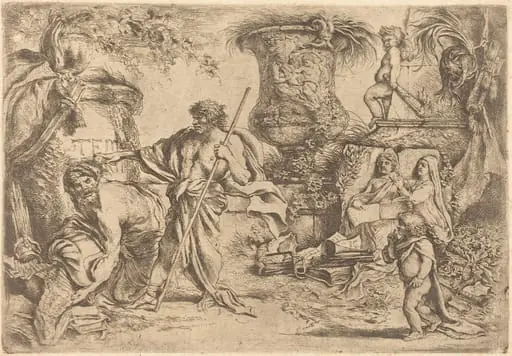 Temporalitas Aeternitas
![Temporalis Aeternitas [Second Version], by Italian 17th Century](https://artifactworldgallery.com/img/italian-17th-century--temporalis-aeternitas-second-version--2b55857961773f67-w320.webp) Temporalis Aeternitas [Second Version]
Temporalis Aeternitas [Second Version]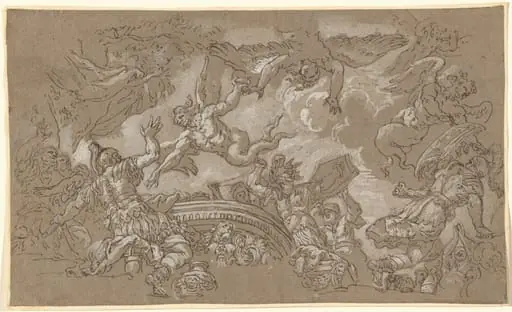 The Harpies Attacking Aeneas and His Companions
![Temporalis Aeternitas [Second Version], by Giovanni Benedetto Castiglione](https://artifactworldgallery.com/img/giovanni-benedetto-castiglione--temporalis-aeternitas-second-version--d9ecb26010022a5a-w320.webp) Temporalis Aeternitas [Second Version]
Temporalis Aeternitas [Second Version]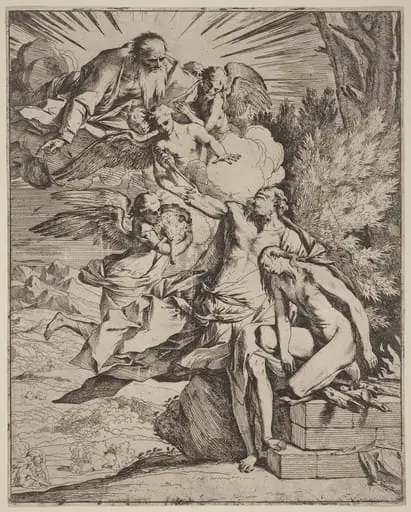 The Sacrifice of Abraham
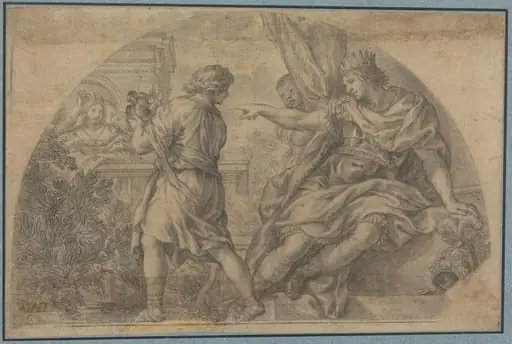 Masinissa and Sophonisba
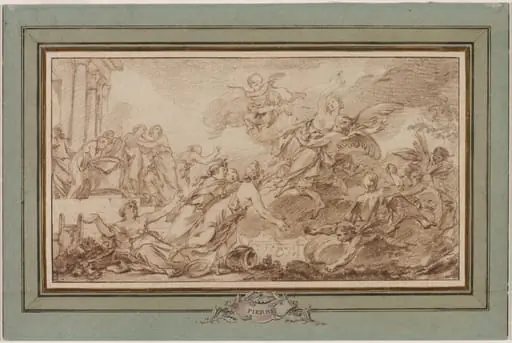 Boreas Abducting Oreithyia
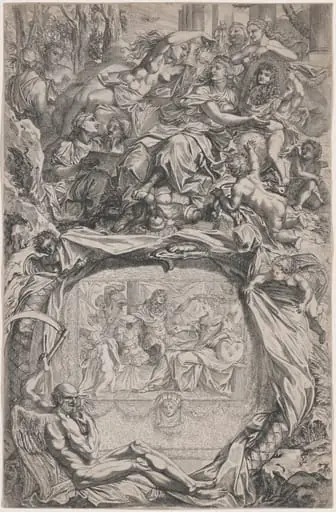 France Crowned with Victory by Louis XIV
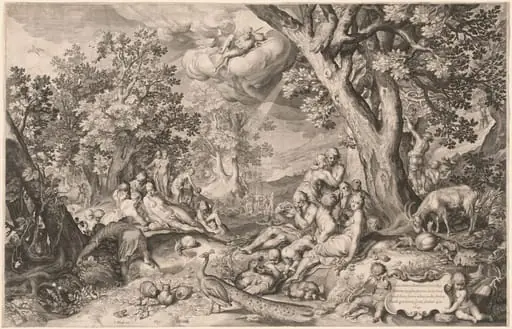 The Golden Age
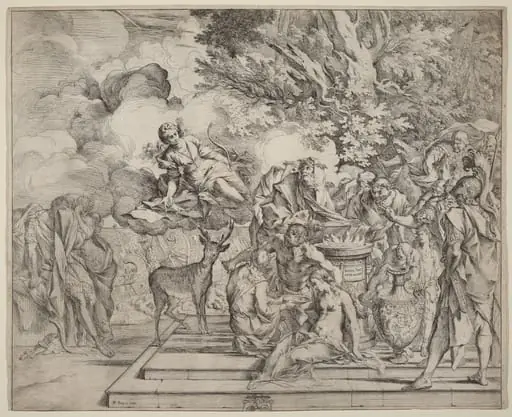 The Sacrifice of Iphigenia
 Venus and Adonis
 The Holy Angels Protecting a Hermit from Evils