Artwork
Temporalis Aeternitas [Second Version]
![Temporalis Aeternitas [Second Version], by Italian 17th Century, ink](https://artifactworldgallery.com/img/italian-17th-century--temporalis-aeternitas-second-version--2b55857961773f67-w1024.webp)
Temporalis Aeternitas [Second Version] is an ink print by the Baroque artist Italian 17th Century. It is held in the collection of the National Gallery of Art. This etching, the second version of Temporalis Aeternitas, presents a dense, intricate composition on laid paper.
About this work
Overview
This etching, the second version of Temporalis Aeternitas, presents a dense, intricate composition on laid paper.
This etching, the second version of Temporalis Aeternitas, presents a dense, intricate composition on laid paper. The image is dominated by a central bearded figure holding a staff, surrounded by a chaotic array of human forms—some grounded, others suspended—as if caught in motion. The background is filled with intertwined trees and rocky forms, creating a layered, almost claustrophobic space. The sharp, incised lines suggest meticulous handwork, characteristic of the etching technique.
Subject & Meaning
The central figure, aged and contemplative, appears to embody a figure of wisdom or authority, though no clear narrative is identifiable. The scattered figures around him may represent different states of being—stillness, ascent, or dissolution—hinting at themes of time, mortality, or spiritual transition. The ambiguity of their actions resists literal interpretation, inviting reflection rather than storytelling.
Technique & Style
The work is executed in fine-line etching, with precise, angular strokes that carve through the plate to create high-contrast tonal depth. The artist employs dense cross-hatching and intricate patterning to render texture in foliage and fabric, while the floating figures are defined by minimal yet deliberate contours. The lack of shading or washes emphasizes the linear precision typical of the medium.
History & Provenance
This is the second known version of the composition, suggesting the artist revisited the theme after an earlier iteration. The print was likely produced in limited numbers, as was common with etchings of the period. Its survival in collections indicates early recognition, though its original commission or purpose remains undocumented.
Context
Created during a time when printmaking was used to explore philosophical and allegorical subjects, the work aligns with Northern European traditions of symbolic imagery. Its complexity echoes the enigmatic visions of contemporaries who used intricate compositions to convey metaphysical ideas, often outside the bounds of religious or mythological convention.
Legacy
Though not widely reproduced or studied, Temporalis Aeternitas exemplifies the potential of etching to convey layered, introspective narratives. Its influence is subtle, visible in later artists who favored dense, symbolic scenes over clear storytelling, preserving a tradition of visual ambiguity in printmaking.
Artist & collection

Artist
This Italian artist worked in the 17th century, making engravings, ink drawings, and oil paintings.

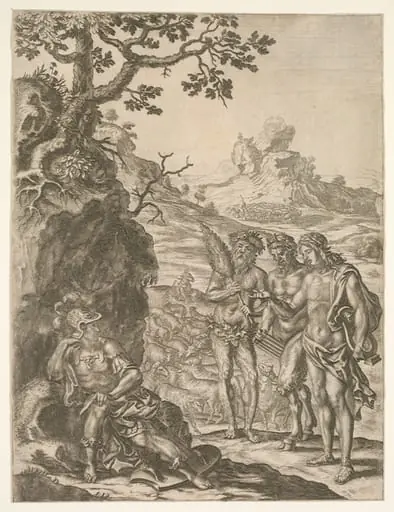 Aeneid
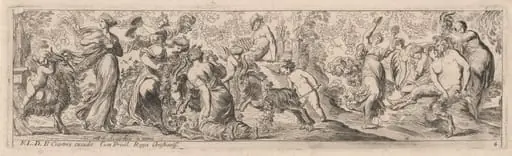 Putto Herding Goats through Garlands
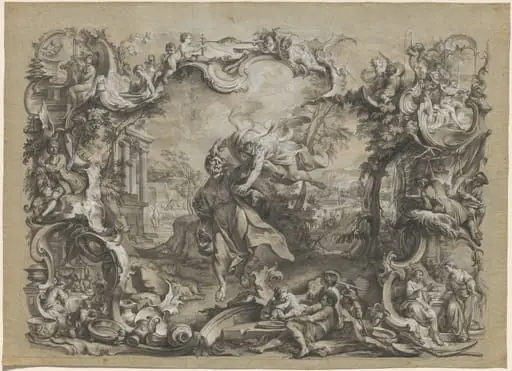 The Angel Carrying off Habakkuk by His Hair, Surrounded by an Elaborate Rococo Frame
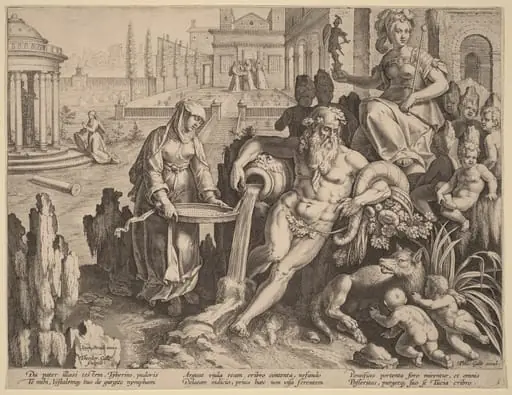 The Vestal Virgin Tuccia
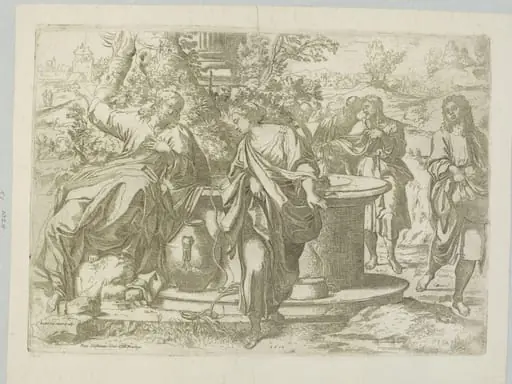 Christ and the Woman of Samaria
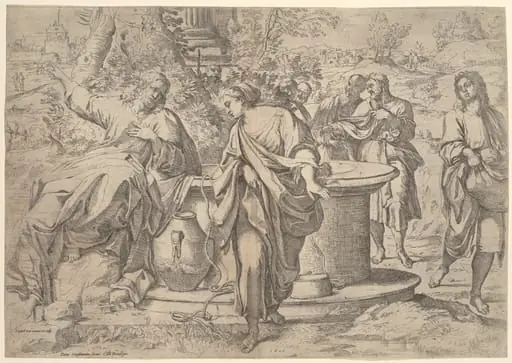 Christ and the Samaritan Woman
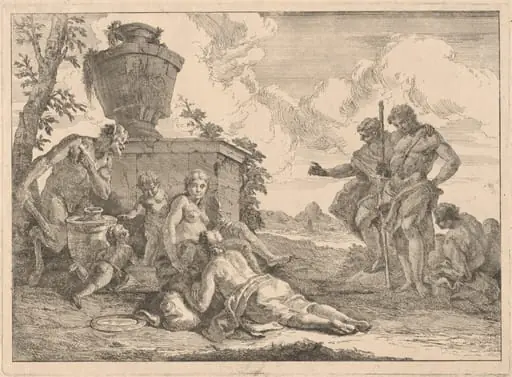 A Satyr with a Staff and Seven Other Figures
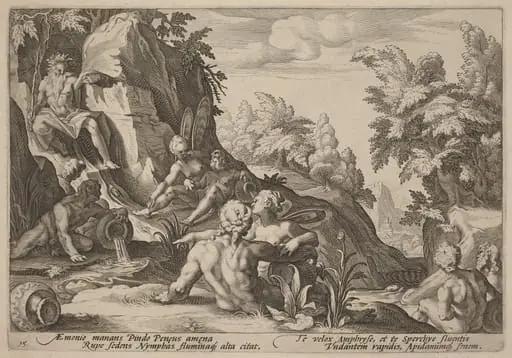 The River God Peneus Surrounded by Other Divinities
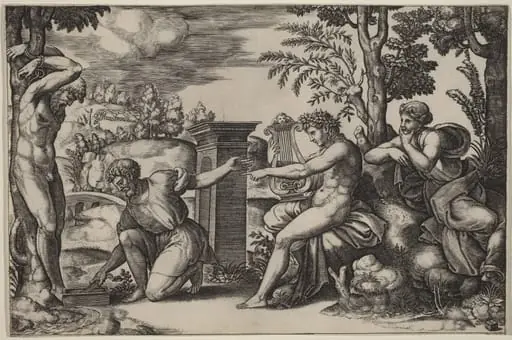 Apollo and Marsyas
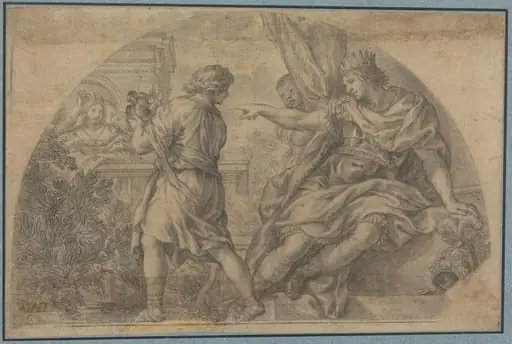 Masinissa and Sophonisba