Artwork
Invocation mémoriale
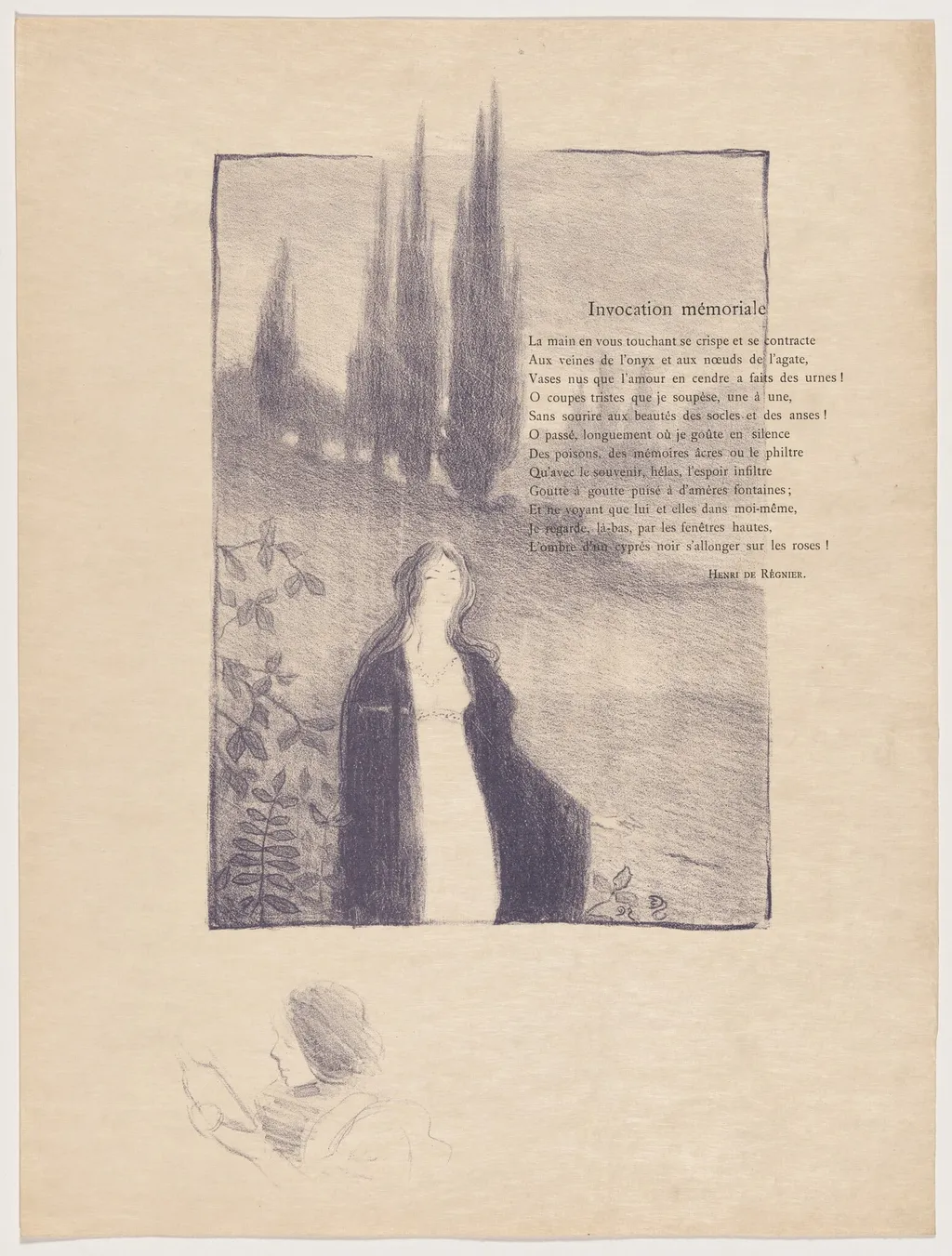
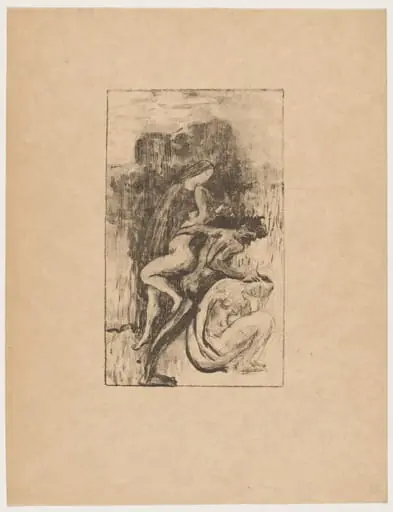
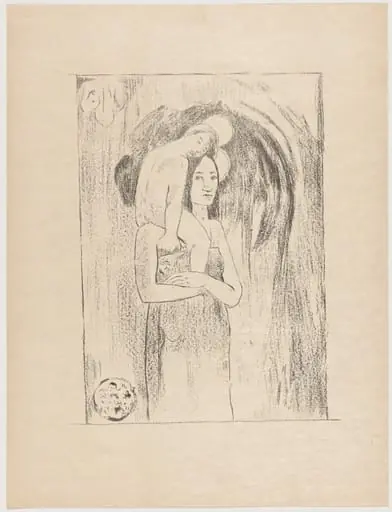
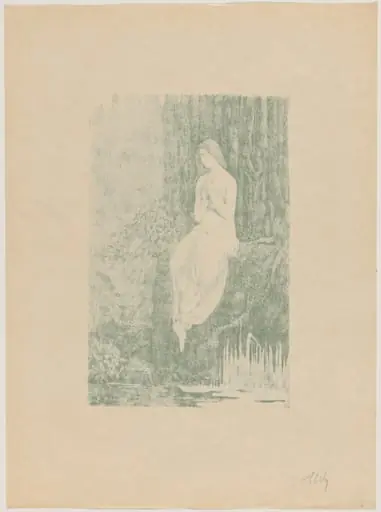
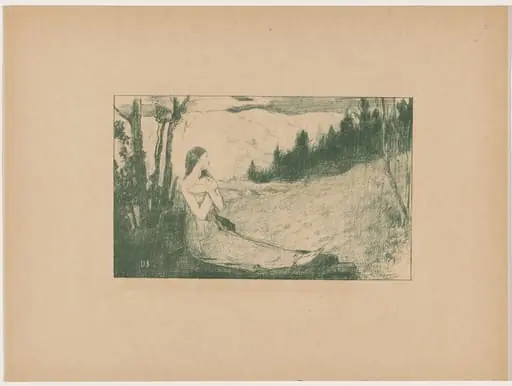
Invocation mémoriale is an ink print by the Impressionist artist Maurice Dumont. It dates from 1895 and is held in the collection of the National Gallery of Art.
About this work
Overview
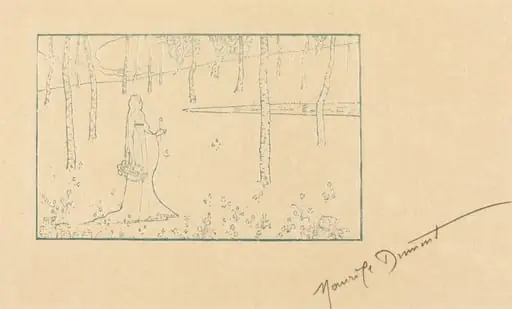
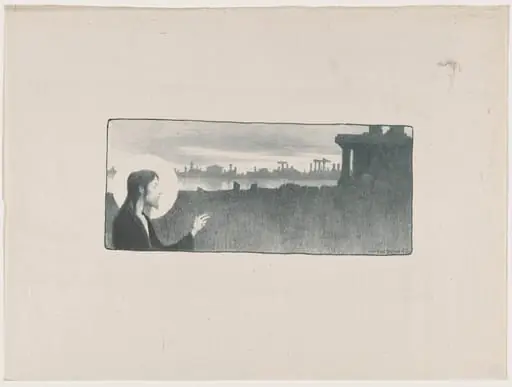
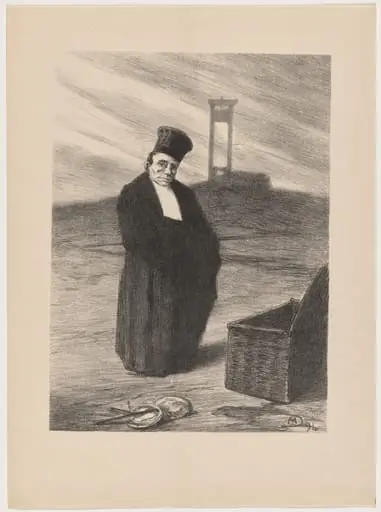
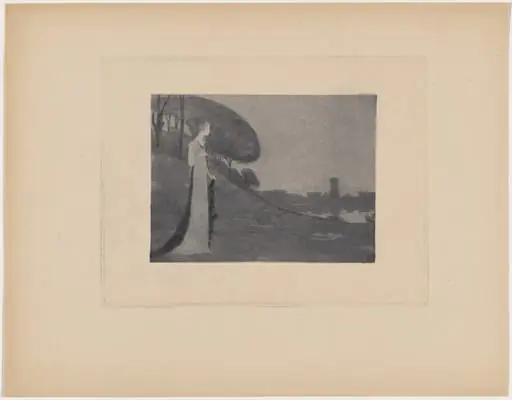
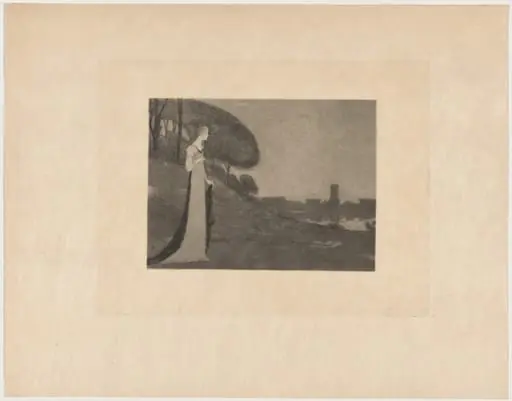
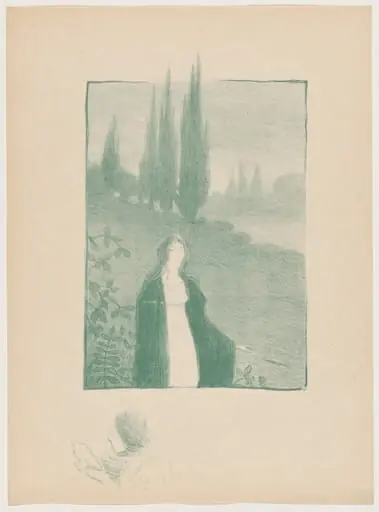
Maurice Dumont’s 1895 lithograph, titled Invocation mémoriale, is executed in violet ink on a sheet of heavy Japan paper. The work presents a solitary female figure set within an ambiguous, dimly lit environment, flanked by two elongated, shadowy towers. A faint, seated silhouette appears beneath the main scene, contributing to an overall atmosphere of quiet introspection.
Subject & Meaning
The central woman, cloaked in a dark coat and turned slightly away, suggests a moment of contemplation or remembrance. The title, invoking memory, aligns with the composition’s melancholic tone, while the distant towers function as mute guardians of the space. The faint seated figure below adds a spectral layer, hinting at lingering presence or loss.
Technique & Style
Dumont employed the lithographic process, allowing violet pigment to seep into the paper’s texture, creating soft, diffused edges. The heavy Japan paper absorbs the ink, enhancing the work’s hazy, unfinished quality. Loose, sketch‑like lines dominate, emphasizing mood over precise detail and reinforcing the piece’s dreamlike character.
History & Provenance
Created in 1895, Invocation mémoriale reflects Dumont’s engagement with printmaking during the late nineteenth century, a period when lithography was gaining prominence among French artists. The work’s provenance traces back to the artist’s personal studio, though subsequent ownership records remain limited, underscoring its relative rarity in public collections.
Artist & collection