Artwork
Untitled
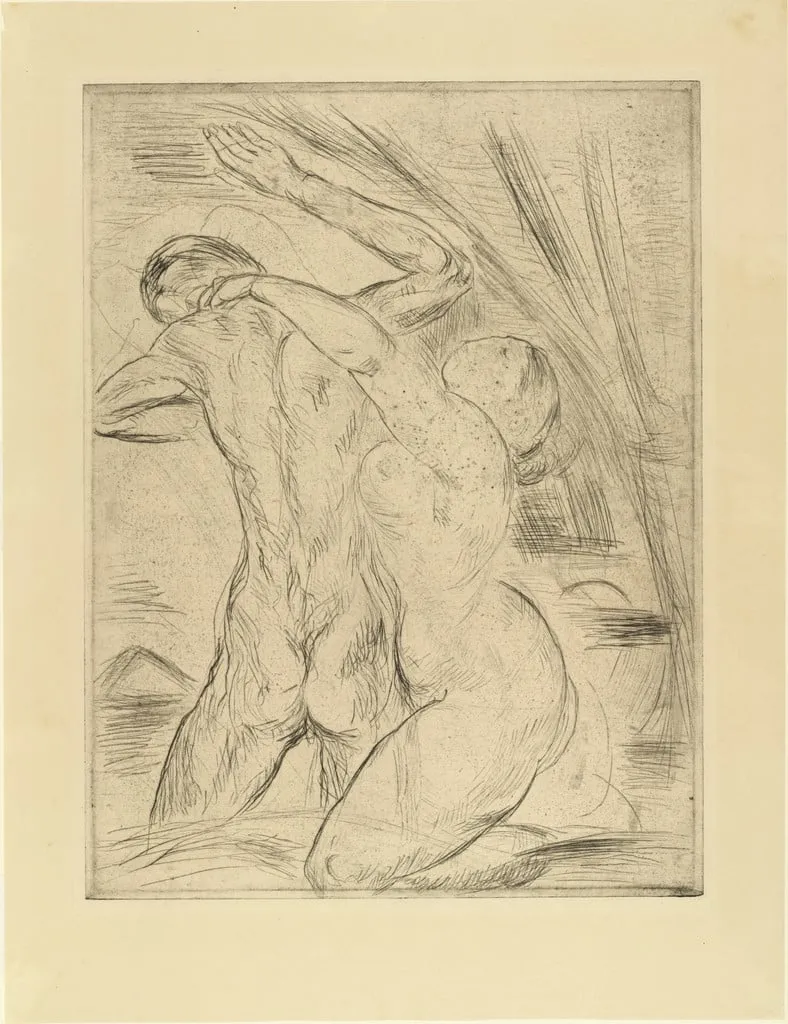
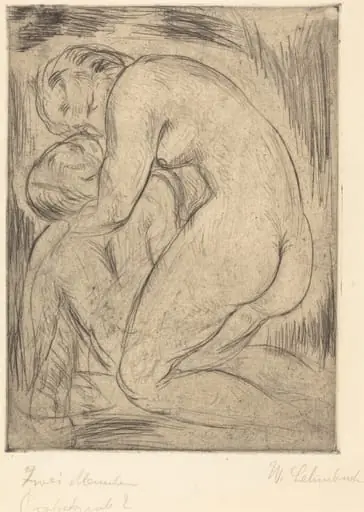
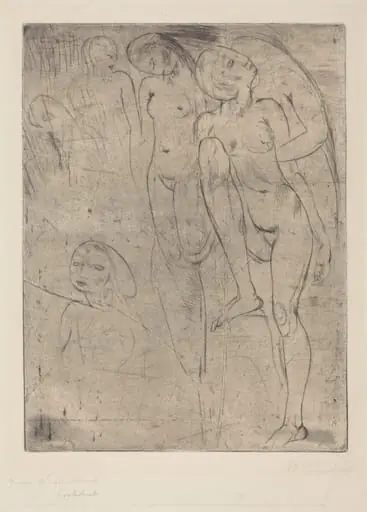
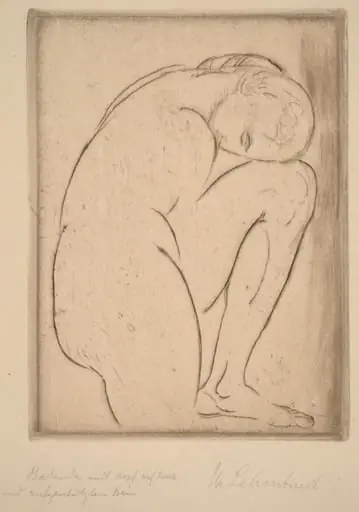
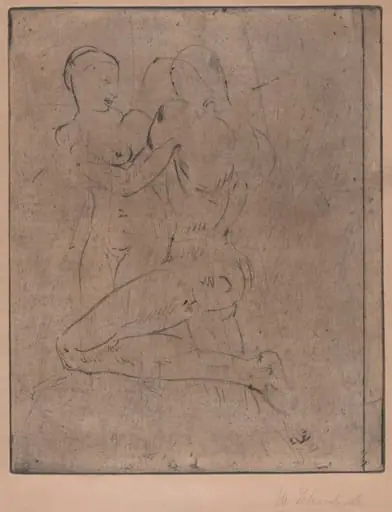
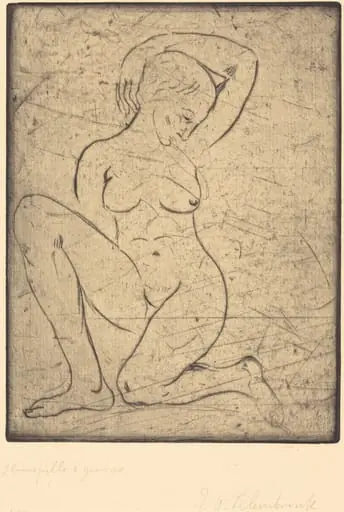
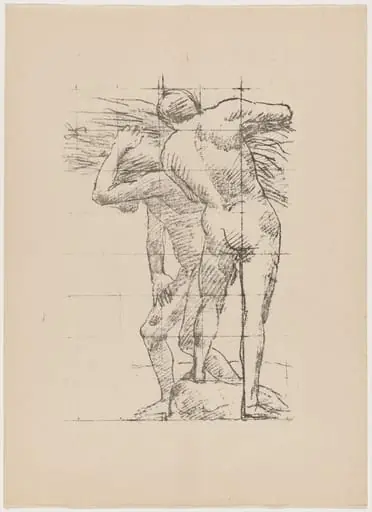
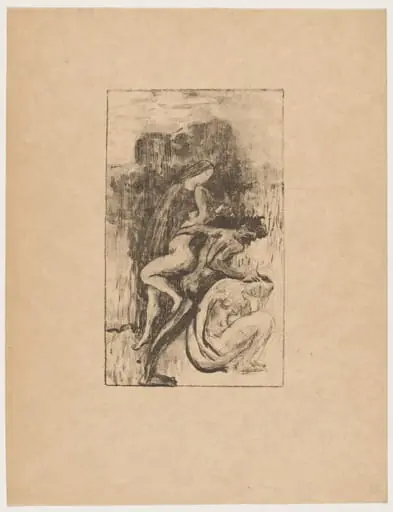
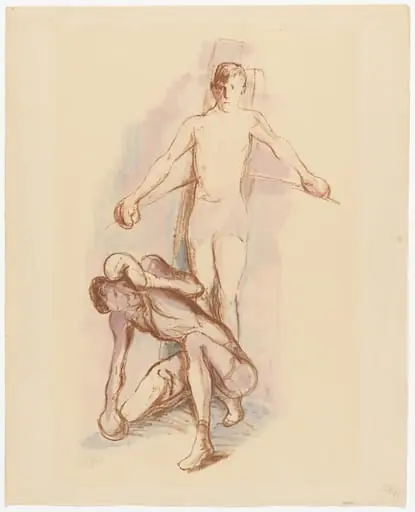
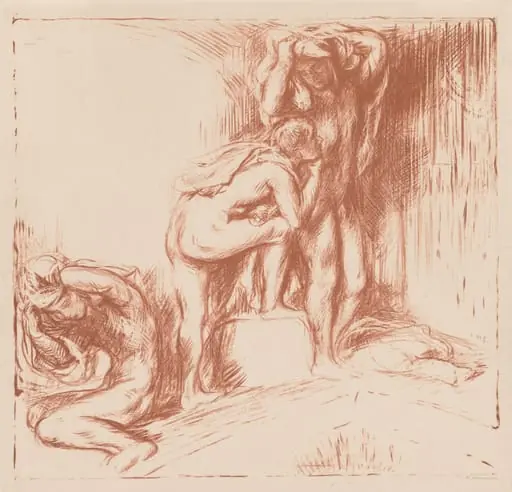
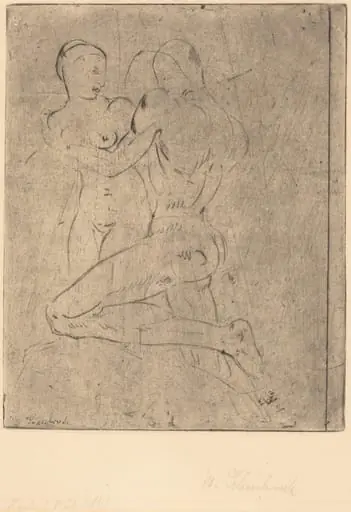
Untitled is an ink print by Wilhelm Lehmbruck. It dates from 1914 and is held in the collection of the Museum of Modern Art.
About this work
Look up the technique drypoint next—it’s how artists scratch lines into metal to make prints like this.
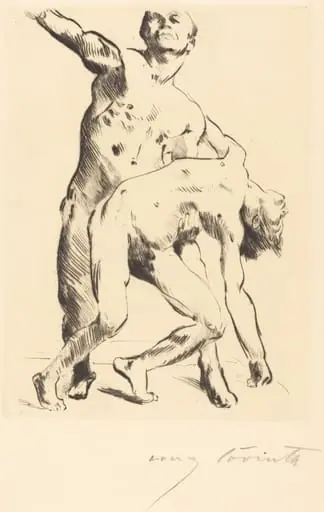
You see a tall, thin figure bending forward, arms stretched out like they’re reaching or falling. The lines are scratchy and light, as if drawn quickly with a needle.
Lehmbruck made this in 1914, the year World War I started. The body looks fragile, almost melting—nothing like the strong heroes in older art. It feels private, like a moment of doubt or pain.
Look up the technique drypoint next—it’s how artists scratch lines into metal to make prints like this.
Overview
Created in 1914, this etching and drypoint by Wilhelm Lehmbruck is a small-scale print that captures a solitary, elongated figure in a bent, vulnerable posture. Unlike monumental sculptures, the work operates on an intimate scale, using fine, irregular lines to convey physical and emotional tension. The medium’s inherent delicacy aligns with the figure’s fragile presence, reflecting Lehmbruck’s shift toward introspective expression during a period of personal and global upheaval.
Subject & Meaning
The figure, slender and hunched, appears to be in motion—either reaching outward or collapsing inward. Its lack of defined features and ambiguous gesture resists narrative closure, suggesting inner turmoil rather than external action. This ambiguity reflects Lehmbruck’s interest in psychological states over idealized forms. The posture evokes isolation and exhaustion, resonating with the anxieties of pre-war Europe and the artist’s own contemplative temperament.
Technique & Style
Lehmbruck employed drypoint to scratch lines directly into a metal plate, creating soft, fuzzy edges that blur with ink. Combined with etching, the result is a texture of fine, uneven strokes that mimic the fragility of the subject. The lines are sparse and hesitant, avoiding bold contours. This restrained technique emphasizes impermanence and emotional weight over clarity, distinguishing the work from more polished academic prints of the era.
History & Provenance
Made in 1914, the print emerged during a pivotal year as Europe edged toward war. Lehmbruck, then based in Berlin, was increasingly drawn to introspective themes, moving away from public monuments toward private, psychological studies. The work was likely produced in his studio as part of a series of prints exploring the human condition. Its early circulation among artists and collectors helped establish his reputation beyond sculpture.
Context
In 1914, European art was shifting from naturalism toward emotional expression. Lehmbruck’s print aligns with broader trends in German Expressionism, where form was distorted to convey inner experience. Unlike heroic or idealized figures in 19th-century art, his subject is diminished, vulnerable—reflecting a cultural mood of uncertainty. The print’s quiet intensity contrasts with the grand narratives dominating public art at the time.
Legacy
Though less known than his sculptures, this print exemplifies Lehmbruck’s ability to translate emotional depth into graphic form. It influenced later printmakers who sought to convey psychological states through minimal, tactile mark-making. Its understated power contributed to the recognition of printmaking as a legitimate medium for serious artistic inquiry in early 20th-century Germany.
Artist & collection
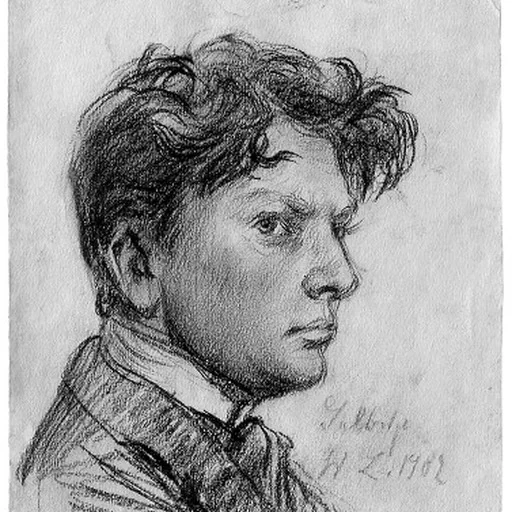
Artist
Wilhelm Lehmbruck (4 January 1881 – 25 March 1919) was a German sculptor. One of the most important of his generation, he was influenced by realism and expressionism.