Artwork
Sainte Agnès
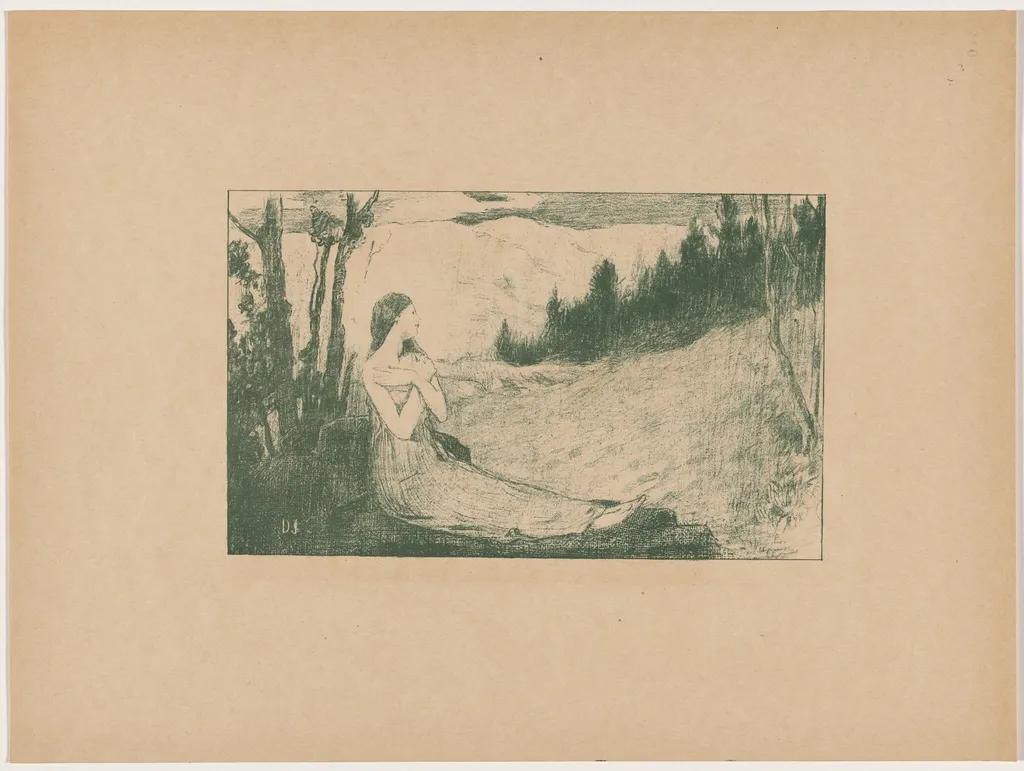
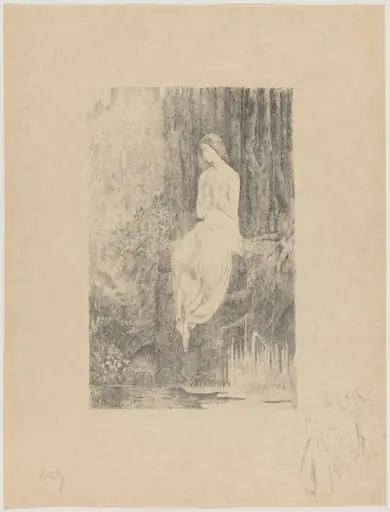
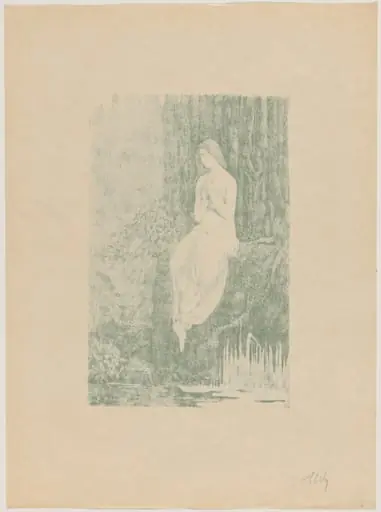
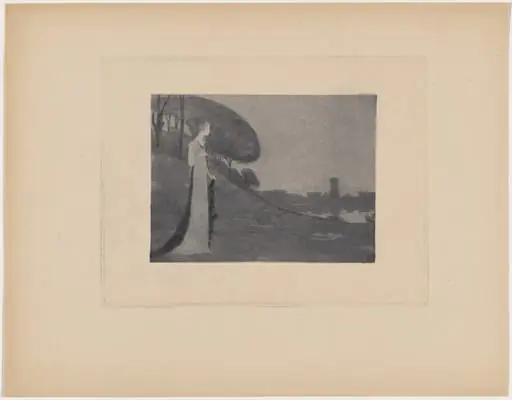
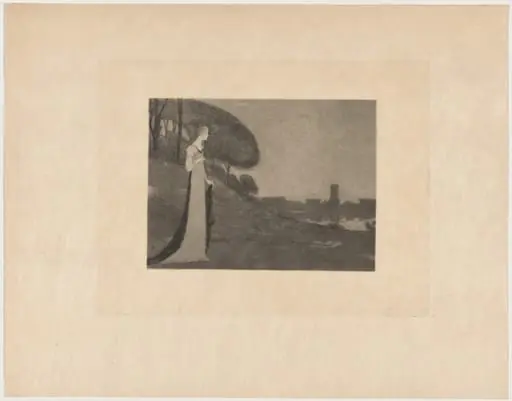
Sainte Agnès is an ink print by the Impressionist artist Jean Danguy. It dates from 1895 and is held in the collection of the National Gallery of Art.
About this work
Overview
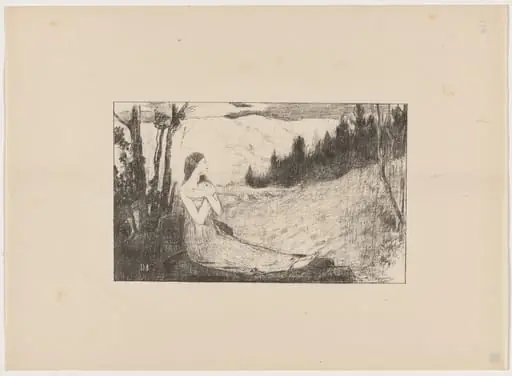
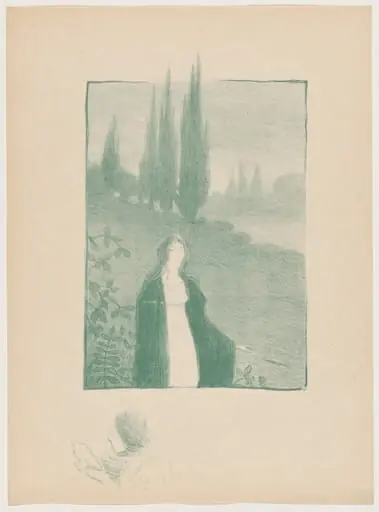
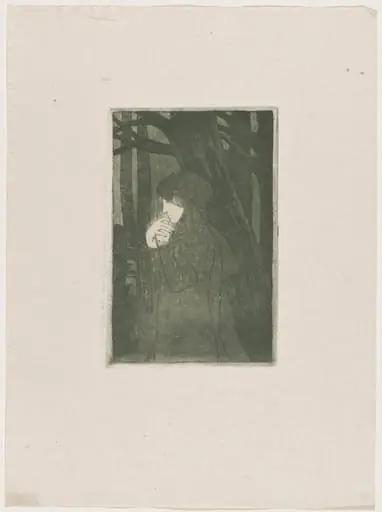
Jean Danguy’s 1895 lithograph titled Sainte Agnès presents a solitary female figure seated against a tree trunk. Rendered in green on calendared wove paper, the print captures a quiet moment in a gently rolling countryside, where foliage and distant hills frame the composition.
Subject & Meaning
The central figure, a woman in a flowing, long dress, rests with her back to the tree, her gaze turned toward the right. Her relaxed posture and the surrounding natural setting suggest a mood of introspection, inviting viewers to contemplate the relationship between the individual and the landscape.
Technique & Style
Executed as a lithograph, Danguy employs a limited green palette that unifies the scene and emphasizes atmospheric calm. The handling of line and tone reflects a blend of Impressionist sensitivity to light and Realist attention to detail, particularly in the rendering of foliage and the figure’s drapery.
History & Provenance
Created in 1895, Sainte Agnès is among Danguy’s early prints, produced during a period when French lithographers were exploring color processes on wove paper. The work has remained in private collections, with documented exhibition records dating from the early 20th century.
Context
The print emerges at a time when French art was negotiating the legacy of Impressionism while embracing Realist concerns for everyday subjects. Danguy’s choice of a solitary, contemplative figure set within a natural environment aligns with contemporary interests in depicting quiet, personal moments within the broader landscape.
Artist & collection