Artwork
Young Anglers
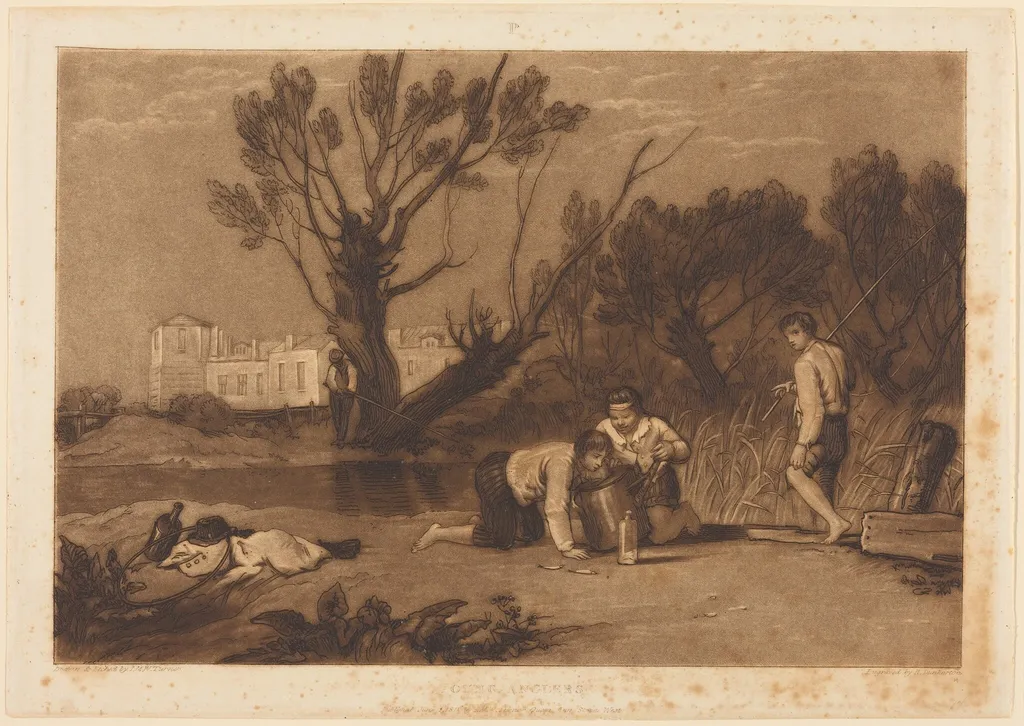
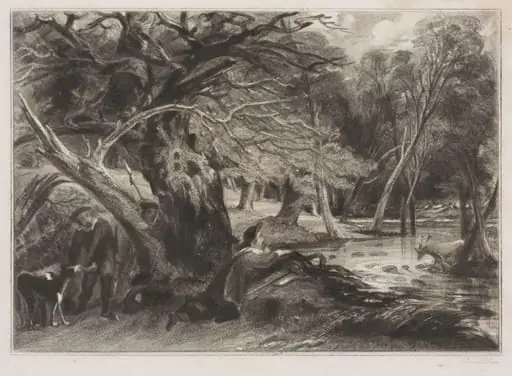
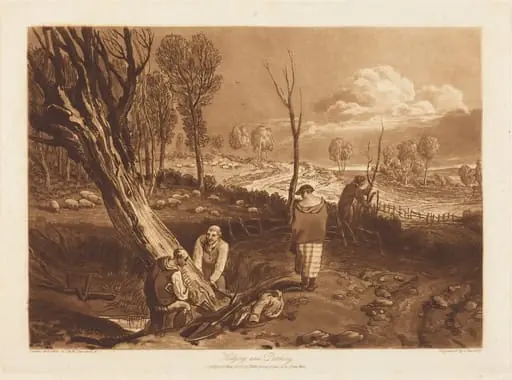
Young Anglers is an ink print by the Romanticist artist Robert Dunkarton. It dates from 1811 and is held in the collection of the National Gallery of Art.
About this work
Overview
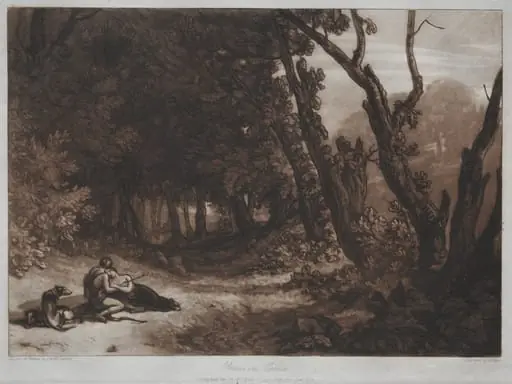
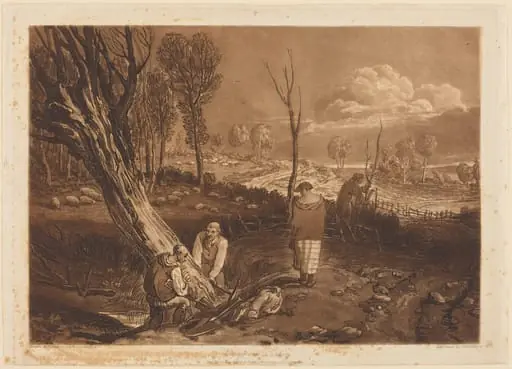
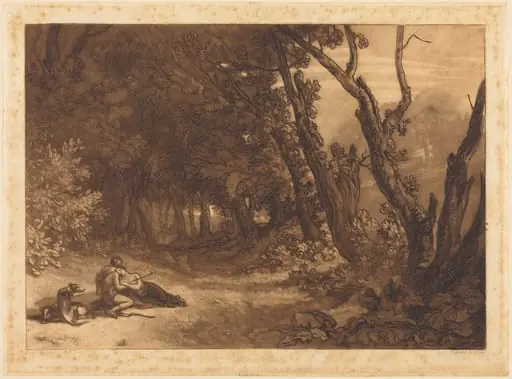
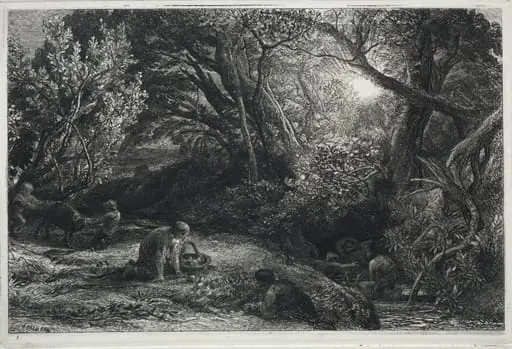
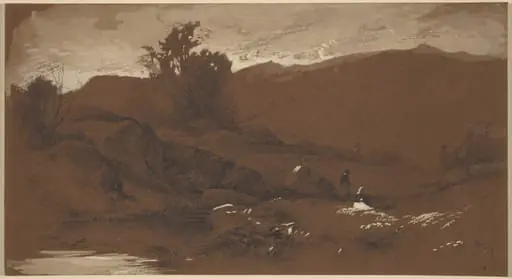
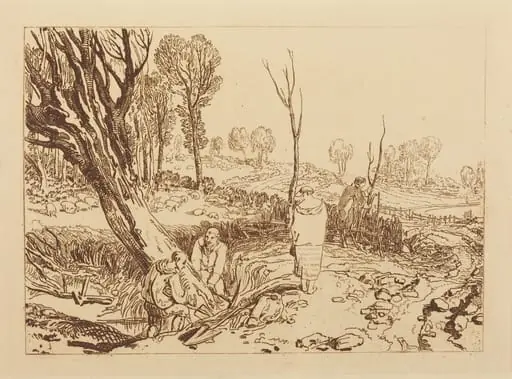
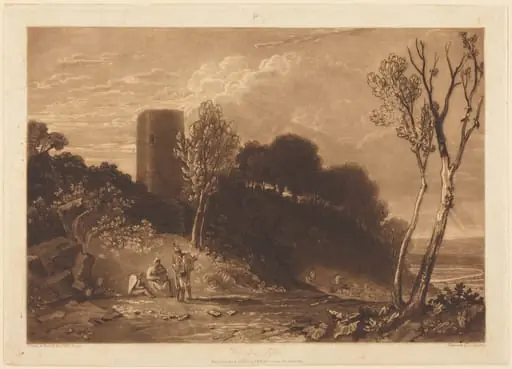
Created in 1811 by English engraver Robert Dunkarton, *Young Anglers* is a print combining etching and mezzotint techniques. Dunkarton, trained under the landscape engraver Pether, specialized in detailed reproductive prints. This work captures a quiet rural scene with three boys at a river’s edge, rendered through subtle tonal gradations that emphasize naturalism over dramatic effect.
Subject & Meaning
The title, *Young Anglers*, frames the activity as a gentle pastime, suggesting an idealized view of rural youth and the quiet rhythms of outdoor life.
The print portrays three boys engaged in leisure by a riverbank: one kneels with a fishing rod, another stands holding a stick, and a third reclines on the grass. The scene evokes an unremarkable moment of childhood repose, free from narrative tension. The title, *Young Anglers*, frames the activity as a gentle pastime, suggesting an idealized view of rural youth and the quiet rhythms of outdoor life.
Technique & Style
Dunkarton employed mezzotint to achieve rich, velvety shadows and smooth transitions of light, complemented by fine etched lines for detail. The technique allowed him to model the boys’ forms and the texture of grass and bark with tactile realism. The background, softened by atmospheric shading, recedes into a distant hillside with a house and outbuildings, enhancing depth without distraction.
History & Provenance
Robert Dunkarton, born in London in 1744, worked primarily as a reproductive engraver, translating paintings into prints for wider circulation. *Young Anglers* was produced late in his career, reflecting his mature command of tonal engraving. Though no specific original painting is known to have inspired it, the composition aligns with popular 18th-century genre scenes favored by print publishers of the period.
Context
In early 19th-century England, prints like this catered to a growing middle-class audience seeking accessible images of domestic and rural life. The emphasis on innocence, nature, and quiet labor mirrored broader cultural values. Dunkarton’s work, though not avant-garde, contributed to a visual language that celebrated everyday moments, distinct from grand historical or mythological subjects.
Legacy
Dunkarton’s prints, including *Young Anglers*, remain as records of engraving practices before the rise of lithography. His careful rendering of light and texture influenced later reproductive artists, though his name is less remembered today. The print endures as a modest but well-executed example of how printmakers translated the aesthetics of rural life for domestic consumption.
Artist & collection

Artist
Robert Dunkarton (1744 – c. January 1815) was an English mezzotint engraver. He was born in London and was a pupil of Pether, and painted a few portraits, some of which, as also some portraits in crayons, were exhibited…