Artwork
Hedging and Ditching
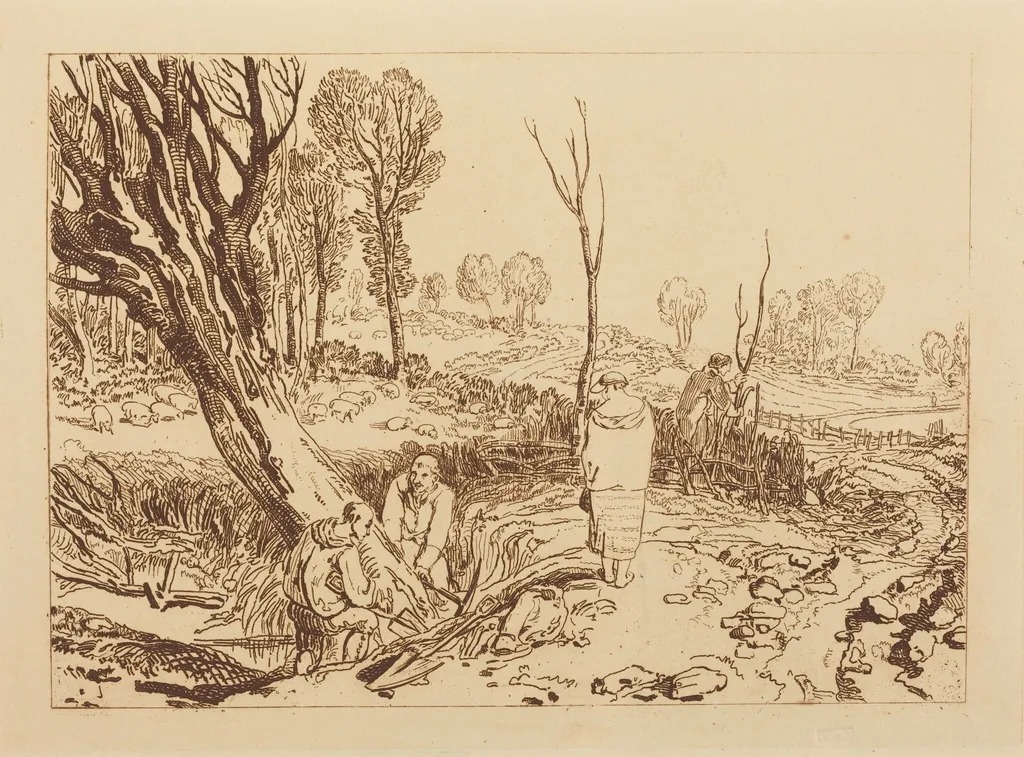
Hedging and Ditching is an ink print by the Romanticist artist Joseph Mallord William Turner. It dates from 1812 and is held in the collection of the National Gallery of Art.
About this work
Overview
The composition centers on figures engaged in land maintenance, framed by dense vegetation and a winding waterway.
Hedging and Ditching is an 1812 etching by J.M.W. Turner, capturing a rural English landscape in meticulous detail. Unlike his later atmospheric watercolors, this work emphasizes texture and labor through fine, incised lines. The composition centers on figures engaged in land maintenance, framed by dense vegetation and a winding waterway. The print reflects Turner’s early interest in documenting everyday rural activity with precision.
Subject & Meaning
The scene depicts agricultural labor—two individuals tending a boundary fence, one holding a tool, another resting on the grass. Distant figures suggest communal work, reinforcing the theme of land stewardship. The tangled trees and uneven terrain convey the physical effort required to shape the countryside. No idealization is present; the focus is on the quiet, unglamorous work that sustained rural life.
Technique & Style
Turner employed etching to render complex textures: bark, foliage, and earth are suggested through dense, angular lines and cross-hatching. The acid-bitten plate creates sharp contrasts between light and shadow, enhancing the tactile quality of the scene. Unlike smooth painterly effects, the print’s scratchy surface mirrors the roughness of the landscape, emphasizing the hand of the artist and the materiality of the medium.
History & Provenance
Created in 1812, the print was likely made for inclusion in Turner’s series of landscape studies, possibly intended for publication or private circulation. It remained in private hands until entering institutional collections in the 20th century. Its survival reflects its value as a document of Turner’s graphic practice, distinct from his more celebrated oil paintings.
Context
In early 19th-century England, land enclosure and agricultural reform were reshaping the countryside. Turner’s etching captures a moment of manual labor that was becoming increasingly rare. The work aligns with contemporary topographical prints but diverges in its expressive line work, hinting at the artist’s evolving sensitivity to nature’s raw structure over idealized scenery.
Legacy
Hedging and Ditching stands as an early example of Turner’s commitment to observing the natural world with unembellished attention. While overshadowed by his later luminous landscapes, this print reveals his foundational skill in graphic media and his interest in the human relationship to land. It remains a quiet testament to the labor embedded in the English countryside.
Artist & collection
Artist
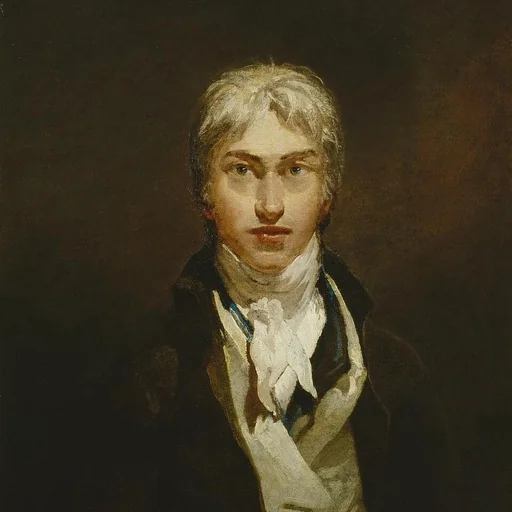
Joseph Mallord William Turner was born in 1775 at Maiden Lane, Covent Garden, where his father kept a barber and wig-making shop.

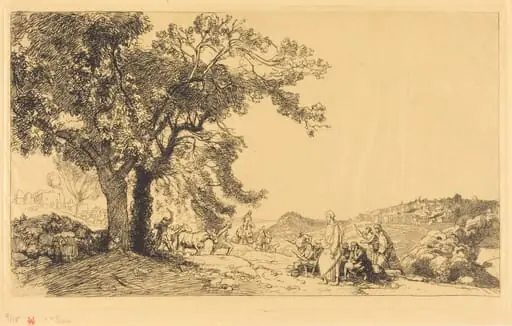 Le Christ au matin de rameaux
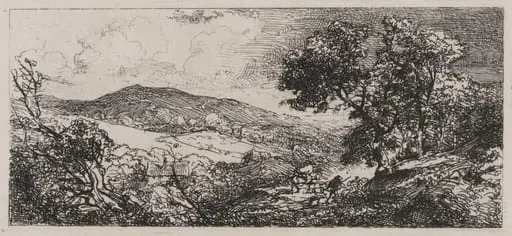 Valley View, Man with a Donkey and a Dog
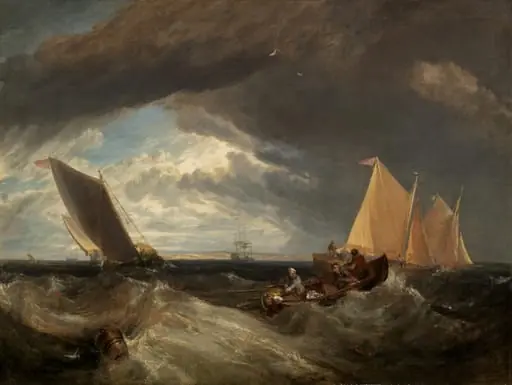
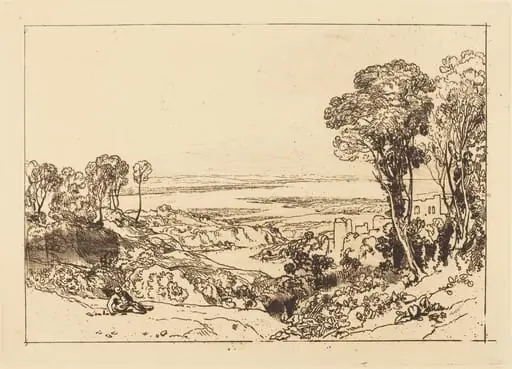 Junction of Severn and Wye
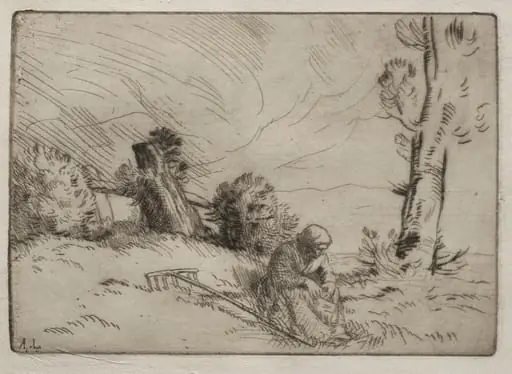 Peasant Woman Seated near a Hedge
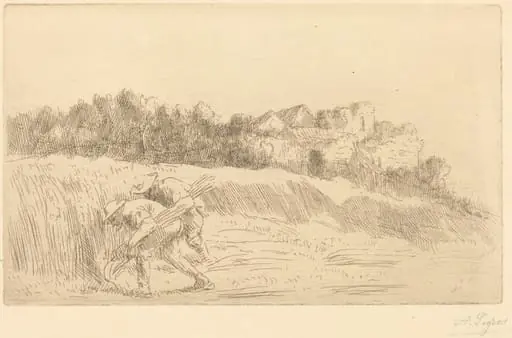 Harvesters (Les moissoneurs)
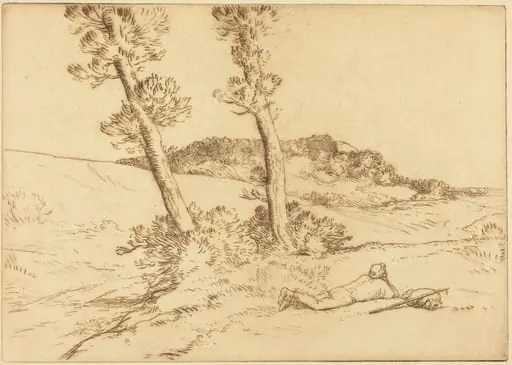 Traveler Reclining on the Grass (Le voyageur etendu sur le gazon)
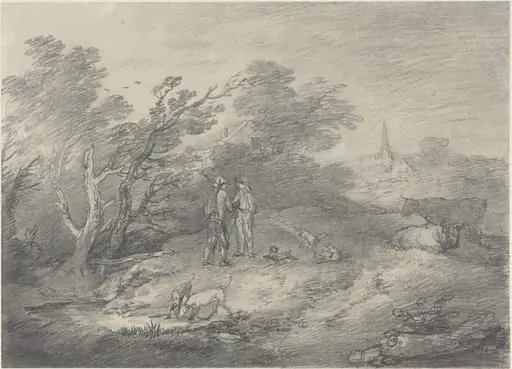 Woods Near a Village with Rabbit Catchers and Their Greyhounds
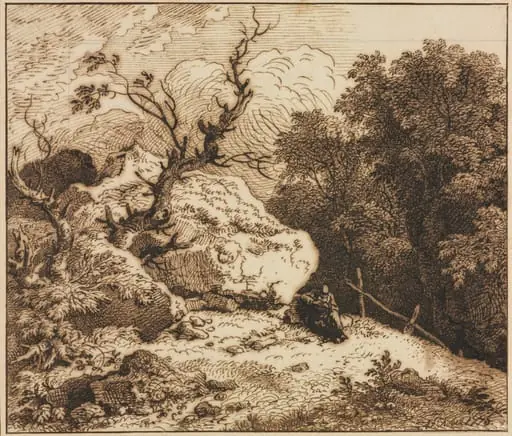 Hermit in a Wooded Landscape
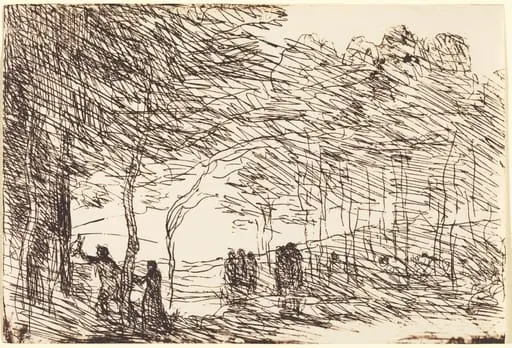 Orpheus Leading Eurydice (Orphee entrainant Eurydice)
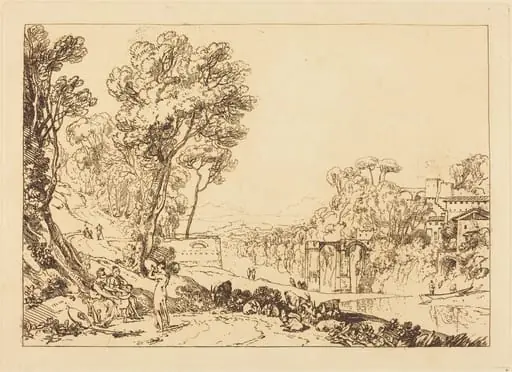 The Woman and Tambourine
 Jason
Jason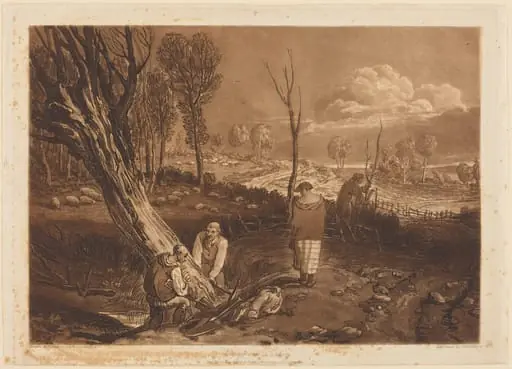 Hedging and Ditching