Artwork
View at Alençon (Vue prise à Alençon)
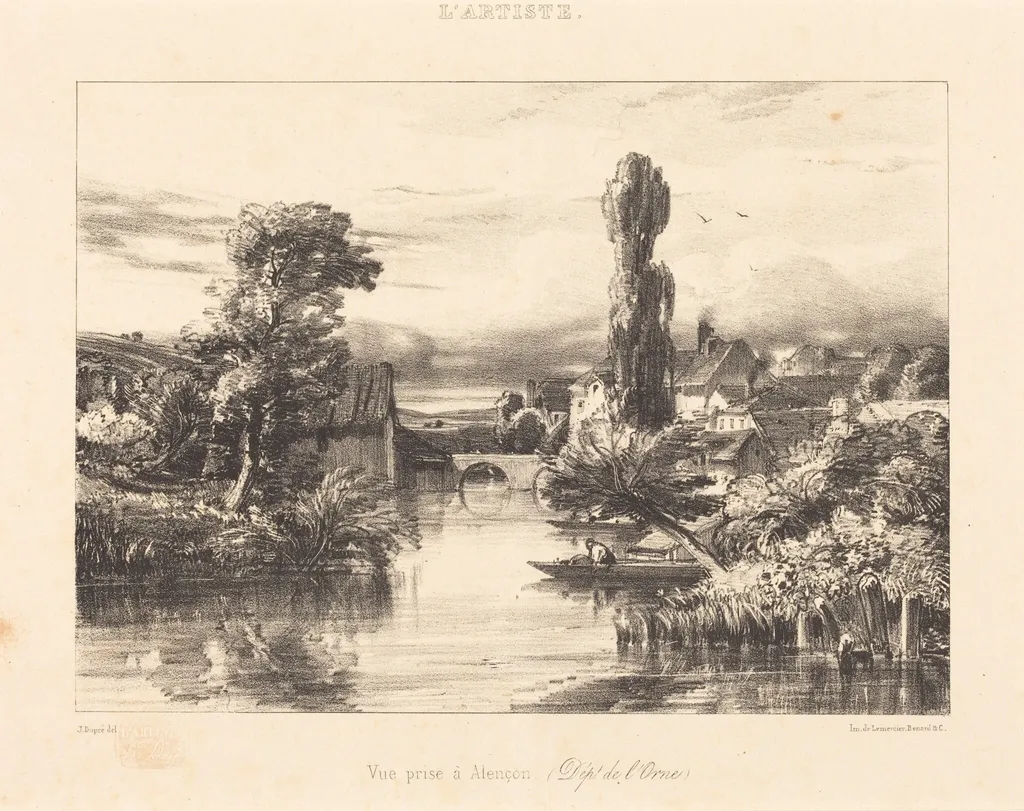
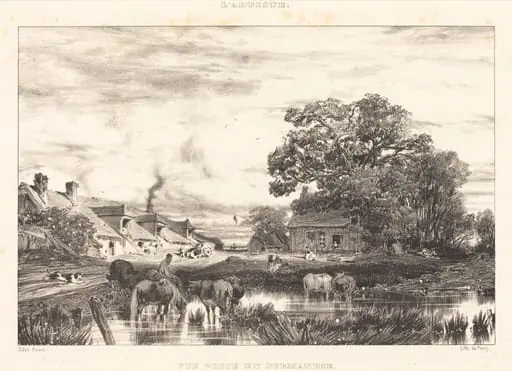
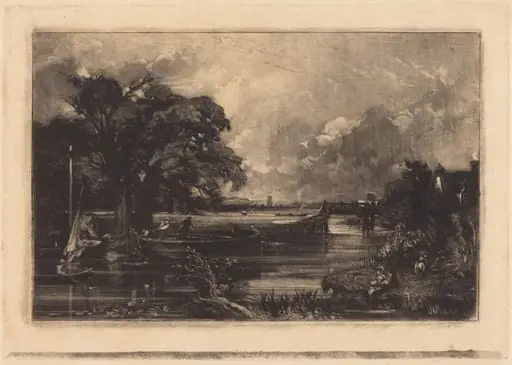
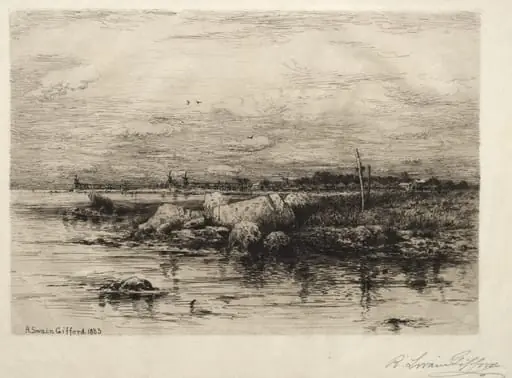
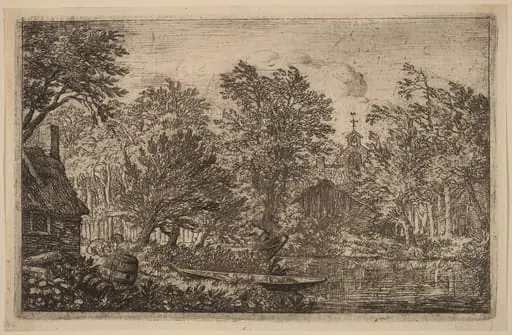
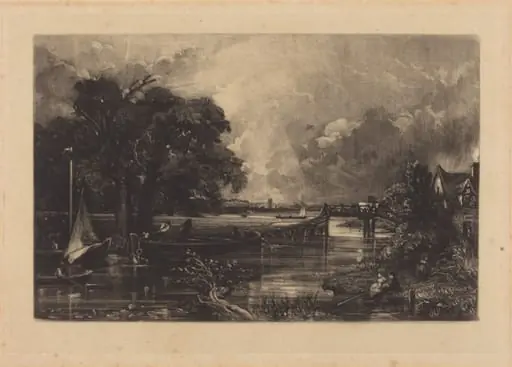
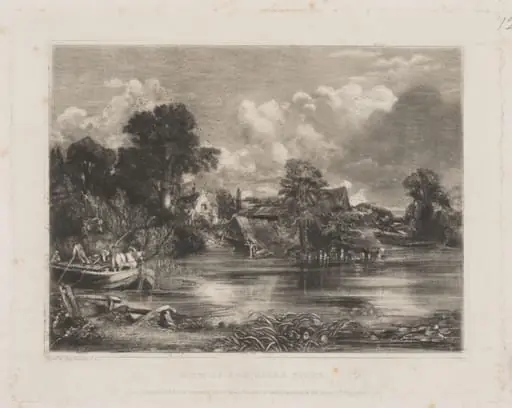
View at Alençon (Vue prise à Alençon) is an ink print by the Romanticist artist Jules Dupré. It dates from 1839 and is held in the collection of the National Gallery of Art.
About this work
Overview
Unlike polished studio works, this piece conveys the quiet atmosphere of a fleeting moment outdoors.
View at Alençon is a lithograph by Jules Dupré, dated 1839. It captures a tranquil riverside landscape near the Norman town of Alençon. The print reflects Dupré’s interest in naturalistic observation, rendered through the medium of lithography, which allowed for subtle tonal variations and a sense of immediacy. Unlike polished studio works, this piece conveys the quiet atmosphere of a fleeting moment outdoors.
Subject & Meaning
The scene depicts a quiet stretch of river bordered by trees in varying states of leafing, a modest bridge in the distance, and scattered dwellings partially hidden by foliage. A single boat rests beneath a weeping willow, emphasizing solitude and stillness. The title confirms the location as a real, unidealized place, suggesting the artist valued authenticity over romanticized scenery, aligning with emerging realist tendencies in landscape depiction.
Technique & Style
Dupré employed lithography to achieve a sketchlike quality, using loose, fluid lines and varied ink tones to suggest light and texture rather than define form precisely. The absence of sharp detail invites the viewer to perceive the scene as an impression of atmosphere—wind through branches, the glint of water, the softness of early spring. This approach prioritizes mood over topographical accuracy, reflecting a shift toward expressive landscape rendering.
History & Provenance
Created in 1839, the print emerged during Dupré’s early engagement with the Barbizon circle, though he was not yet based in Barbizon itself. It was likely produced as part of a series documenting regional French landscapes, intended for dissemination among collectors and artists interested in contemporary naturalism. Its survival in museum collections attests to its role in documenting the evolution of 19th-century printmaking beyond pure illustration.
Context
In the late 1830s, French artists increasingly turned to rural scenes as subjects worthy of serious attention, moving away from historical or mythological themes. Dupré’s work aligned with this trend, influenced by the growing appreciation for direct observation of nature. Lithography, then gaining popularity as a reproductive and original medium, enabled artists like him to distribute intimate, personal views widely, contributing to a broader cultural interest in landscape as a subject in its own right.
Legacy
View at Alençon exemplifies Dupré’s contribution to the transition from academic landscape traditions toward more spontaneous, nature-centered approaches. Its emphasis on atmosphere and modest subject matter prefigured the Barbizon School’s ethos. Though not widely known outside specialized circles, the print remains a quiet testament to the growing legitimacy of landscape as a vehicle for personal expression in 19th-century French art.
Artist & collection