Artwork
The Mouth of the Apponigansett
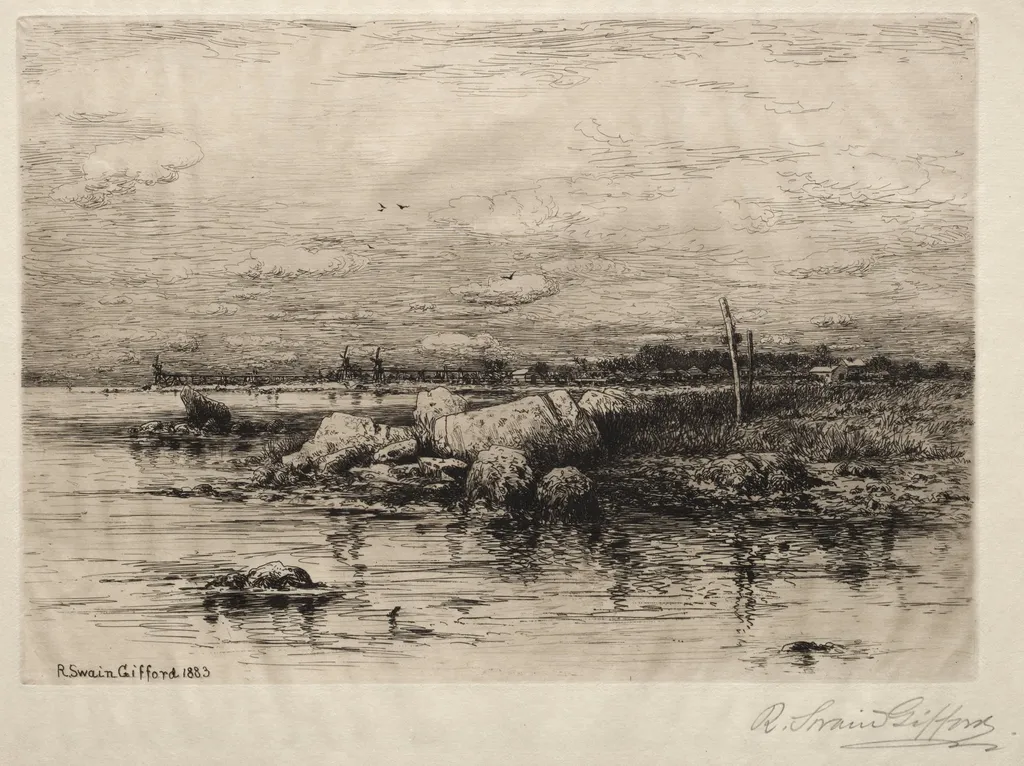
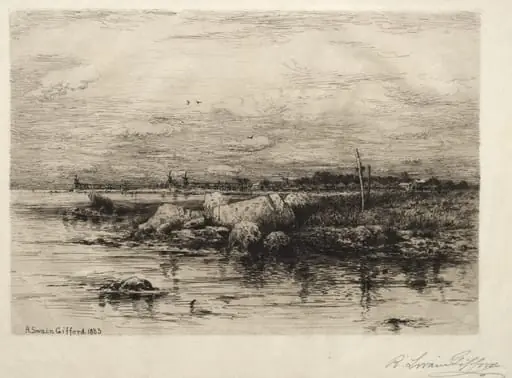
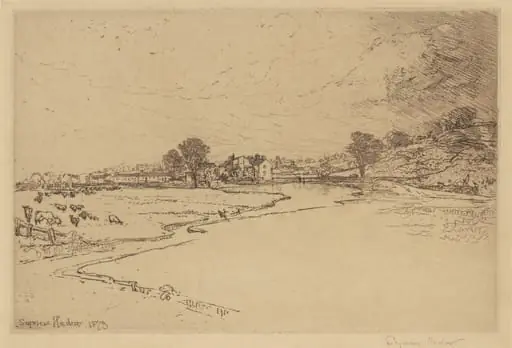
The Mouth of the Apponigansett is a print by the Impressionist artist Robert Swain Gifford. It dates from 1883 and is held in the collection of the Cleveland Museum of Art.
About this work
The artist focused on how light hits the water and plants, making everything look soft and natural.
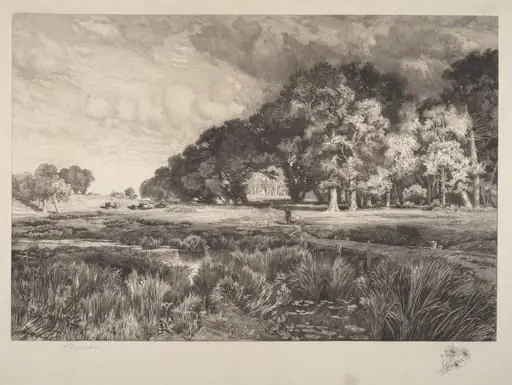
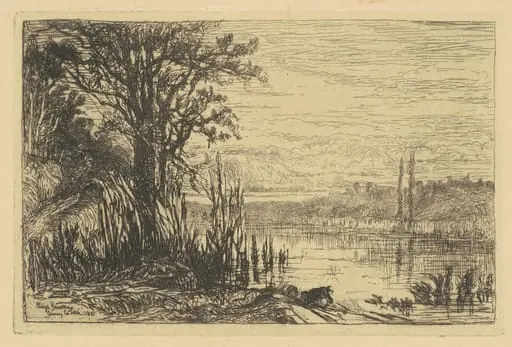
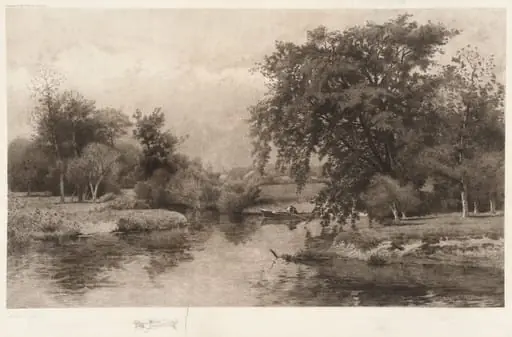
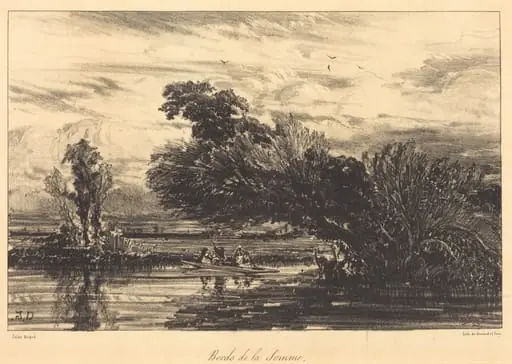
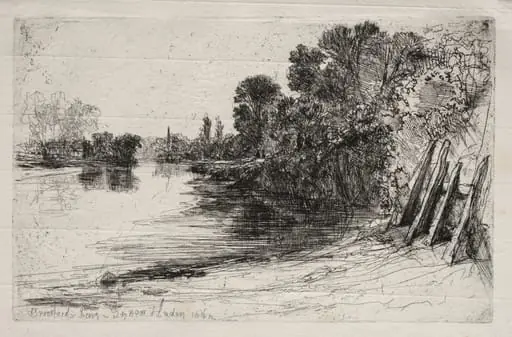
This sketch shows a quiet river meeting a grassy bank. The water is full of tiny lines to mimic ripples, and a few rocks stick out near the shore. A small boat sits in the distance, almost hidden by the reeds.
The artist focused on how light hits the water and plants, making everything look soft and natural. The signature says it’s from 1883.
Next, check out Impressionism to see how artists used light in similar ways.
Overview
Robert Swain Gifford produced *The Mouth of the Apponigansett* in 1883 as a landscape print reflecting his engagement with the Barbizon school’s emphasis on quiet, observed nature. A member of the Society of American Artists, Gifford favored unidealized scenes of the American coast, focusing on subtle atmospheric effects rather than dramatic narrative. This work captures a tranquil estuary where freshwater meets tidal waters, rendered with restrained detail and a sensitivity to natural light.
Subject & Meaning
The scene depicts the quiet convergence of a river and its marshy shoreline, with reeds, scattered rocks, and a barely visible boat suggesting human presence without intrusion. The composition avoids grandeur, instead honoring the understated rhythms of coastal ecology. The absence of figures or activity reinforces a contemplative tone, aligning with 19th-century American ideals of nature as a space for quiet reflection rather than conquest or spectacle.
Technique & Style
Gifford employed fine, delicate lines to suggest water movement and the texture of wet grasses, creating a sense of surface tension without heavy shading. The light is diffused, falling evenly across the scene to unify land, water, and sky in a muted tonal range. His approach prioritizes atmospheric cohesion over sharp definition, using etching or drypoint to achieve a soft, almost hazy quality that echoes the effects of natural daylight.
History & Provenance
Created in 1883, the print emerged during a period when American artists were increasingly turning to native landscapes as subjects worthy of serious artistic attention. Gifford, active in New York’s art circles, produced this work as part of a broader effort to establish a distinct American visual language. Its signature and date confirm its origin, though its early ownership history remains undocumented in public records.
Context
In the 1880s, American landscape art was shifting from romanticized vistas toward more intimate, observational modes. Gifford’s work aligned with contemporaries like George Inness and the Barbizon painters, who valued mood and light over detail. While European Impressionism was gaining traction, Gifford’s quieter approach offered a domestic counterpart—emphasizing stillness and subtlety rather than bold brushwork or color contrast.
Legacy
Gifford’s prints, including *The Mouth of the Apponigansett*, contributed to the acceptance of landscape as a legitimate genre in American printmaking. Though less widely known today, his work influenced later generations of regional artists who sought to capture the nuanced beauty of everyday natural environments. His restrained style remains a quiet counterpoint to the more flamboyant trends of his era.
Artist & collection

![Old Trees at Naushon Island [plate 2], by Robert Swain Gifford](https://artifactworldgallery.com/img/robert-swain-gifford--old-trees-at-naushon-island-plate-2--74282486ac5ae211-w320.webp)
![Near the Coast [large plate], by Robert Swain Gifford](https://artifactworldgallery.com/img/robert-swain-gifford--near-the-coast-large-plate--8d769538188085e0-w320.webp)