Artwork
Nicolas Coustou
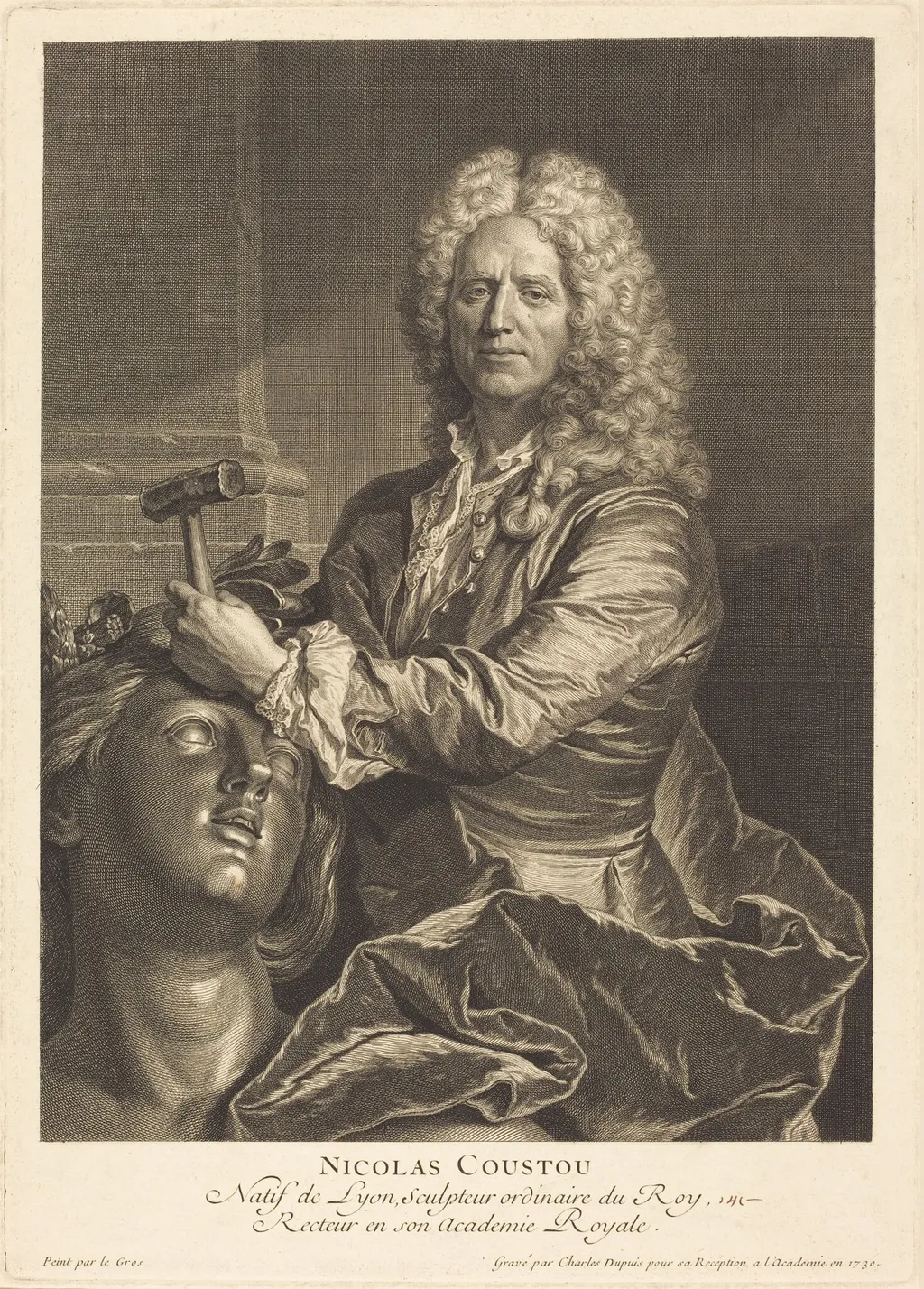
Nicolas Coustou is an ink print by the Baroque artist Charles Dupuis. It dates from 1730 and is held in the collection of the National Gallery of Art.
About this work
Overview
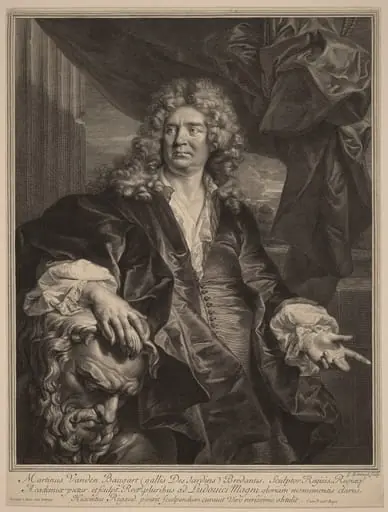
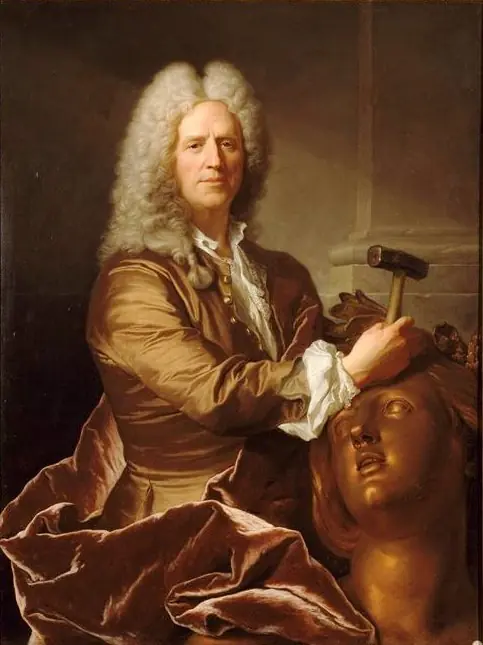
Created in 1730, this copperplate engraving by Charles Dupuis bears the title Nicolas Coustou. It presents a solitary figure, elegantly dressed in a velvet robe, holding a hammer that rests upon a classical statue positioned to his left. The composition is set against a dark background that subtly recedes, giving the scene a modest sense of depth.
Subject & Meaning
The central figure, likely a representation of the sculptor Nicolas Coustou, is depicted with long, curled hair and a direct gaze that engages the viewer. The hammer and the adjacent statue allude to the sculptor’s craft, juxtaposing the living artist with his finished work and emphasizing the relationship between creation and creator.
Technique & Style
Dupuis employed the fine line work characteristic of early 18th‑century French engraving, using delicate hatching to render the texture of the velvet robe and the chiaroscuro of the background. The contrast between the crisp outlines of the figure and the softer modeling of the statue demonstrates a controlled mastery of tonal variation within the medium.
History & Provenance
The print originates from the workshop of Charles Dupuis, a noted engraver active in Paris during the early 1700s. Produced in 1730, it would have been circulated among collectors interested in portraiture of prominent artists. Its survival in museum collections indicates its continued relevance as a documentary image of the celebrated sculptor.
Artist & collection