Artwork
Nicolas de Largillière
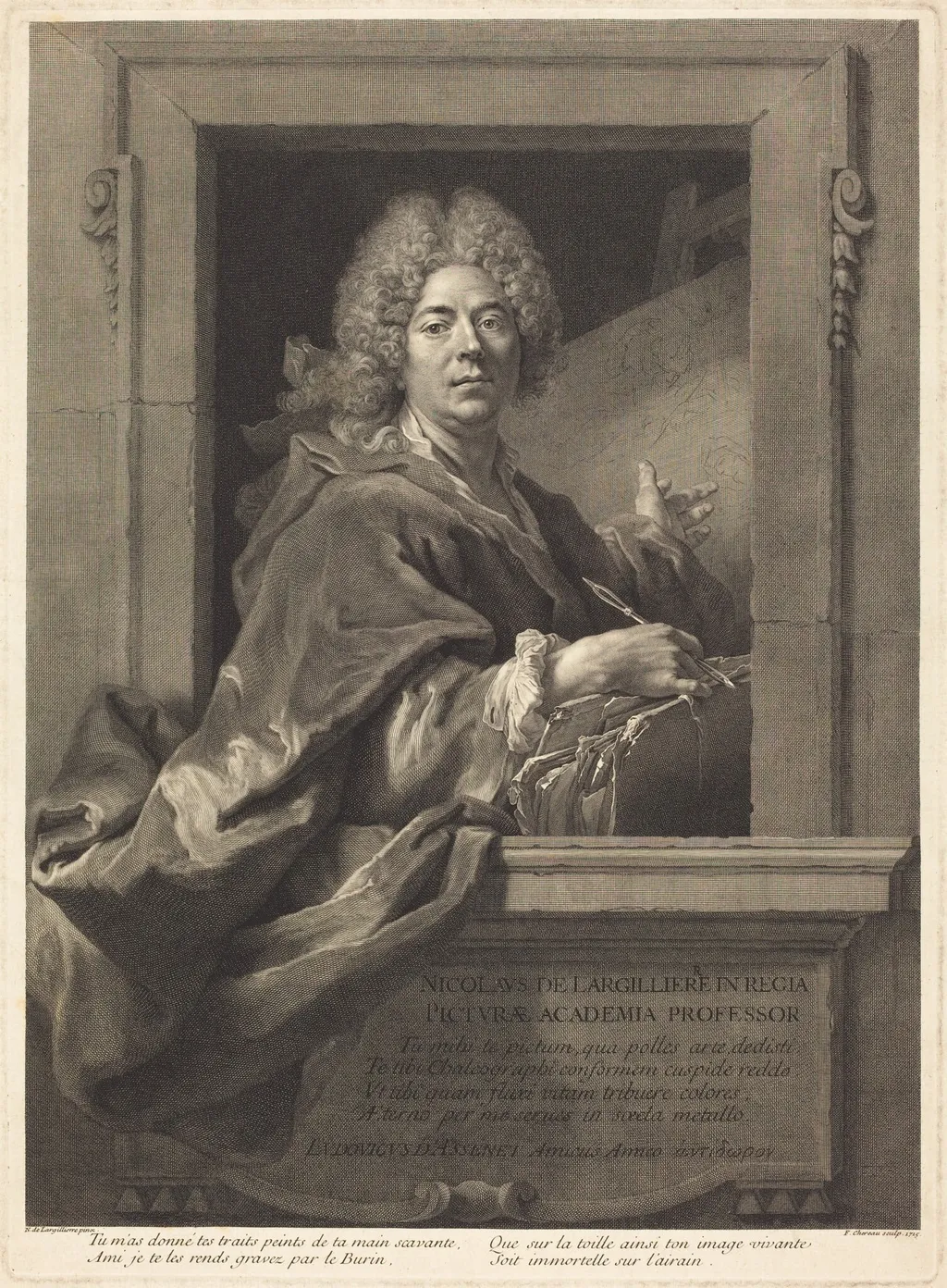
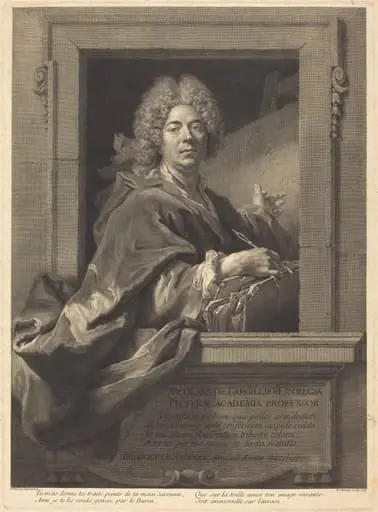
Nicolas de Largillière is an ink print by the Baroque artist François Chereau I. It dates from 1715 and is held in the collection of the National Gallery of Art.
About this work
Overview
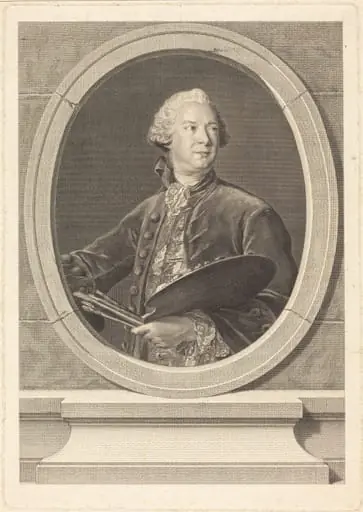
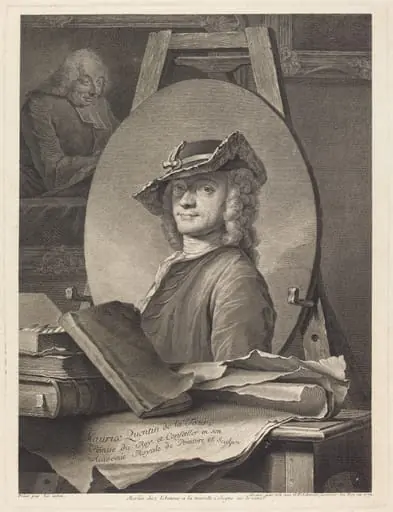
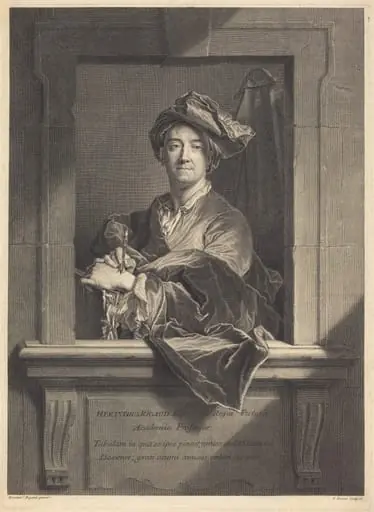
This 1715 engraving by François Chereau I depicts Nicolas de Largillière, a French painter and academician. Rendered in black and white on laid paper, the portrait follows the conventions of formal 18th-century printmaking. The image captures Largillière in a composed, frontal pose, framed within a simulated architectural space, with inscriptive text below identifying his professional role.
Subject & Meaning
His serious expression, formal attire, and the scroll he holds suggest scholarly engagement and professional identity.
The portrait presents Largillière as a man of intellectual and artistic authority. His serious expression, formal attire, and the scroll he holds suggest scholarly engagement and professional identity. The inscription beneath labels him a Professor of Painting, reinforcing his status within the Académie Royale. The composition avoids ornamentation, emphasizing dignity and institutional affiliation over personal flair.
Technique & Style
Executed in engraving, the work relies on fine, controlled lines to model form and texture. The wig’s curls, the fabric of the coat, and the ledge’s surface are rendered with precision typical of Chereau’s craftsmanship. The background suggests depth through subtle tonal gradations, while the text in elegant script integrates as a formal element, common in portrait prints of the period.
History & Provenance
Created in 1715, the print likely served to disseminate Largillière’s reputation beyond his paintings. François Chereau I was known for producing reproductive engravings of prominent artists, making this piece part of a broader effort to document and honor academic figures. Its survival in collections today reflects its role as a historical record of artistic institutional life in early 18th-century France.
Context
In early 18th-century France, the Académie Royale de Peinture et de Sculpture held significant cultural authority. Portraits of its professors were often circulated as prints to affirm their status and promote the institution. Largillière, a respected painter and member since 1686, was a natural subject. Such engravings reinforced hierarchies within the art world and connected academic prestige to visual representation.
Legacy
This engraving endures as a documentary artifact of artistic pedagogy and institutional identity. It offers insight into how academic figures were visually codified during the Ancien Régime. While not widely reproduced today, it remains a valuable reference for understanding the intersection of print culture, professional identity, and artistic authority in early modern France.
Artist & collection