Artwork
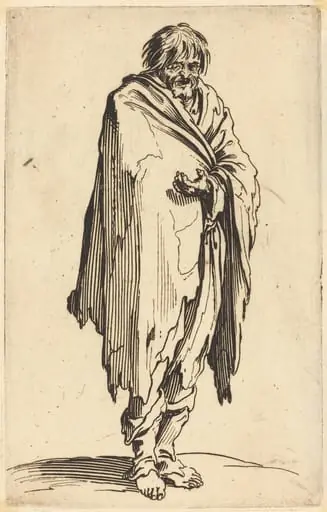
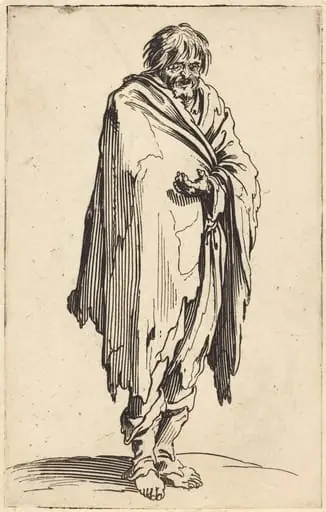
Beggar with His Left Hand Extended
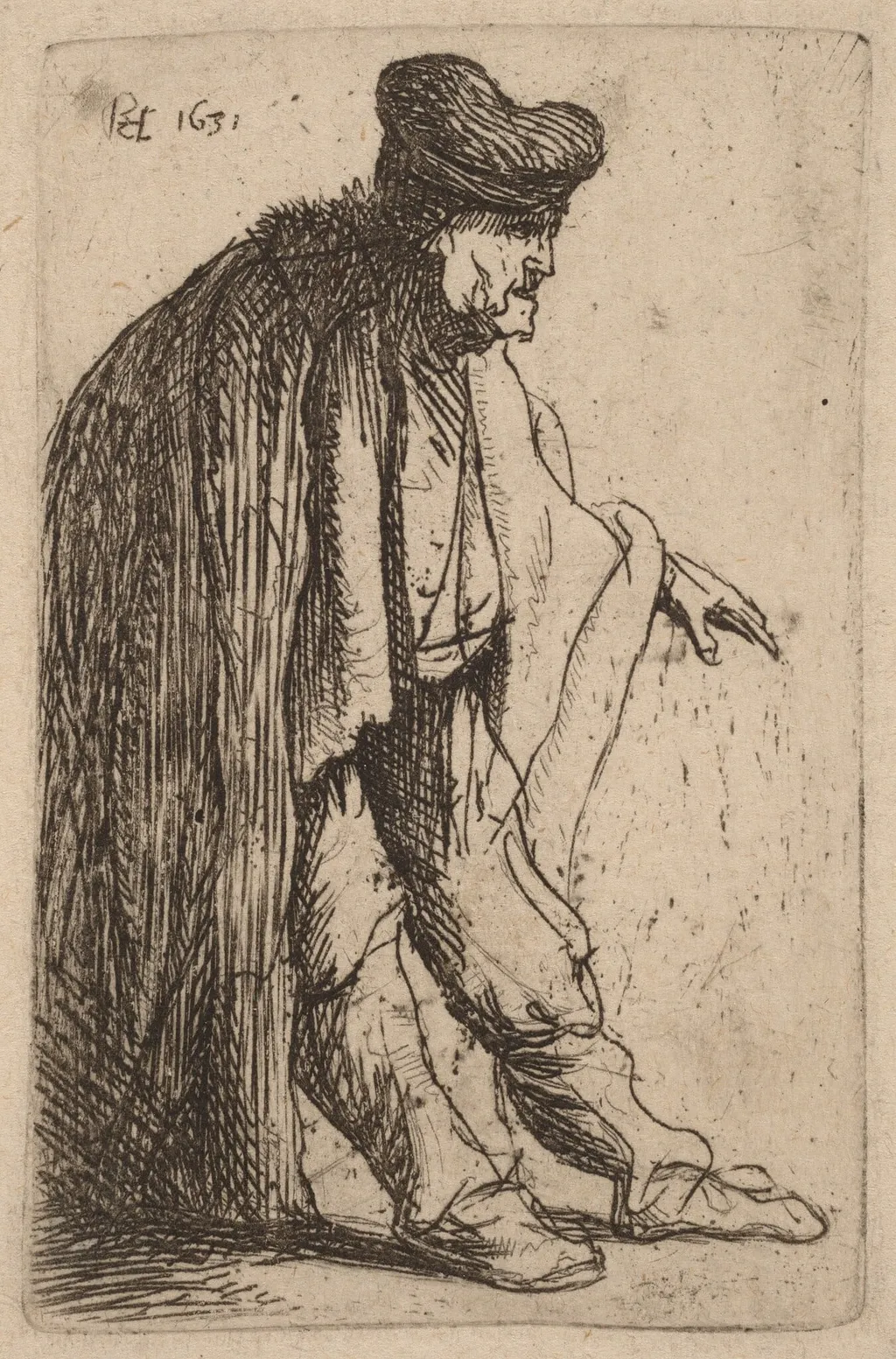
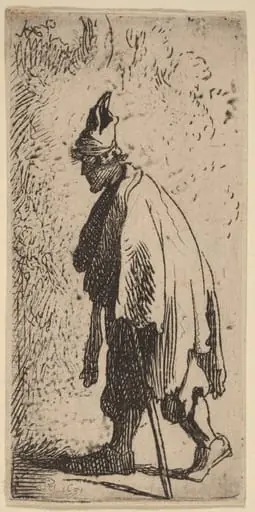
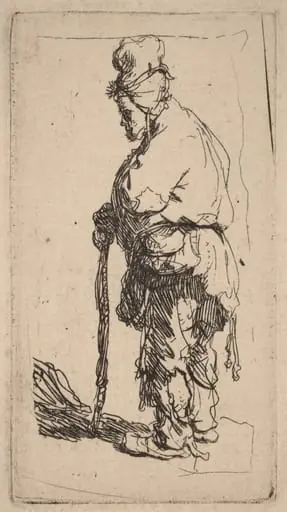
Beggar with His Left Hand Extended is an ink print by the Baroque artist Rembrandt. It dates from 1631 and is held in the collection of the National Gallery of Art.
About this work
Overview
As a print, it reflects Rembrandt’s interest in everyday subjects and the expressive potential of etching as a medium for spontaneous composition.
Created in 1631, this etching by Rembrandt van Rijn depicts a destitute figure in mid-stride, capturing a fleeting moment of urban life. Executed with rapid, incised lines, the work conveys immediacy and observation rather than idealization. The figure’s posture and attire suggest hardship, rendered without embellishment. As a print, it reflects Rembrandt’s interest in everyday subjects and the expressive potential of etching as a medium for spontaneous composition.
Subject & Meaning
The figure is a marginalized individual, dressed in tattered garments and leaning on a staff, his left hand extended in a gesture of supplication. There is no narrative context—no architecture, no companions—only the solitary presence of poverty. The lack of facial detail universalizes the figure, inviting contemplation of human vulnerability rather than identification with a specific person. The image resists sentimentality, presenting destitution with quiet dignity.
Technique & Style
Rembrandt employed etching with loose, energetic lines, using a needle to scratch directly into a wax-coated copper plate. The rough, irregular strokes mimic the texture of worn fabric and the uneven gait of the figure. Areas of deep shadow contrast with sparse, open lines, creating depth without detail. The technique prioritizes emotional resonance over precision, aligning with Rembrandt’s broader interest in capturing transient human states through direct, unpolished mark-making.
History & Provenance
The print was made during Rembrandt’s early years in Amsterdam, a period when he increasingly turned to secular and humble subjects. It circulated among collectors and artists, valued for its raw observation. While no single early ownership record is definitive, the work appears in several 17th-century print collections and was later included in major catalogues raisonnés. Its survival in multiple impressions suggests it was reproduced and disseminated during Rembrandt’s lifetime.
Context
In early 17th-century Amsterdam, urban poverty was visible and widespread, and artists began depicting ordinary people with greater attention. Rembrandt’s engagement with beggars, laborers, and the elderly reflected a broader cultural shift toward realism in Dutch art. Unlike religious or mythological scenes, this etching offers no moral lesson—only a direct encounter with a marginalized individual, consistent with the city’s growing interest in human experience beyond the elite.
Legacy
This etching exemplifies Rembrandt’s influence on the depiction of everyday life in printmaking. Its unvarnished portrayal of hardship inspired later artists to explore similar themes with psychological depth. The work remains a key reference in studies of 17th-century print techniques and social observation in art. It stands as a quiet testament to the artist’s commitment to seeing and recording the unseen corners of society.
Artist & collection
Artist
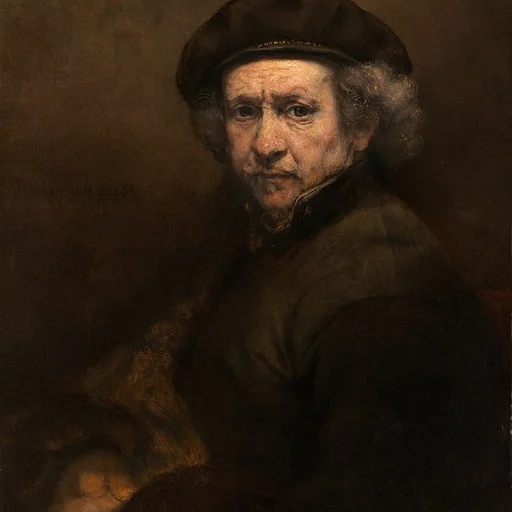
Rembrandt Harmenszoon van Rijn (15 July 1606 – 4 October 1669), known mononymously as Rembrandt, was a Dutch Golden Age painter, printmaker, and draughtsman.