Artwork
Charles I, King of England
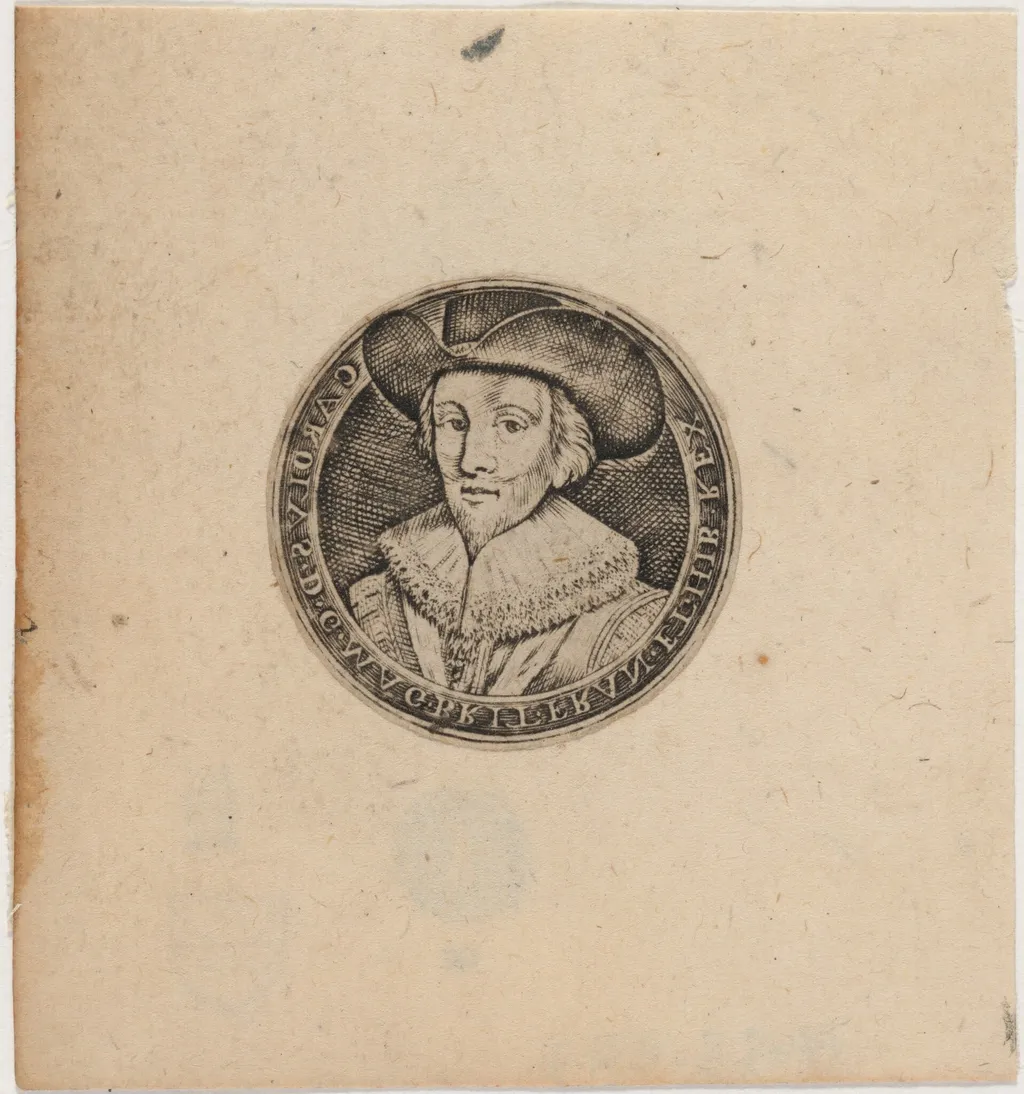
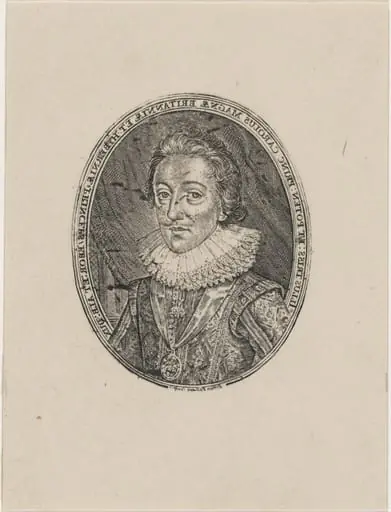
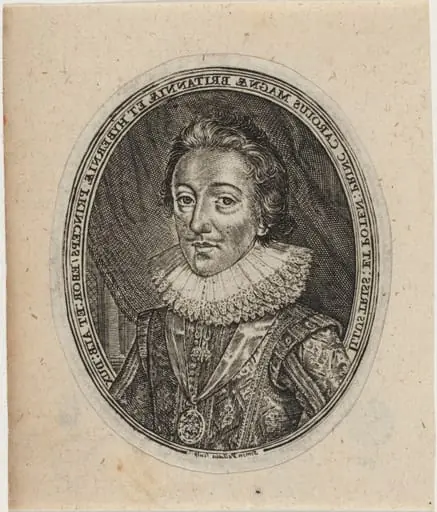
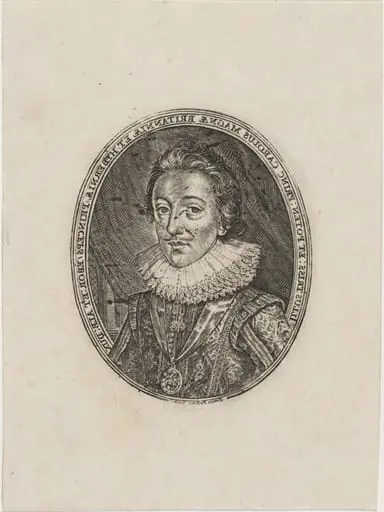
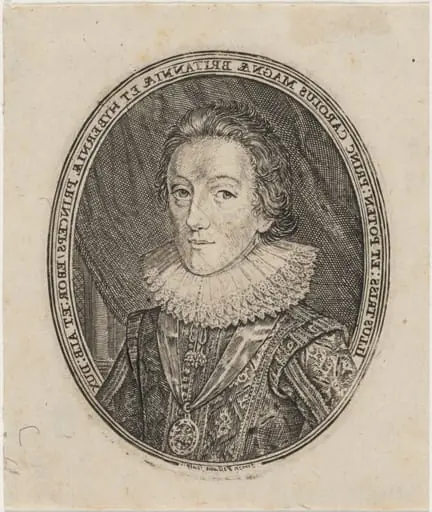
Charles I, King of England is an ink print by the Baroque artist Dutch 17th Century. It dates from 1650 and is held in the collection of the National Gallery of Art.
About this work
Overview
The print presents a portrait of Charles I, King of England, rendered as a black‑and‑white image taken from a silver medal. The composition is confined to a circular frame, centering the monarch’s face against an unadorned background. He is shown wearing a fur‑lined collar and a broad‑brimmed hat topped with a feather, his expression composed and his beard neatly trimmed.
Subject & Meaning
The image functions as a formal representation of royal authority, emphasizing the king’s dignified bearing through restrained facial features and luxurious attire. The inclusion of a fur collar and feathered hat signals status, while the calm demeanor conveys stability and governance, typical of portraiture intended to reinforce monarchical legitimacy in the early seventeenth century.
Technique & Style
The work is an engraving derived from a silver medal, a process in which the original relief design is incised into a metal plate and then printed onto paper. This method preserves the fine line work and subtle shading of the medal’s surface, producing a crisp, monochrome image that reflects the precise, ornamental style common to portrait medals of the 1600s.
History & Provenance
Engravings of this type were circulated to disseminate the king’s likeness beyond the court, often accompanying diplomatic correspondence or serving as collectible souvenirs. The Latin inscription that frames the portrait identifies the sitter and his titles, a convention that linked the image to contemporary numismatic and heraldic traditions.
Context
During Charles I’s reign, portrait medals and their printed reproductions were popular means of projecting royal image across Europe. The emphasis on regal attire and serene expression aligns with the broader visual language of early Stuart portraiture, which sought to balance personal authority with the cultural expectations of courtly representation.
Legacy
While the original silver medal remains a valuable artifact, the engraving has survived as a more accessible record of the king’s iconography. Such prints contribute to the visual archive of Stuart monarchy, informing both scholarly study of early modern portraiture and public understanding of Charles I’s visual self‑presentation.
Artist & collection

Artist
This Dutch artist made small, sharp engravings and etchings—mostly portraits and sea battles—printed from metal plates.