Artwork
Charles I, King of England
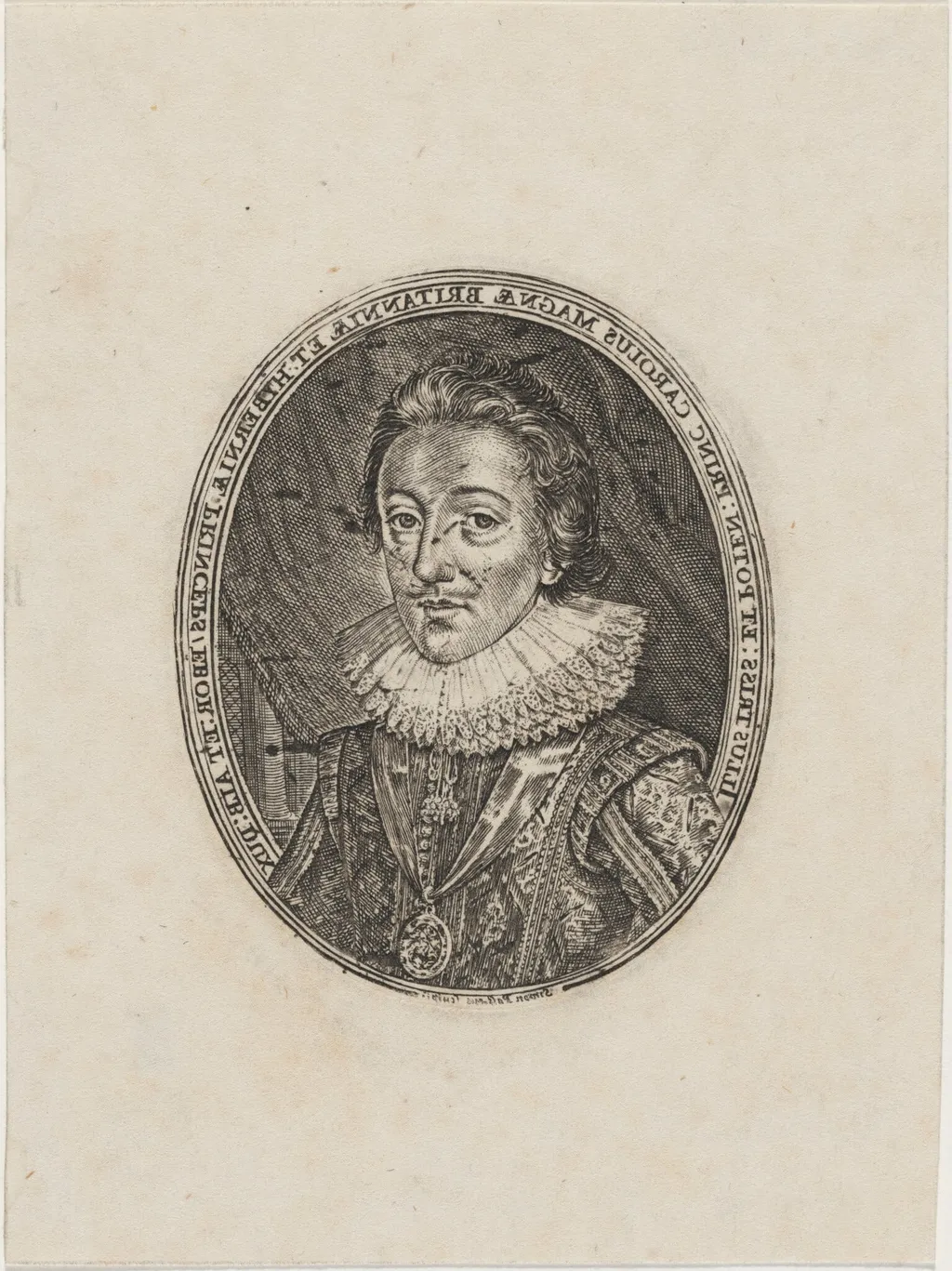
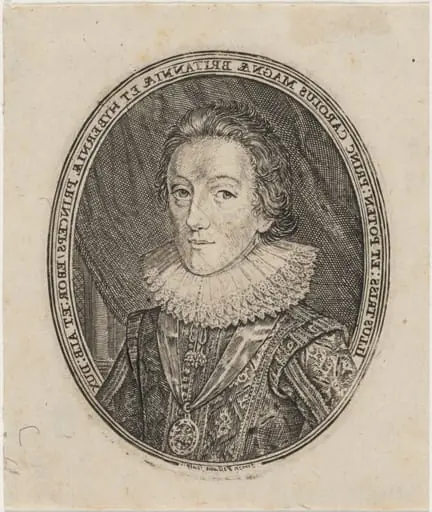
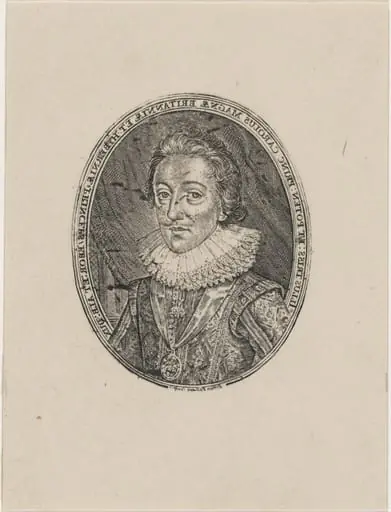
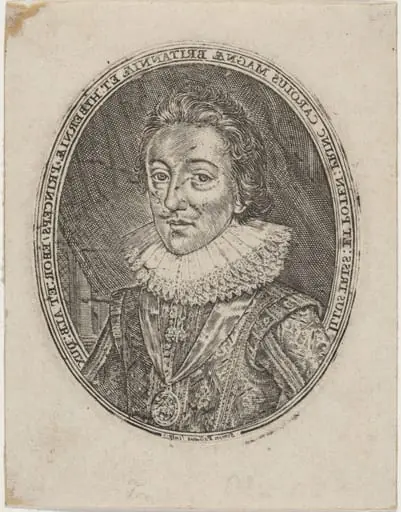
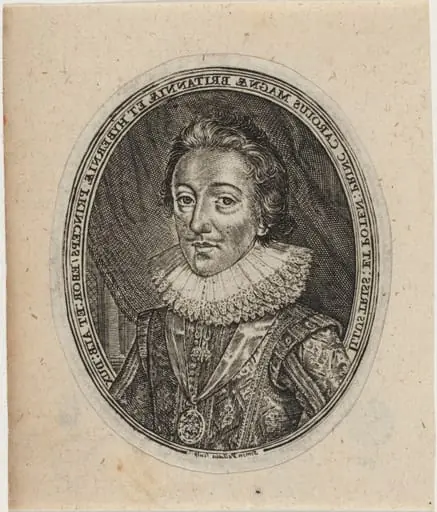
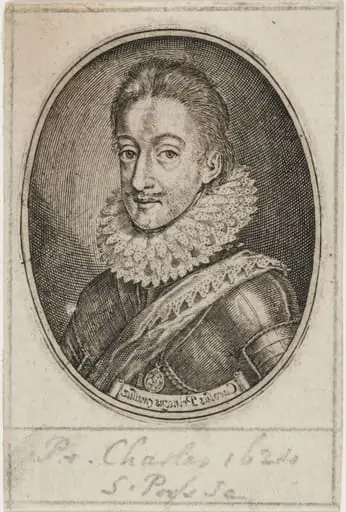
Charles I, King of England is an ink print by the Renaissance artist Simon van de Passe. It dates from 1621 and is held in the collection of the National Gallery of Art.
About this work
Overview
This black-and-white engraving depicts Charles I of England, created in 1621 by Simon van de Passe. It was produced by incising a design into a silver medal and then printing from it, a rare method for portraiture at the time. The image captures the king’s head and shoulders, rendered with meticulous line work that emphasizes texture and form through fine cross-hatching and delicate contours.
Subject & Meaning
Charles I is shown in formal attire, wearing a high ruffled collar and a dark doublet with a medal suspended from his neck.
Charles I is shown in formal attire, wearing a high ruffled collar and a dark doublet with a medal suspended from his neck. His expression is composed, with a faint furrow between the brows, suggesting solemnity and authority. The medal may reference royal honors or dynastic legitimacy, reinforcing his status as monarch. The portrait avoids theatricality, favoring restrained dignity over grandeur.
Technique & Style
The image was made by engraving directly into a silver surface, then transferring the design onto paper. Van de Passe employed fine, controlled lines and dense cross-hatching to model volume and fabric texture. The precision of the technique reflects Northern European printmaking traditions, where detail and clarity were prized over boldness. The result is a highly refined, almost miniature-like likeness.
History & Provenance
Created in 1621, the engraving originated from a silver medal commissioned to commemorate Charles I’s status as heir to the English throne. Such medals were often distributed among courtiers and foreign dignitaries as diplomatic gifts. The print likely circulated as a reproducible version of the medal, extending the king’s image beyond the court to a wider audience of elites.
Context
In early 17th-century England, portraiture served political and dynastic functions. Engravings from medals were among the most reliable means of disseminating royal likenesses before widespread photography. Van de Passe, a Dutch artist working in England, brought continental printmaking expertise to the Stuart court, blending Netherlandish precision with English ceremonial ideals.
Legacy
This engraving exemplifies the role of print in shaping early modern monarchical imagery. While not widely known today, it contributed to the standardization of Charles I’s visual identity in the years before civil conflict. Its technical rigor influenced later portrait engravers, and surviving impressions remain valuable records of royal iconography before the upheavals of the 1640s.
Artist & collection

![Charles I, King of England [top half], by Simon van de Passe](https://artifactworldgallery.com/img/simon-van-de-passe--charles-i-king-of-england-top-half--dc79da295243563e-w320.webp)