Artwork
Emblem of the Phoenix and the motto "Dieu et mon droit" [right half]
![Emblem of the Phoenix and the motto "Dieu et mon droit" [right half], by Dutch 17th Century, ink, 1650](https://artifactworldgallery.com/img/dutch-17th-century--emblem-of-the-phoenix-and-the-motto-dieu-et-mon-droit-right--3ab125f8be6c5e10-w1024.webp)
Emblem of the Phoenix and the motto "Dieu et mon droit" [right half] is an ink print by the Baroque artist Dutch 17th Century. It dates from 1650 and is held in the collection of the National Gallery of Art. This circular engraving was produced by impressing a design into a silver medal using a burin, a fine cutting tool.
About this work
Overview
The image depicts a phoenix rising from flames, crowned and holding a staff, encircled by the Latin motto 'Dieu et mon droit' on its right half.
This circular engraving was produced by impressing a design into a silver medal using a burin, a fine cutting tool. The image depicts a phoenix rising from flames, crowned and holding a staff, encircled by the Latin motto 'Dieu et mon droit' on its right half. Unlike painted works, this is a relief print made from a metal matrix, intended for reproduction and distribution as a symbolic object rather than a standalone artwork.
Subject & Meaning
The phoenix, drawn from ancient myth, symbolizes renewal through destruction, rising from its own ashes. Paired with the royal motto 'God and my right,' the image asserts legitimacy and resilience, likely tied to monarchical claims of divine authority. The crown above the bird and the staff it holds reinforce sovereignty, suggesting rebirth under divine sanction rather than political upheaval.
Technique & Style
Executed in fine-line engraving, the design relies on incised grooves to hold ink and transfer detail onto paper. The linear precision of the phoenix’s feathers, the crown’s contours, and the looping text reflect skilled metalwork. The style is formal and symmetrical, typical of heraldic medals, where clarity and symbolic weight outweigh naturalistic detail.
History & Provenance
The medal likely originated in early modern France or England, where such emblems were commissioned to commemorate royal events or affirm dynastic continuity. The motto 'Dieu et mon droit' was used by English monarchs since the 12th century, suggesting this piece may have been produced during a period of political reaffirmation, possibly after civil unrest or succession.
Context
In the 16th to 18th centuries, engraved medals served as portable propaganda, circulating among elites to convey political or religious messages. The phoenix motif, though rooted in classical antiquity, was revived in Renaissance and Baroque iconography to signify endurance. This piece fits within a tradition of using mythological imagery to legitimize authority through timeless symbolism.
Legacy
Though not widely known today, such medals contributed to the visual language of monarchy and state ideology. Their production influenced later numismatic art and emblematic printing. As artifacts of statecraft, they offer insight into how rulers employed ancient symbols to reinforce continuity, authority, and resilience in times of change.
Artist & collection

Artist
This Dutch artist made small, sharp engravings and etchings—mostly portraits and sea battles—printed from metal plates.




![Three Crowns Supported by Two Sceptres [left half], by Dutch 17th Century](https://artifactworldgallery.com/img/dutch-17th-century--three-crowns-supported-by-two-sceptres-left-half--f6b61a3078075d6c-w320.webp) Three Crowns Supported by Two Sceptres [left half]
Three Crowns Supported by Two Sceptres [left half]![Shield of Queen Elizabeth [left half], by Simon van de Passe](https://artifactworldgallery.com/img/simon-van-de-passe--shield-of-queen-elizabeth-left-half--f4b61579dbc6b41d-w320.webp) Shield of Queen Elizabeth [left half]
Shield of Queen Elizabeth [left half]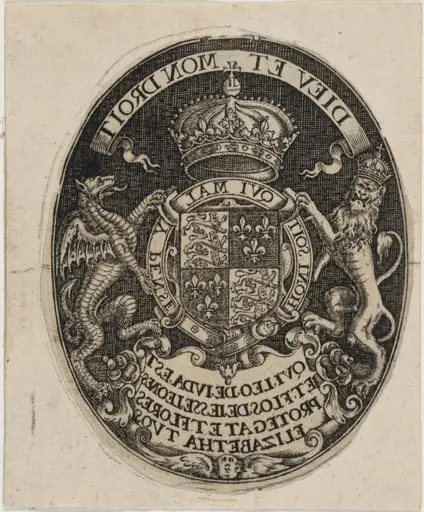 Shield of Queen Elizabeth
![Shield of James I [bottom half], by Simon van de Passe](https://artifactworldgallery.com/img/simon-van-de-passe--shield-of-james-i-bottom-half--5f78c9059311c27d-w320.webp) Shield of James I [bottom half]
Shield of James I [bottom half]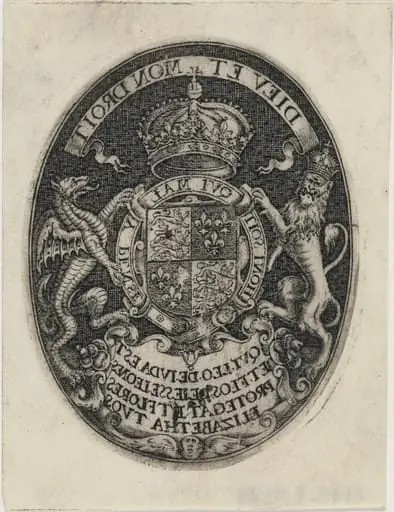 Shield of Queen Elizabeth
![Shield of James I [bottom half], by Simon van de Passe](https://artifactworldgallery.com/img/simon-van-de-passe--shield-of-james-i-bottom-half--ba628f9c8498bd19-w320.webp) Shield of James I [bottom half]
Shield of James I [bottom half]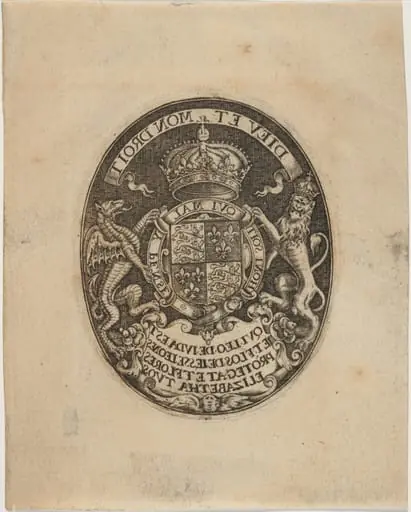 Shield of Queen Elizabeth
![Three Crowns Supported by Two Sceptres [right half], by Dutch 17th Century](https://artifactworldgallery.com/img/dutch-17th-century--three-crowns-supported-by-two-sceptres-right-half--a6fa523aedde07e0-w320.webp) Three Crowns Supported by Two Sceptres [right half]
Three Crowns Supported by Two Sceptres [right half]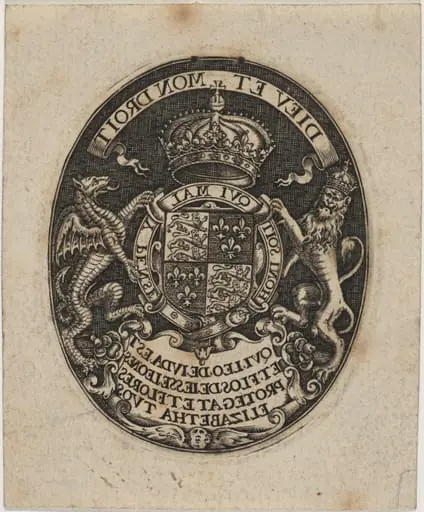 Shield of Queen Elizabeth