Artwork
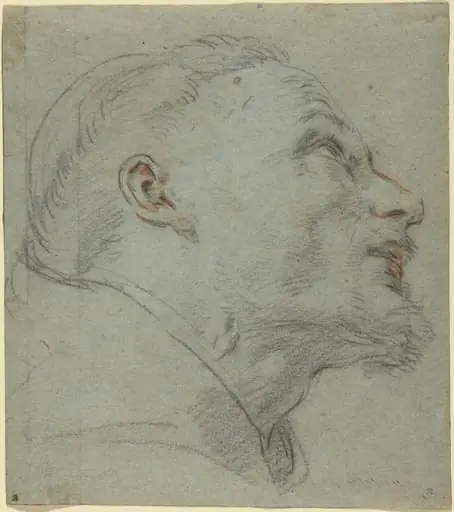
Head of a Young Man [recto]
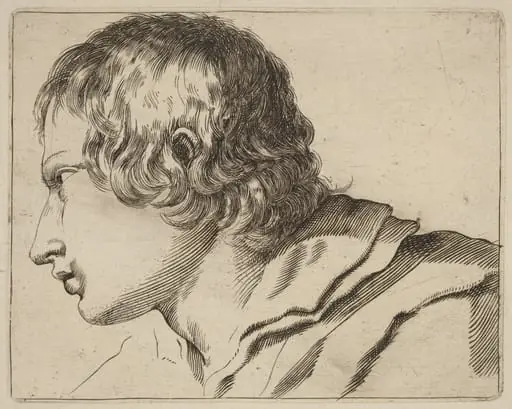
![Head of a Young Man [recto], by Dutch 17th Century, chalk, 1650](https://artifactworldgallery.com/img/dutch-17th-century--head-of-a-young-man-recto--f3e12a86c43ae2a0-w1024.webp)
Head of a Young Man [recto] is a chalk drawing by the Baroque artist Dutch 17th Century. It dates from 1650 and is held in the collection of the National Gallery of Art. This drawing is a study in black chalk on laid paper, depicting the head of a young man.
About this work
Overview
The artist employed subtle gradations to model form, emphasizing the contours of the forehead and jaw without overt detail.
This drawing is a study in black chalk on laid paper, depicting the head of a young man. Executed with restrained precision, it captures a quiet, introspective gaze. The artist employed subtle gradations to model form, emphasizing the contours of the forehead and jaw without overt detail. Its brevity suggests it was made rapidly, likely as part of an exercise in observing human features under natural light.
Subject & Meaning
The subject is an anonymous youth, his expression serene and inward-turned. There is no narrative or symbolic context—only a focus on the quiet dignity of a momentary pose. The downward glance invites contemplation, not storytelling. The work reflects an artist’s interest in the subtleties of human presence rather than idealized portraiture.
Technique & Style
Black chalk was used with a light, fluid hand to define planes of the face. Soft shading under the cheekbones and brow creates volume without harsh outlines. The paper’s texture subtly interacts with the medium, enhancing the tactile quality of the skin. The technique prioritizes observation over finish, aligning with Renaissance practices of preparatory study.
History & Provenance
The drawing’s origin is unattributed, with no documented ownership prior to modern institutional acquisition. Its lack of signature or inscription suggests it was never intended for public display. It survives as part of a larger corpus of studies, likely from a workshop or artist’s personal sketchbook, preserved for its pedagogical value.
Context
In early modern Europe, such drawings were common tools for training artists in anatomy and expression. Working from live models, practitioners refined their ability to render light and form through repeated studies. This piece fits within a tradition of disciplined observation, where the human face served as both subject and exercise.
Legacy
Though unsigned and uncommissioned, the drawing exemplifies the quiet rigor of artistic apprenticeship. It survives not as a finished work but as evidence of method—how artists learned to see. Its endurance in collections speaks to the enduring value placed on such studies within the history of drawing.
Own this work as a print
Artist & collection

Artist
This Dutch artist made small, sharp engravings and etchings—mostly portraits and sea battles—printed from metal plates.

![Young Peasant Seated on the Ground [recto], by Giuseppe Maria Crespi](https://artifactworldgallery.com/img/giuseppe-maria-crespi--young-peasant-seated-on-the-ground-recto--4f17490e41fbab4c-w320.webp)