Artwork
Village Street
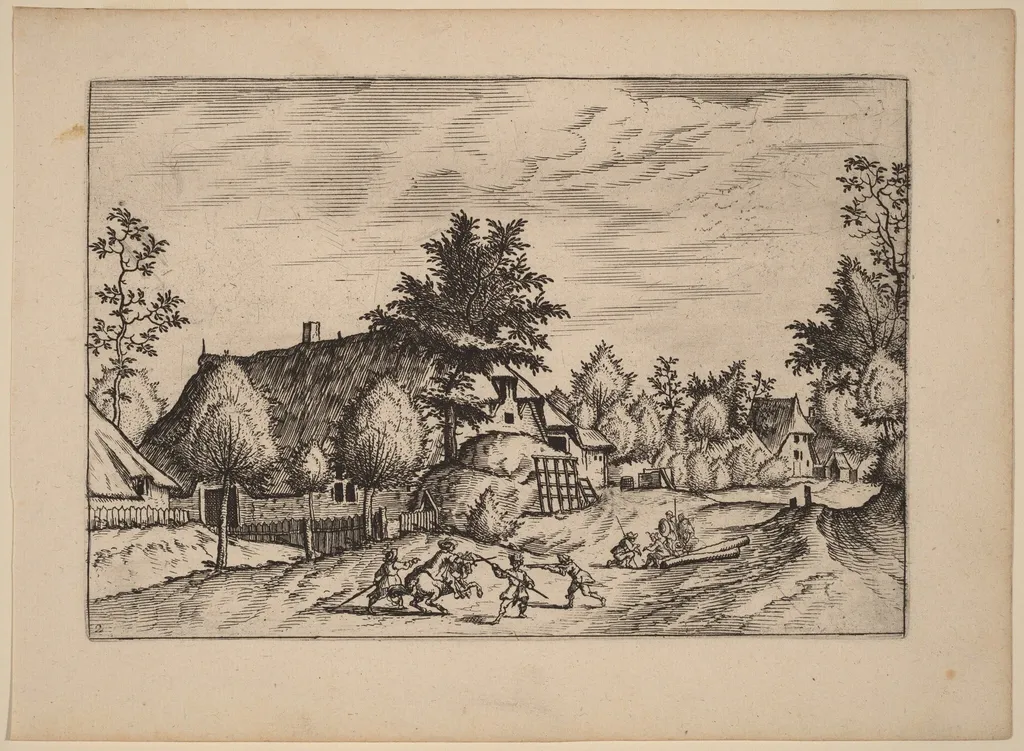
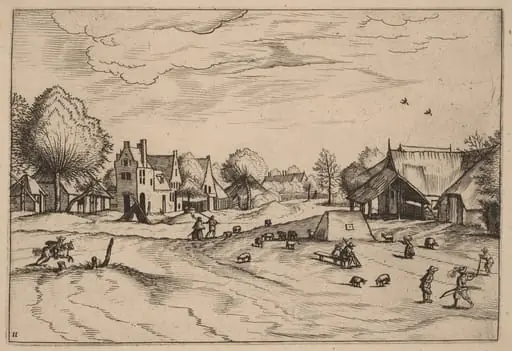
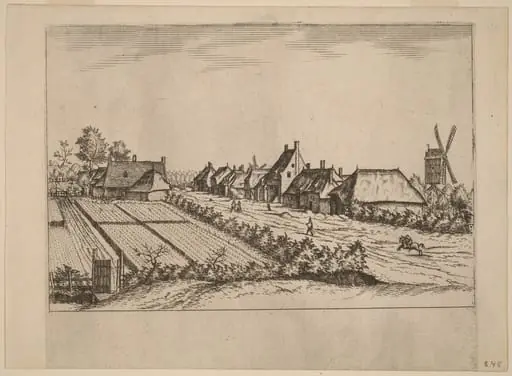
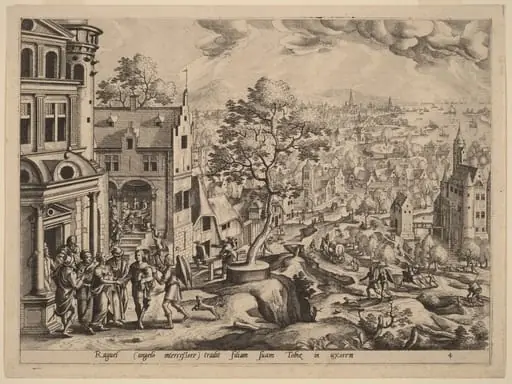
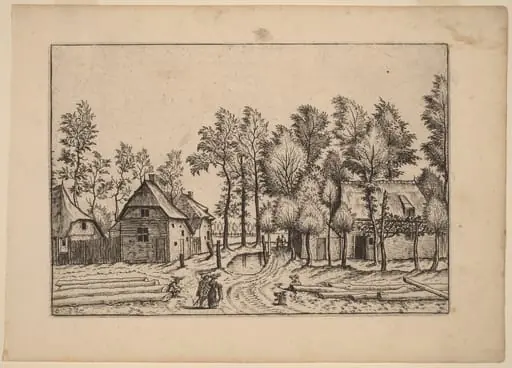
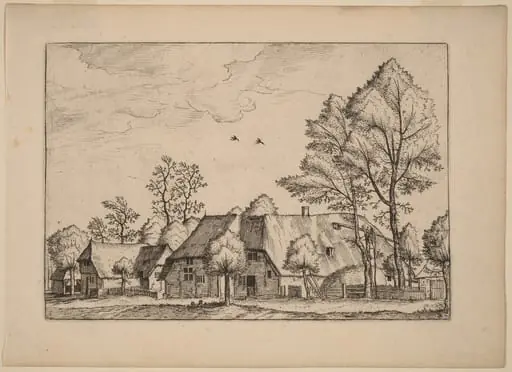
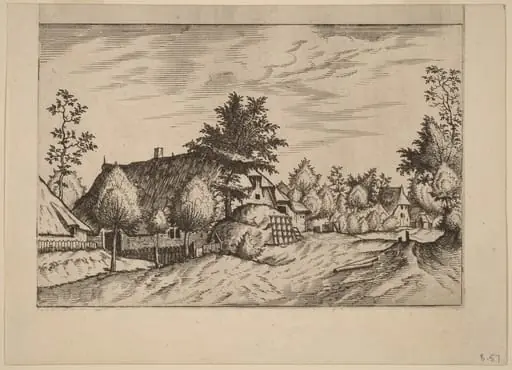
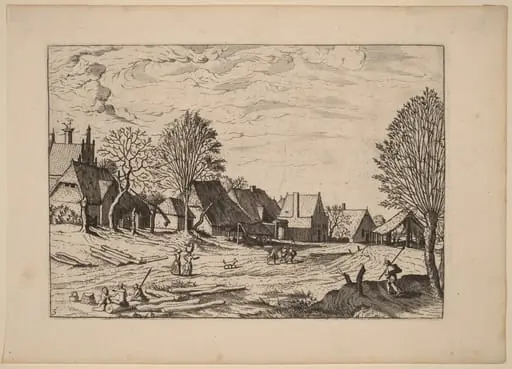
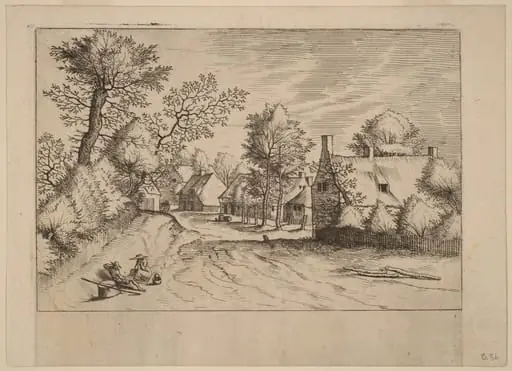
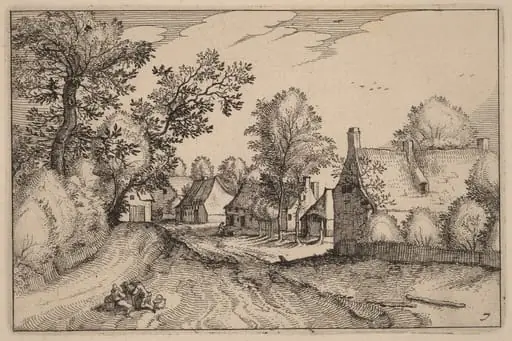
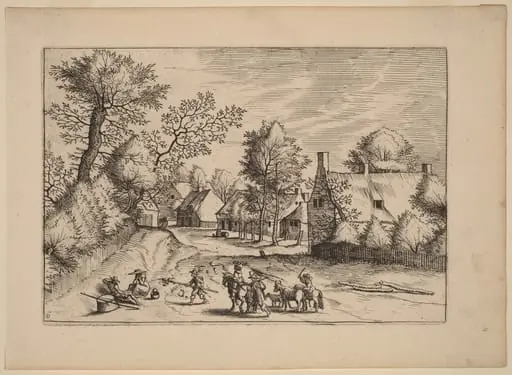
Village Street is an ink print by the Baroque artist Johannes van Doetechum the Elder. It is held in the collection of the National Gallery of Art.
About this work
Overview
Village Street is a 1676 print created by Johannes van Doetecum the Elder, a Dutch engraver-cartographer, combining etching with engraving techniques.
Subject & Meaning
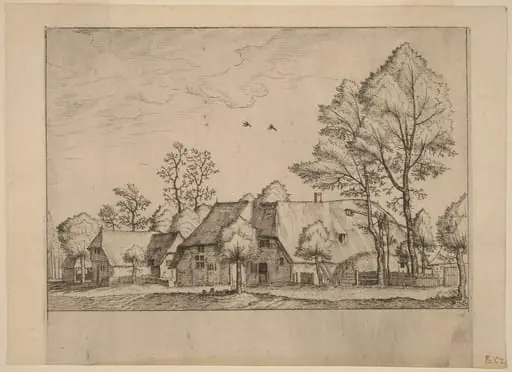
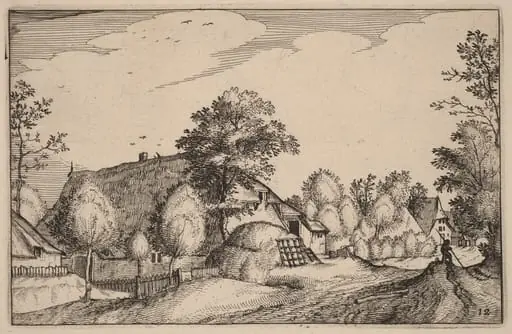
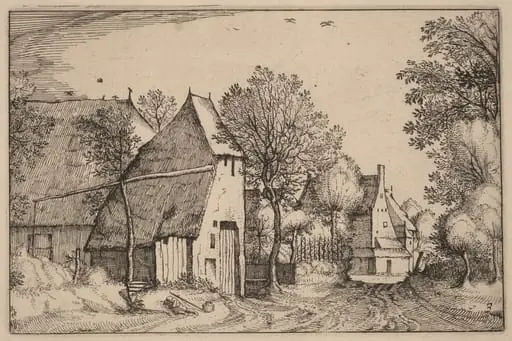
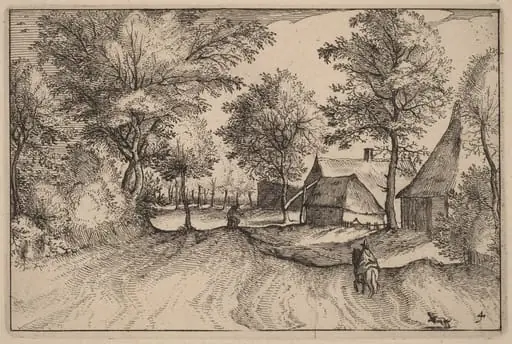
The print captures a serene rural scene with a village street, buildings, trees, and figures gathered near a horse, set against a cloudy sky. The composition reflects collaborative family printmaking practices.
Technique & Style
Van Doetecum employed a range of lines and textures to achieve depth. The detailed rendering of architecture and flora contrasts with the simplified depiction of human and animal figures, aligning with Baroque stylistic elements of nuanced visual storytelling.
History & Provenance
Originally from Deventer, the artist worked in Haarlem from 1578, known for reproducing Bruegel's genre scenes and Dutch city maps. The work is now part of the National Gallery of Art collection in Washington.
Context
Created during the Dutch Golden Age, the piece situates within the broader context of 17th-century Dutch printmaking, characterized by meticulous detail and everyday life themes.
Legacy
While not individually renowned, Village Street contributes to the van Doetecum family's collective legacy in preserving and disseminating Dutch artistic and cartographic traditions of the era.
Artist & collection

Artist
Johannes van Doetechum the Elder
Joannes van Doetecum the Elder (1530 – 1605) was a Dutch engraver-cartographer known for his etched works after genre scenes by Pieter Bruegel the Elder and maps of various cities in the Netherlands.