Artwork
Landscape with a Waterfall
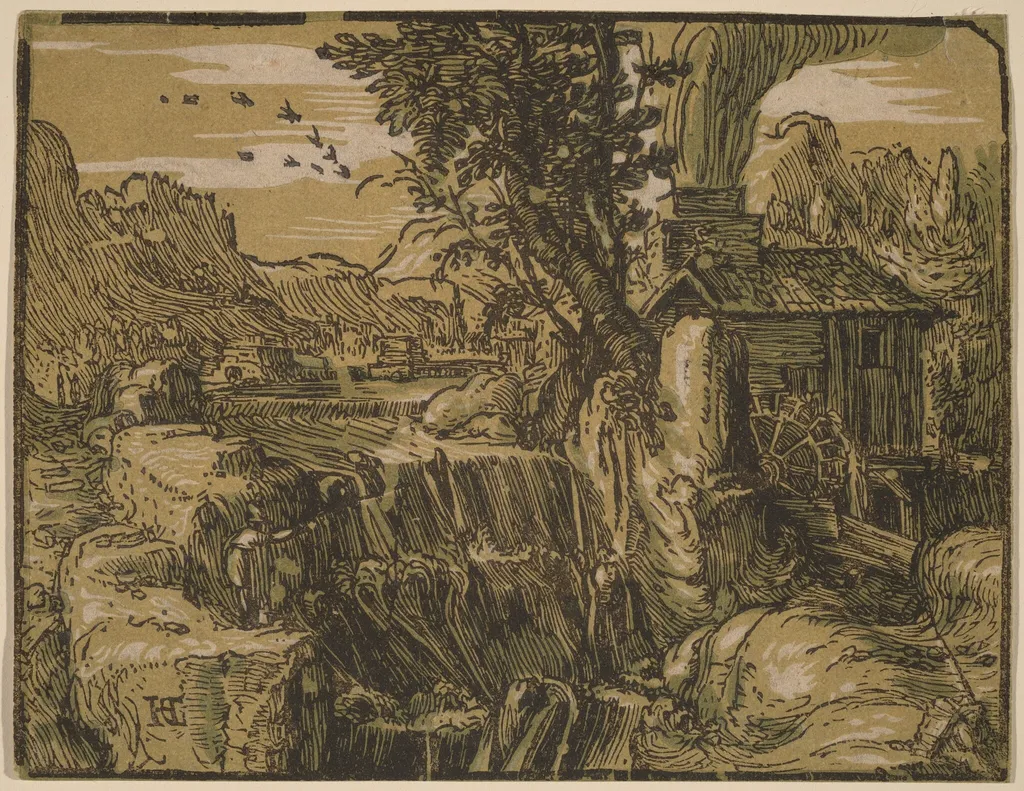
Landscape with a Waterfall is an ink print by the Renaissance artist Hendrik Goltzius. It dates from 1594 and is held in the collection of the National Gallery of Art.
About this work
Overview
As a printmaker active in the Dutch Republic, Goltzius employed multiple woodblocks to layer tones, simulating the effects of light and shadow without pigment.
Created around 1594, *Landscape with a Waterfall* is a chiaroscuro woodcut by Hendrick Goltzius, executed in sepia-ochre, olive, and black inks. As a printmaker active in the Dutch Republic, Goltzius employed multiple woodblocks to layer tones, simulating the effects of light and shadow without pigment. This technique allowed him to translate the depth and texture of a natural scene into a monochromatic medium, demonstrating his command over printmaking’s technical possibilities.
Subject & Meaning
The scene depicts a dense, untamed forest with a cascading waterfall descending over rugged cliffs. Twisting, gnarled trees rise vertically, their forms compressed and dramatic, while the water’s motion is rendered with agitated lines. The faint glimpse of sky through the canopy suggests a fleeting transition between earth and atmosphere. The composition evokes nature’s power and mystery, reflecting a Northern European fascination with wild landscapes as sites of both awe and moral contemplation.
Technique & Style
Goltzius used separate woodblocks for each tone—black for shadows, sepia-ochre for midtones, and olive for subtle transitions—to build a nuanced tonal range. His carving technique combined fine, controlled lines with bold, textured areas, mimicking the effects of ink washes. Unlike traditional line engravings, this method relied on gradations of tone to model form, creating a sense of volume and atmospheric depth without color, a hallmark of chiaroscuro printmaking in the late 16th century.
History & Provenance
The print emerged during Goltzius’s mature period in Haarlem, where he was recognized as the foremost Dutch printmaker of his time. Though no early ownership records are documented, the work aligns with his broader output of landscape prints produced between 1590 and 1600. These were circulated among collectors and artists across Europe, valued for their technical innovation and departure from purely religious or mythological subjects.
Context
In the late 1500s, landscape as an independent subject gained traction in Northern Europe, influenced by growing interest in naturalism and the sublime. Goltzius’s work responded to this shift, drawing from both Italian chiaroscuro traditions and the detailed observation of nature favored by Dutch and Flemish artists. His prints bridged Mannerist elegance with emerging realist tendencies, positioning him at the intersection of artistic innovation and regional taste.
Legacy
Goltzius’s use of multi-block chiaroscuro woodcuts influenced later printmakers seeking tonal complexity without color. While the technique declined after his death, his approach to landscape as a vehicle for technical and emotional expression helped legitimize the genre in printmaking. His work remains a reference point for understanding how printmakers expanded the expressive potential of the medium beyond reproductive functions.
Artist & collection
Artist
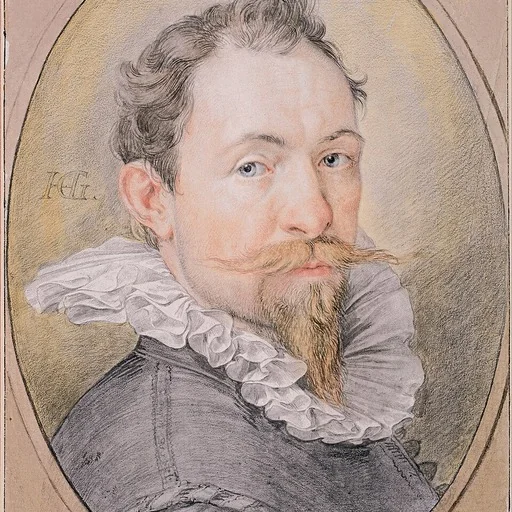
Hendrick Goltzius (German: , Dutch: ; né Goltz; January or February 1558 – 1 January 1617) was a German-born Dutch printmaker, draftsman, and painter.

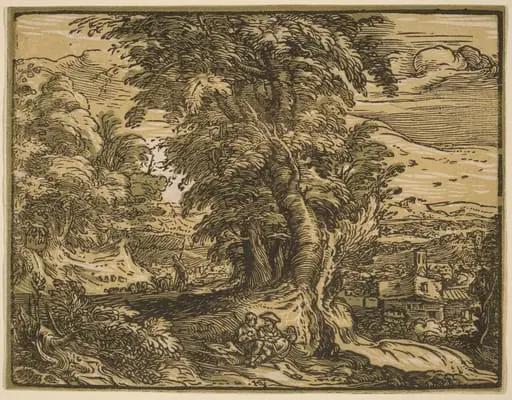 Landscape with a Shepherd Couple
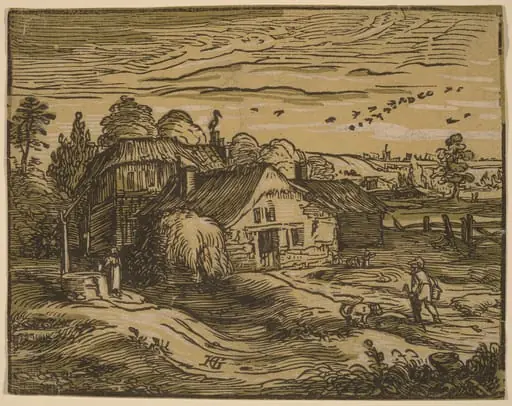 Landscape with a Farmhouse
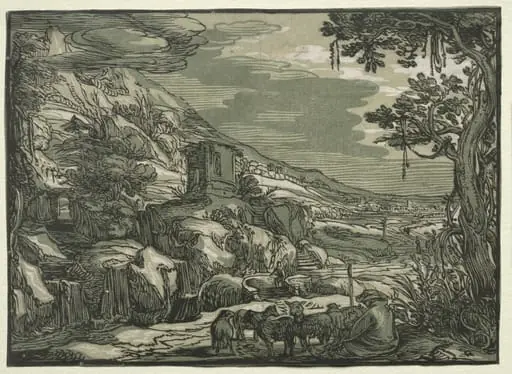 Arcadian Landscape
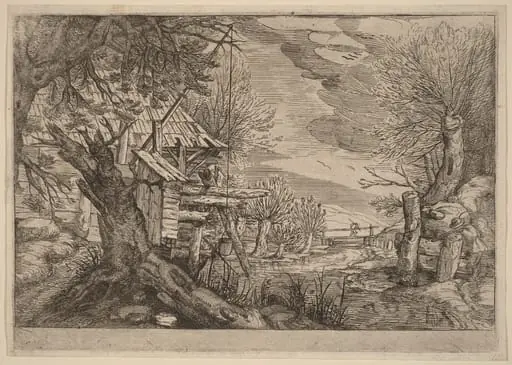 Landscape with Log House near a River
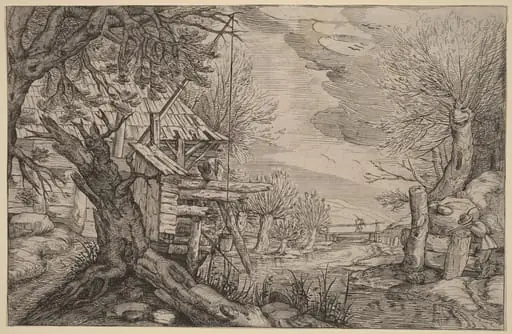 Landscape with Log House near a River
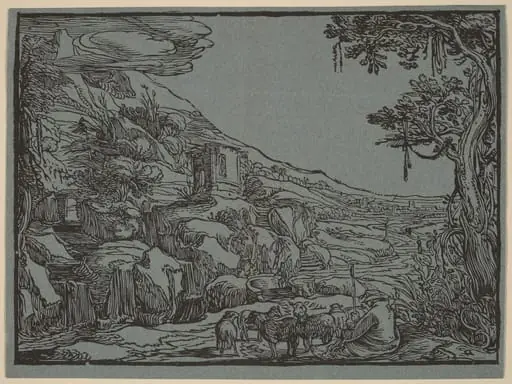 Arcadian Landscape
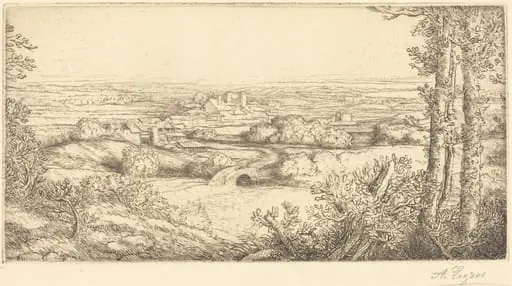 Valley in Bourgogne (Une vallee en Bourgogne)
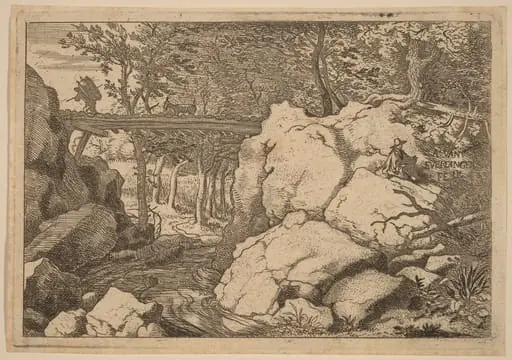 Goat on a small Bridge
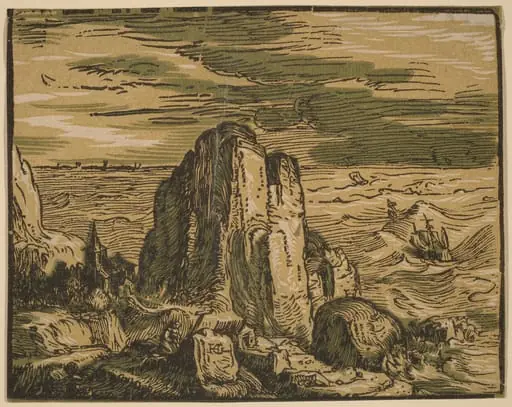 Cliff on a Seashore
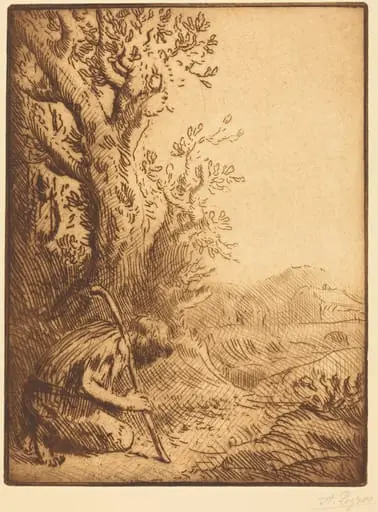 The Prodigal Son, 4th plate (L'enfant prodigue)
 Carpenter's Hut
 A Forest Marsh with Travelers on a Bank (The Travelers)