Artwork
Pieter Bruegel the Younger
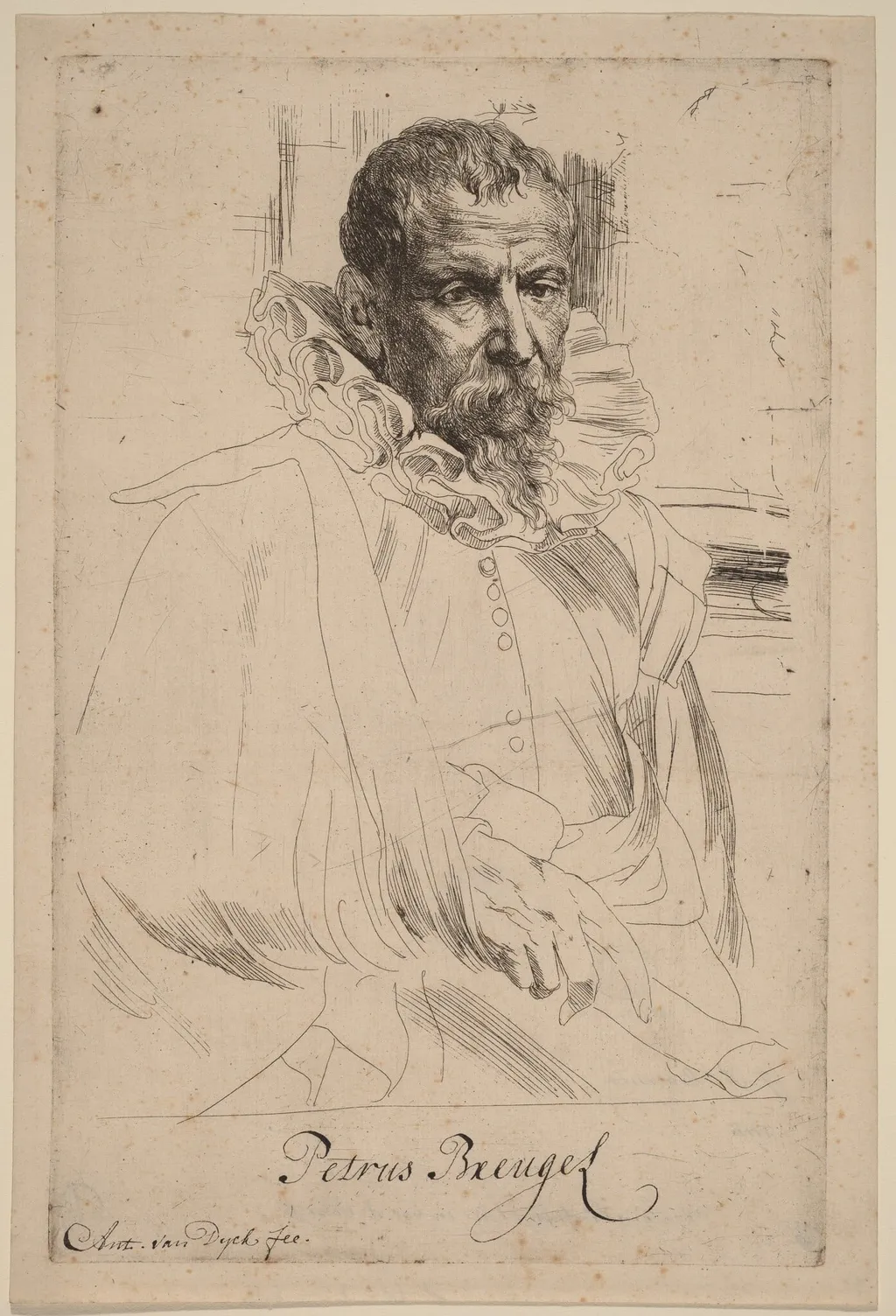
Pieter Bruegel the Younger is an ink print by the Baroque artist Anthony van Dyck. It dates from 1634 and is held in the collection of The Frick Collection.
About this work
Overview
This etching, created around 1634 by Anthony van Dyck, portrays Pieter Bruegel the Younger as a contemplative figure at his desk.
This etching, created around 1634 by Anthony van Dyck, portrays Pieter Bruegel the Younger as a contemplative figure at his desk. Executed two decades after the artist’s death, it stands as one of the rare visual records of his likeness. The work belongs to van Dyck’s series of portrait prints, notable for their intimate tone and restrained composition, capturing the subject in a moment of quiet reflection rather than formal grandeur.
Subject & Meaning
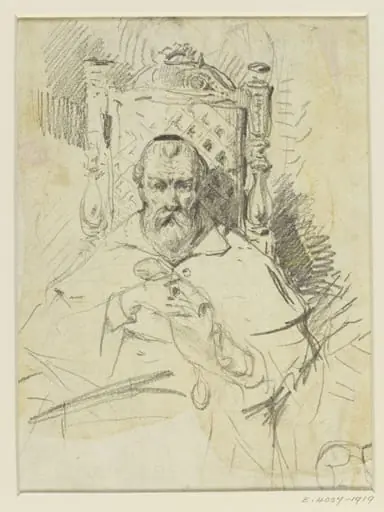
The portrait presents Pieter Bruegel the Younger mid-thought, quill in hand, gazing upward as if pausing before writing. His plain surroundings and minimal desk objects emphasize introspection over display. The image conveys the dignity of the artist at work, aligning with early 17th-century ideals of intellectual labor. It does not celebrate fame but honors the quiet discipline of artistic creation.
Technique & Style
Van Dyck employed fine, controlled lines to model the sitter’s features with subtle gradations of light and shadow. The etching’s softness avoids harshness, lending a gentle realism to the face and hands. Background elements are minimized, focusing attention on the figure’s posture and expression. The technique reflects van Dyck’s mastery of the medium, balancing precision with atmospheric restraint.
History & Provenance
Created around 1634, the etching was made after Pieter Bruegel the Younger’s death in 1638, placing it among van Dyck’s later portrait studies. It likely served as a commemorative image for collectors familiar with the Bruegel artistic lineage. The print circulated in van Dyck’s circle and was later included in his published collections of portraits, contributing to the posthumous recognition of the Bruegel family.
Context
In the early 1630s, van Dyck was refining his portrait etchings as part of a broader effort to elevate printmaking as a vehicle for artistic legacy. His depictions of cultural figures, including artists, were intended to document intellectual and creative pedigrees. This portrait of Bruegel the Younger fits within that project, linking the Flemish tradition of genre painting to the emerging culture of artistic commemoration in the Southern Netherlands.
Legacy
As one of the few contemporary images of Pieter Bruegel the Younger, the etching has served as a key reference for identifying his appearance in later reproductions and scholarly works. Van Dyck’s interpretation, though not from life, became the authoritative visual template. Its quiet dignity influenced subsequent portrait prints of artists, reinforcing the notion of the creator as a thoughtful, solitary figure.
Artist & collection
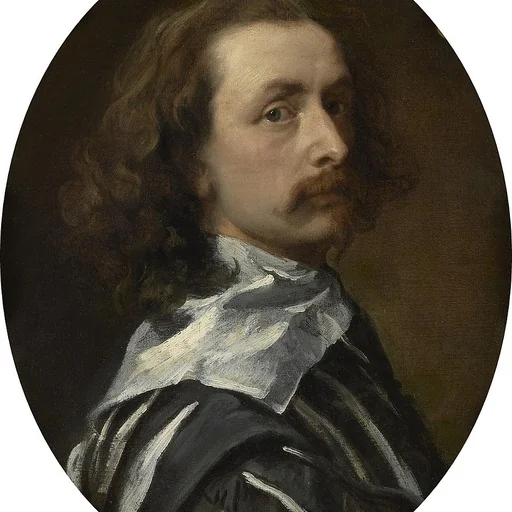
Artist
Sir Anthony van Dyck (; Dutch: Antoon van Dijck ; 22 March 1599 – 9 December 1641) was a Flemish Baroque artist, who became the leading court painter in England after success in the Spanish Netherlands and Italy.