Artwork
An old man seated in a chair
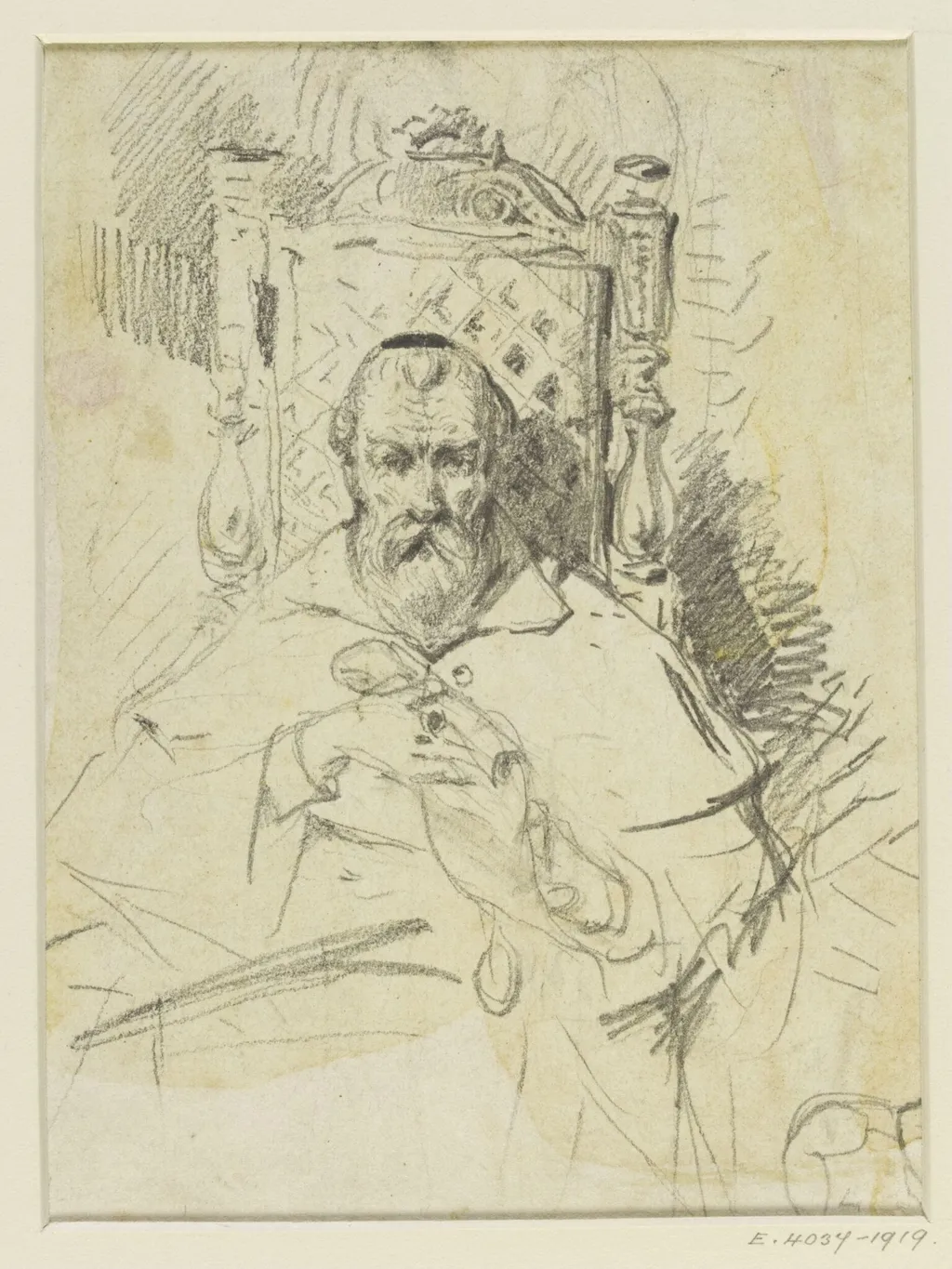
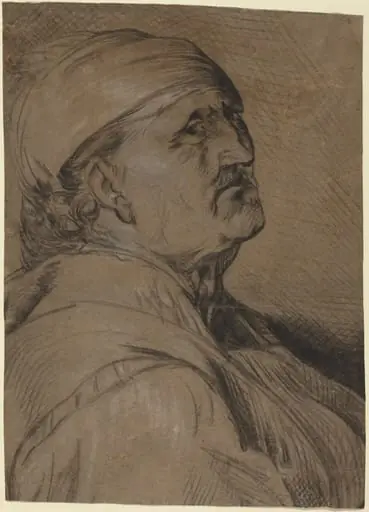
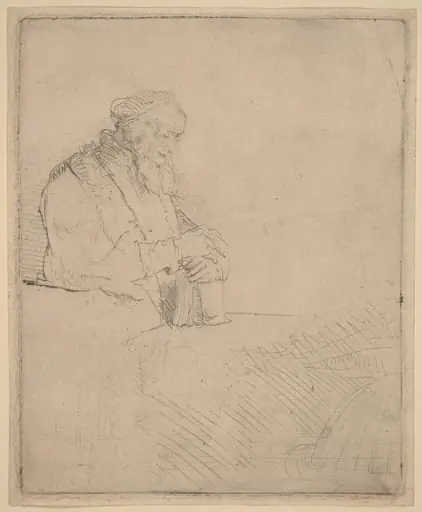
An old man seated in a chair is a drawing by the Romanticist artist Henry RA Edridge. It dates from 1769 and is held in the collection of the Victoria and Albert Museum. This pencil drawing by Henry Edridge portrays an elderly man seated in a simple chair.
About this work
Overview
This pencil drawing by Henry Edridge portrays an elderly man seated in a simple chair. Executed with rapid, expressive strokes, the work carries the immediacy of a preparatory study rather than a polished composition. Its informal quality suggests the artist was capturing a moment of observation, prioritizing presence over finish.
Subject & Meaning
The subject is an older man with a full white beard, seated calmly in a domestic setting. His posture and weathered features convey age and quiet dignity. The inclusion of a window with distant trees and architecture implies an interior space, grounding the figure in a lived environment without narrative elaboration.
Technique & Style
Edridge employed loose, overlapping pencil lines to build form and shadow through cross-hatching. The scratchy texture and varied pressure create depth without smooth blending. The background is suggested minimally—curtains and a window rendered with sparse, tentative strokes—emphasizing the figure while leaving space for the viewer’s imagination.
History & Provenance
The drawing is held in the collection of the Victoria and Albert Museum, where it is cataloged as part of Edridge’s graphic works. Its origins are likely tied to the artist’s practice of sketching from life, common among 19th-century British draftsmen who used such studies to refine portraiture and composition.
Context
In early 19th-century Britain, drawing was a foundational skill for artists, often used to record observations before painting. Edridge’s sketch reflects this tradition, aligning with contemporaries who valued direct observation over idealized forms. The work’s informality mirrors the growing interest in everyday subjects during this period.
Legacy
Though not widely exhibited, this drawing exemplifies the quiet rigor of British academic drawing practices. Its preservation in a major museum underscores its value as a record of artistic process. It remains a modest but instructive example of how observation shaped portraiture beyond finished works.
Artist & collection
Artist
A prolific watercolour artist working at the turn of the 19th century, Henry Edridge captured daily life in soft, detailed strokes.