Artwork
Baby at Play
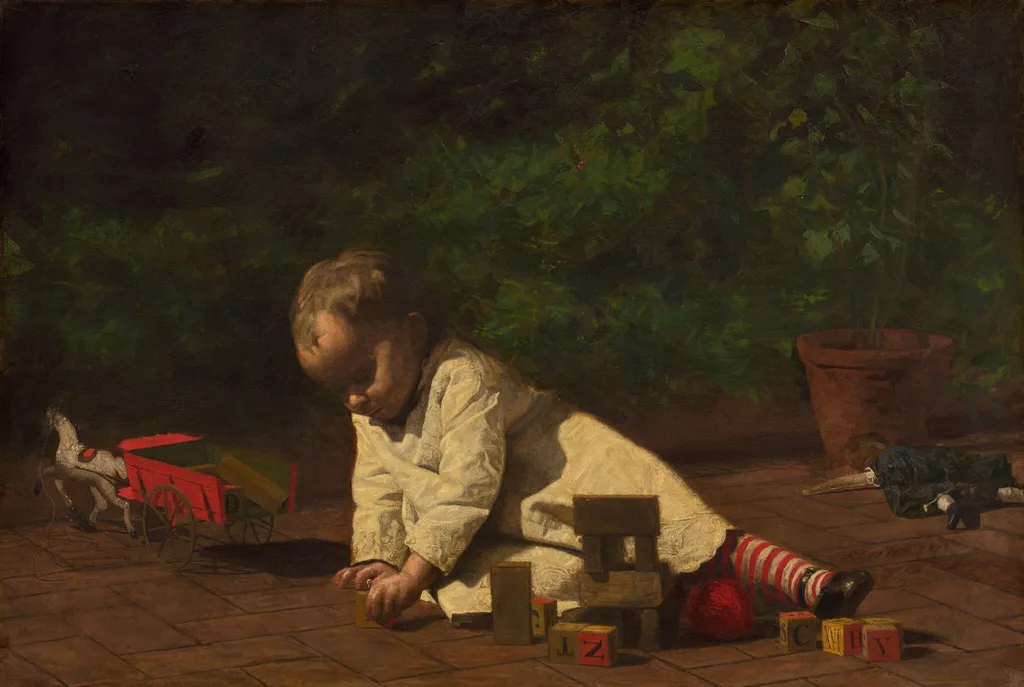
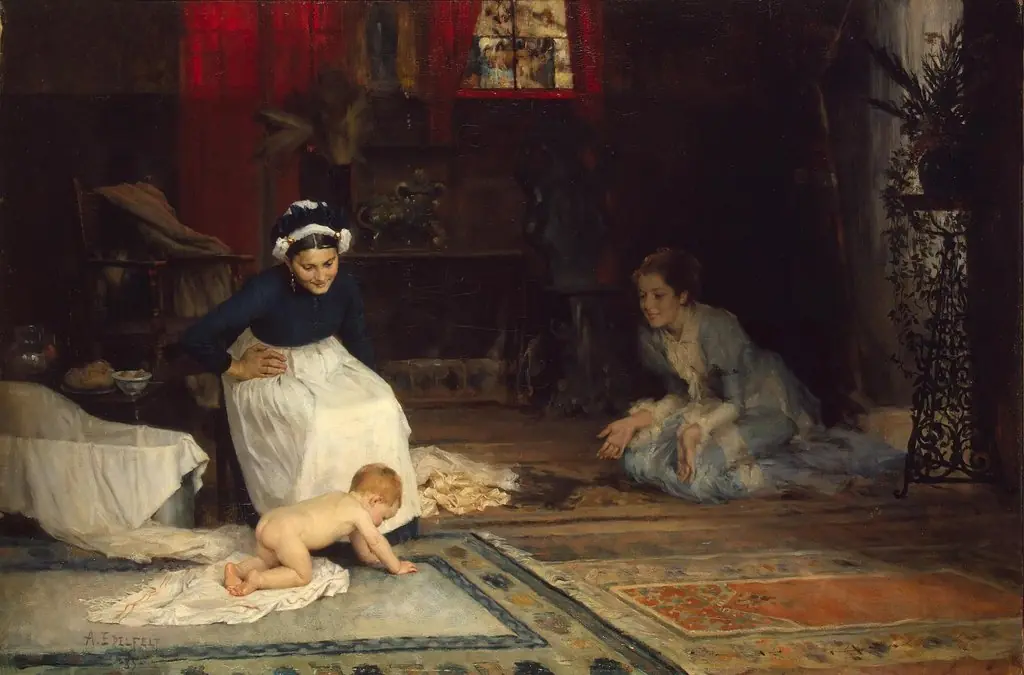
Baby at Play is an oil painting by the Impressionist artist Thomas Eakins. It dates from 1876 and is held in the collection of the National Gallery of Art.
About this work
Overview
Eakins rendered the scene with close attention to light, texture, and spatial depth, characteristic of his commitment to observing real life.
Painted in 1876, Baby at Play is an oil on canvas work by American artist Thomas Eakins. It depicts a toddler engaged in quiet play on a floor, surrounded by simple toys and domestic details. The composition avoids theatricality, focusing instead on a moment of unguarded childhood. Eakins rendered the scene with close attention to light, texture, and spatial depth, characteristic of his commitment to observing real life.
Subject & Meaning
The painting captures a child absorbed in solitary play, surrounded by blocks, a miniature wagon, and a white horse toy. The child’s white clothing and striped socks suggest modest, everyday attire. No adult is present, emphasizing the child’s autonomy in this private moment. The scene conveys neither sentimentality nor moral instruction, but rather an unembellished observation of routine childhood behavior.
Technique & Style
Eakins employed precise brushwork and careful modeling to render the child’s form and the textures of fabric, wood, and ceramic. The lighting is naturalistic, falling softly across the floor and toys, enhancing the sense of a real interior space. The background includes a potted plant, subtly placed to frame the scene without distraction. His approach reflects a commitment to anatomical accuracy and environmental truth.
History & Provenance
Completed in 1876, the painting was likely made during Eakins’s early period of domestic subjects, following his return from European study. It remained in private hands for much of the 20th century before entering a public collection. Its modest scale and intimate subject contributed to its relative obscurity compared to his larger historical or portrait works.
Context
In the late 19th century, American art increasingly turned to scenes of ordinary life, rejecting idealized narratives. Eakins, influenced by European realism and scientific observation, aligned with this shift. Baby at Play reflects a broader cultural interest in childhood as a subject worthy of serious artistic attention, distinct from Victorian sentimentality.
Legacy
Though not among Eakins’s most widely exhibited works, Baby at Play exemplifies his dedication to unvarnished observation. It stands as a quiet counterpoint to the melodrama common in contemporary genre painting. Its influence is seen in later American realists who prioritized authenticity over embellishment, reinforcing the value of everyday moments in art.
Own this work as a print
Artist & collection
Artist
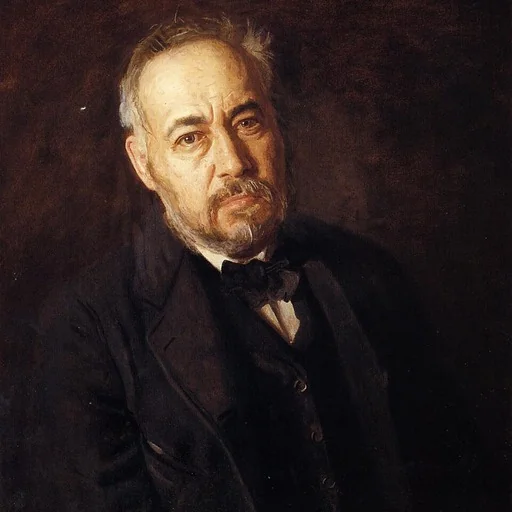
Thomas Cowperthwait Eakins (; July 25, 1844 – June 25, 1916) was an American realist painter, photographer, sculptor, and fine arts educator.