Artwork
Fox Talbot to Fred Ives photography lecture
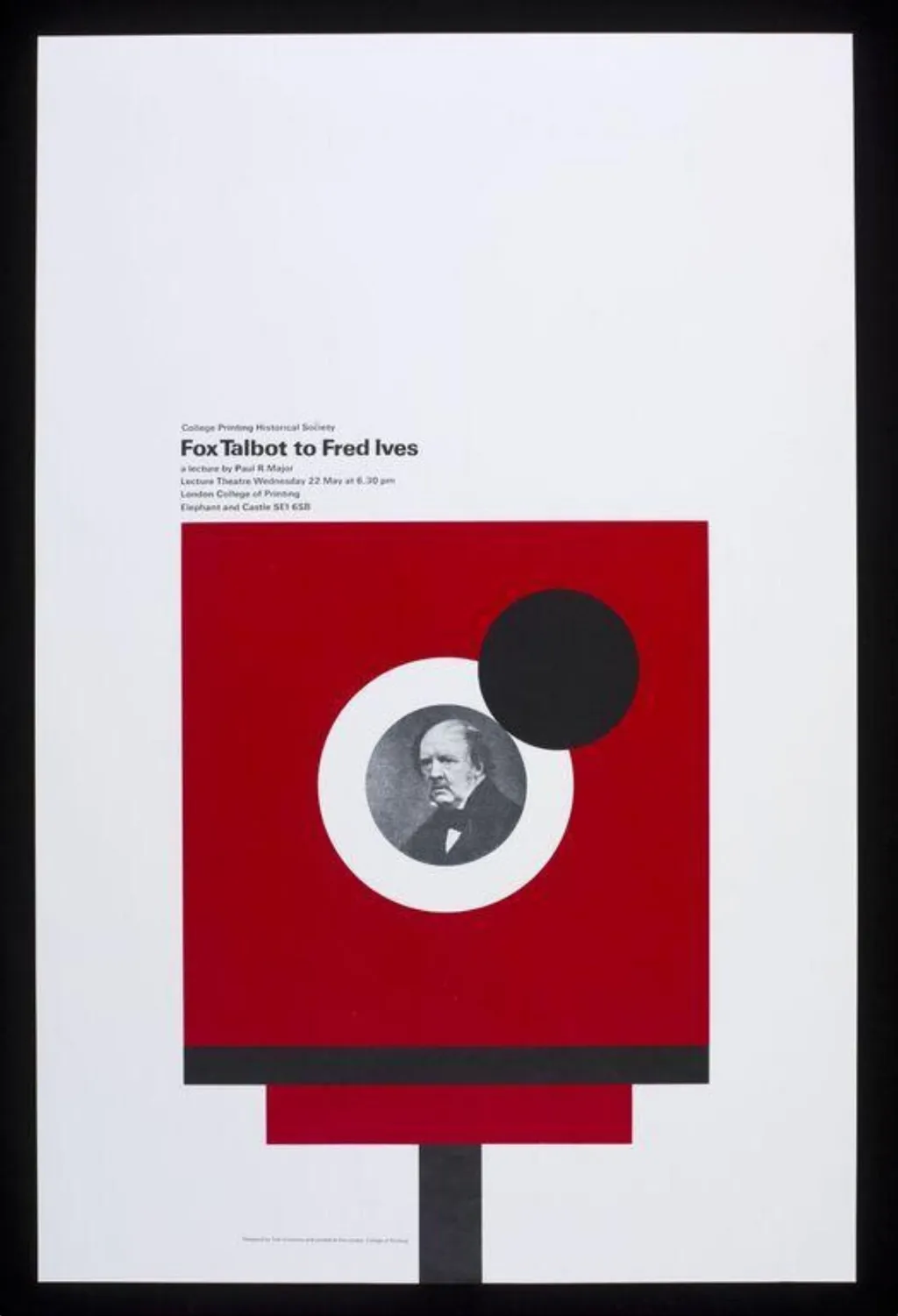
Fox Talbot to Fred Ives photography lecture is a poster by Tom Eckersley. It dates from 1985 and is held in the collection of the Victoria and Albert Museum. This poster advertises a lecture tracing the evolution of photographic technology from William Henry Fox Talbot to Fred Ives.
About this work
Overview
The stark contrast and clean lines reflect early 20th-century modernist aesthetics, prioritizing clarity and symbolic representation over ornamentation.
This poster advertises a lecture tracing the evolution of photographic technology from William Henry Fox Talbot to Fred Ives. Designed with minimalist geometry, it uses a red square and central white circle to suggest a camera lens, framing a black-and-white portrait. The stark contrast and clean lines reflect early 20th-century modernist aesthetics, prioritizing clarity and symbolic representation over ornamentation.
Subject & Meaning
The portrait at the center likely depicts one of the two named pioneers—Fox Talbot or Fred Ives—grounding the lecture’s technical narrative in a human figure. The title positions photography as a lineage of innovation, not merely a medium. By embedding the subject’s face within the lens shape, the design implies that the people behind the technology are inseparable from its development.
Technique & Style
The poster employs flat, unmodulated colors—red, black, and white—arranged in precise geometric forms. The circular portrait is sharply defined against its background, creating visual focus without shading or texture. Typography is sans-serif and aligned horizontally, reinforcing the design’s rational, industrial character. No decorative elements distract from the core message: a direct transmission of information.
History & Provenance
The poster was created by Tom Eckersley, a British graphic designer known for his clean, typographic posters in the mid-20th century. It was produced for an educational or institutional lecture series, likely in the 1950s or 1960s, when historical narratives of photographic technology were being formalized in academic contexts. Its survival reflects its role in disseminating technical history through accessible visual communication.
Context
During the postwar period, institutions increasingly used graphic design to communicate specialized knowledge to broader audiences. This poster aligns with efforts to demystify scientific progress by linking it to individual contributors. The choice of Talbot and Ives—early innovators in negative-positive processes and color photography—highlights a narrative of incremental technological advancement in British and American photographic history.
Legacy
Eckersley’s design exemplifies how mid-century graphic design translated complex subjects into digestible visual forms. Its enduring clarity has made it a reference in design histories focused on information architecture. Though created for a specific lecture, its stripped-down aesthetic continues to influence how technical histories are visually presented in educational materials.
Artist & collection
Artist
Tom Eckersley spent his life turning plain words into bold, no-nonsense posters—think of him as the guy who made train schedules look cool.

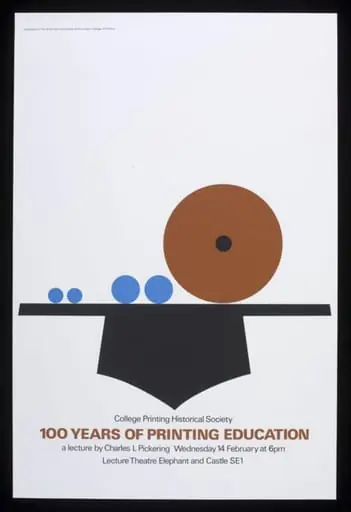 100 years of printing education
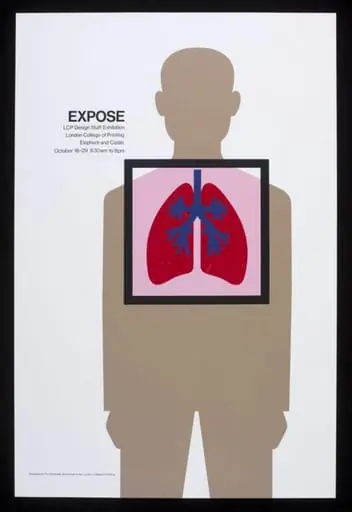 EXPOSE: LCP Design Staff Exhibition
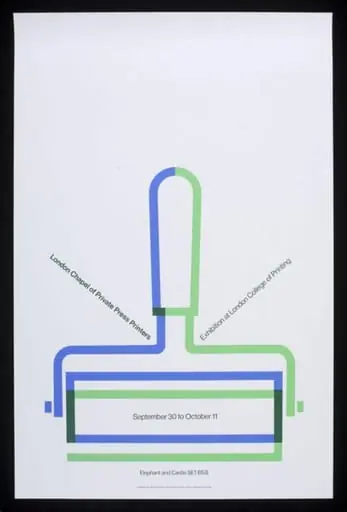 London Chapel of Private Press Printers Exhibition at London College of Printing
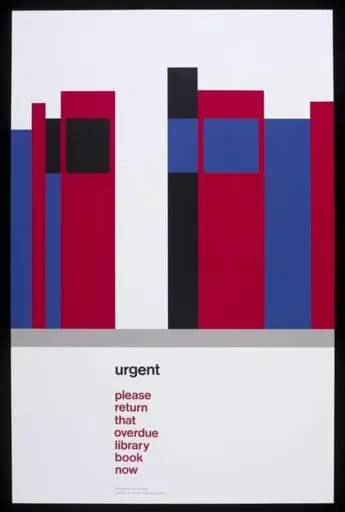 urgent please return that overdue library book now
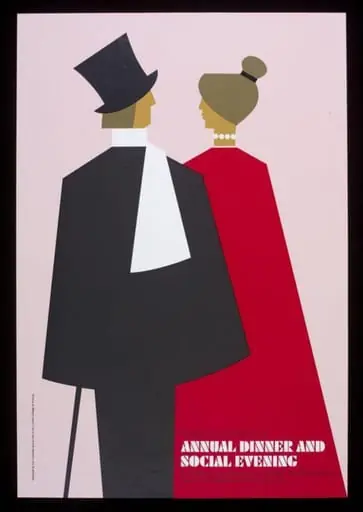 Annual Dinner and Social Evening LCP poster
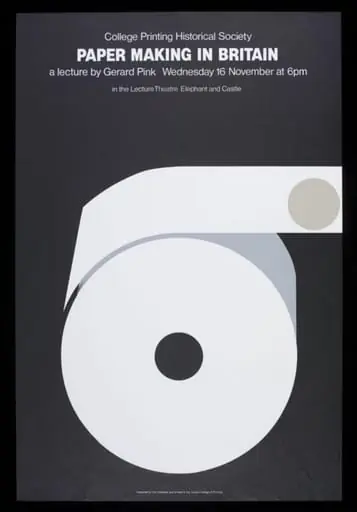 Paper Making in Britain
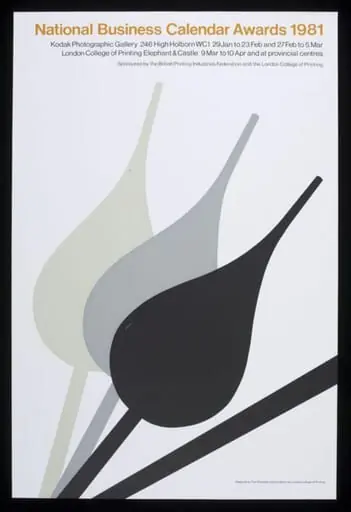 National Business Calendar Awards 1981
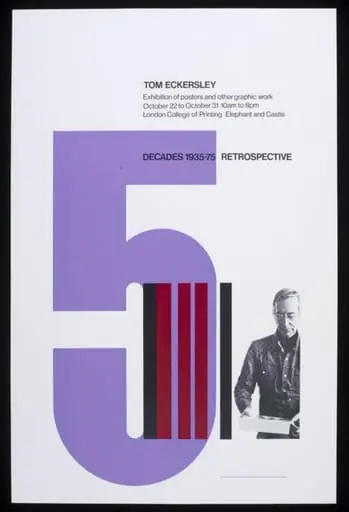 Tom Eckersley: 5 Decades 1935-1975