Artwork
Joosef ja hänen veljensä
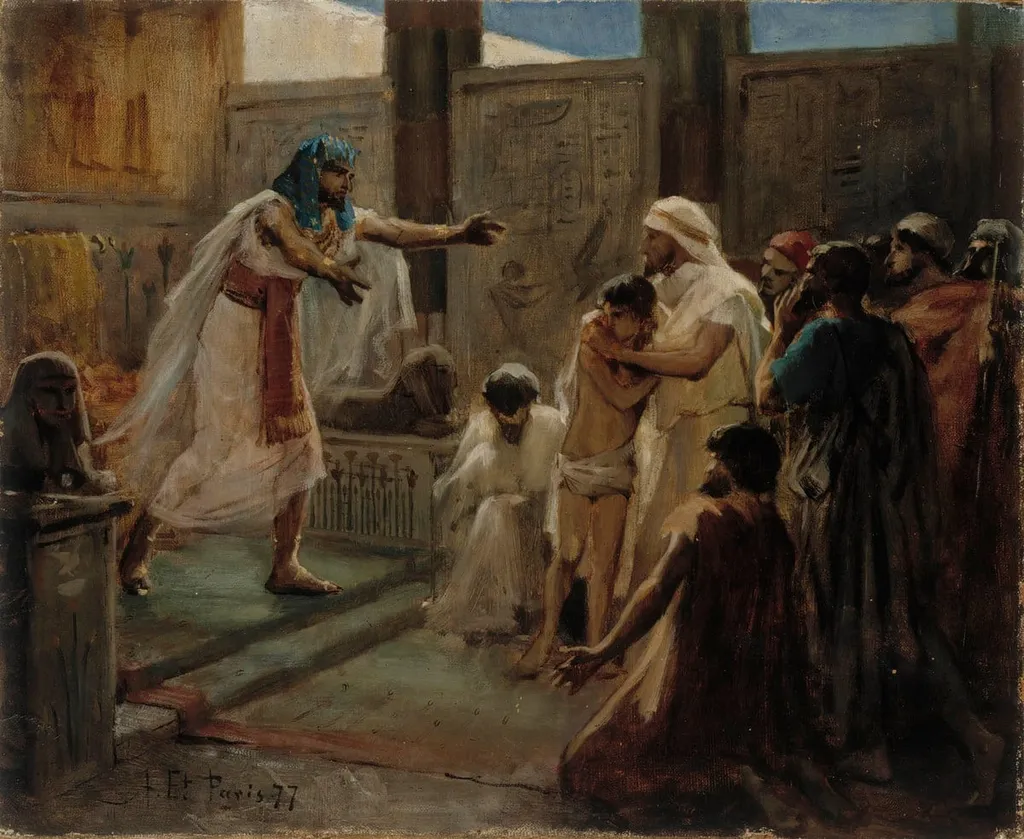
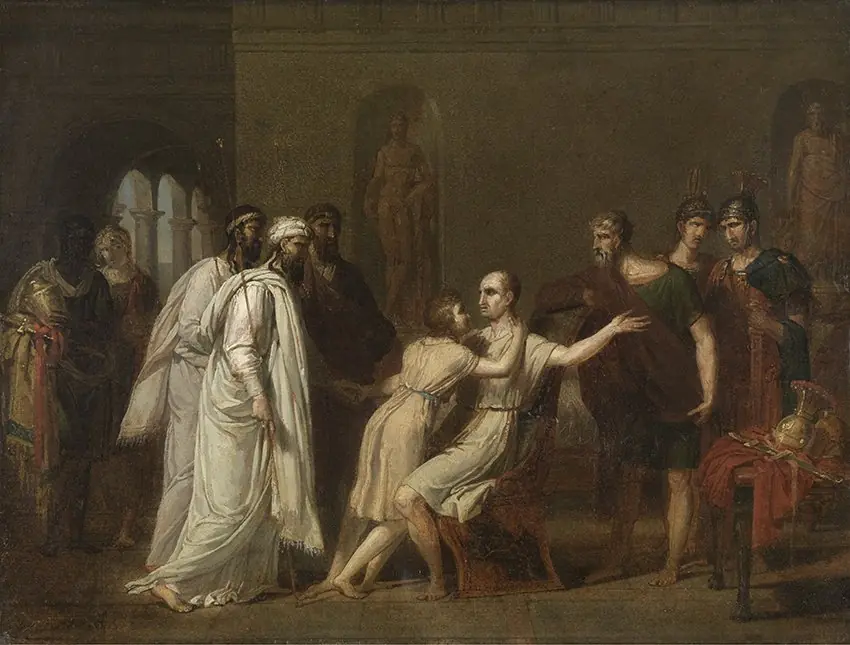
Joosef ja hänen veljensä is an unspecified painting by the Realist artist Albert Edelfelt. It dates from 1889 and is held in the collection of the Finnish National Gallery.
About this work
Overview
The scene is illuminated by a sharp, directional light that isolates key figures, creating a theatrical contrast between action and stillness.
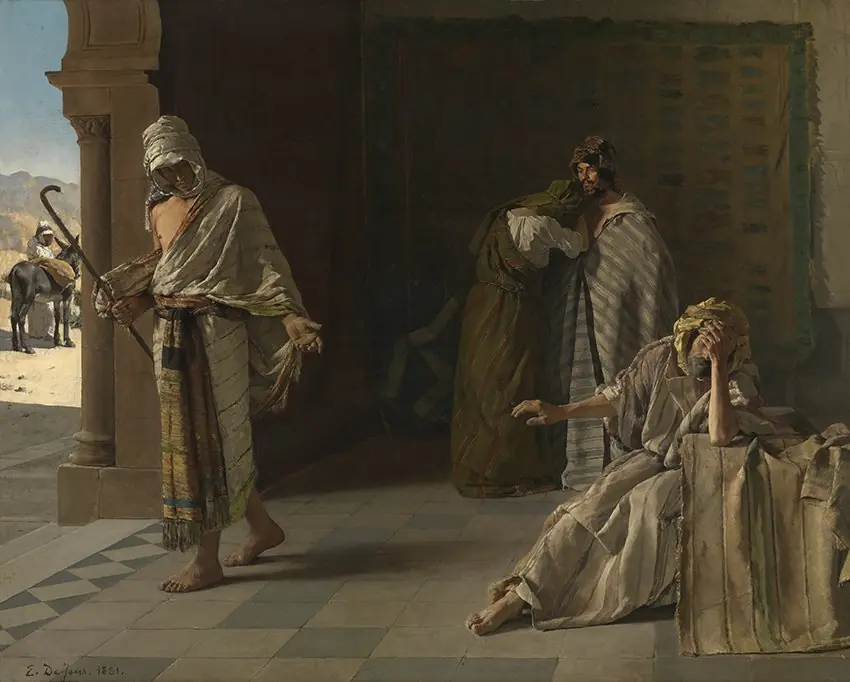
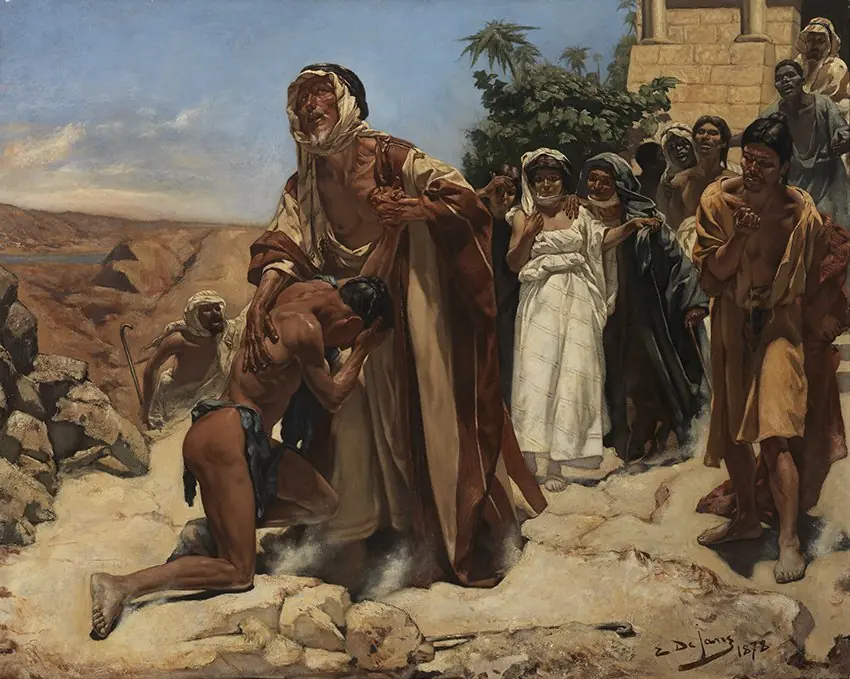
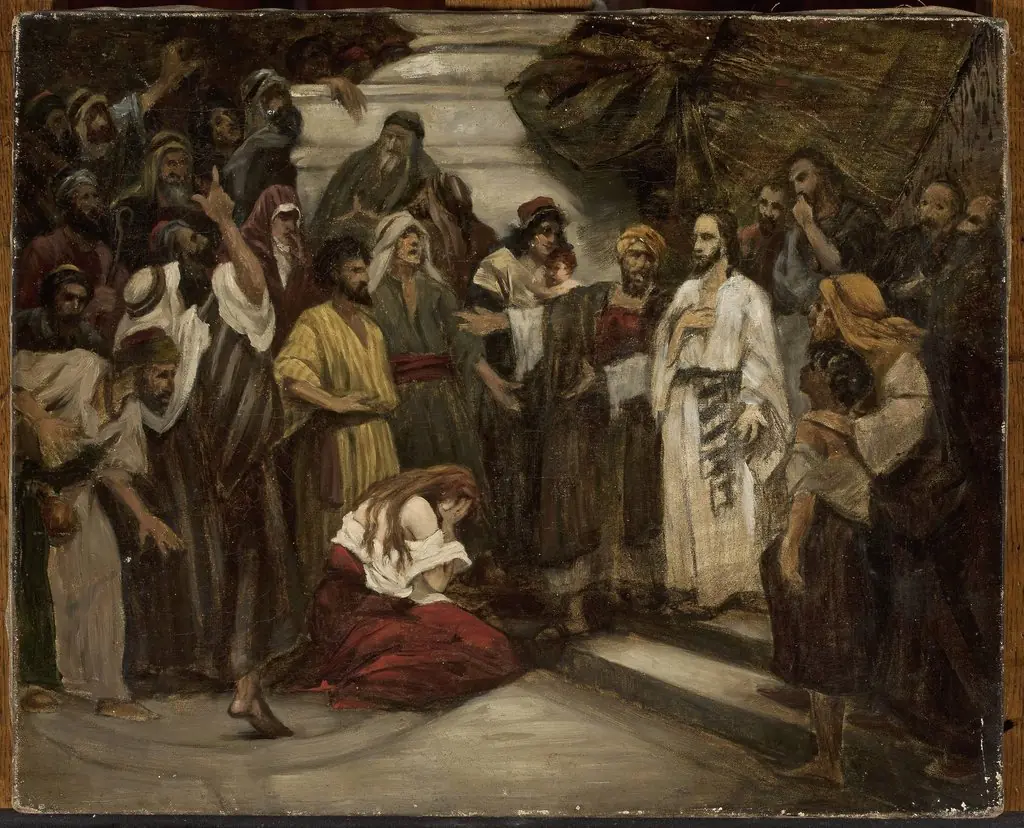
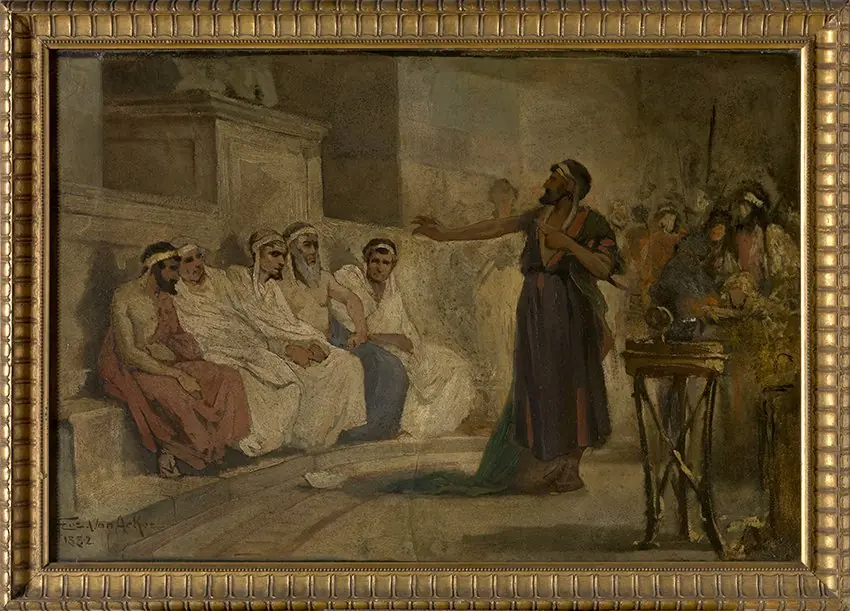
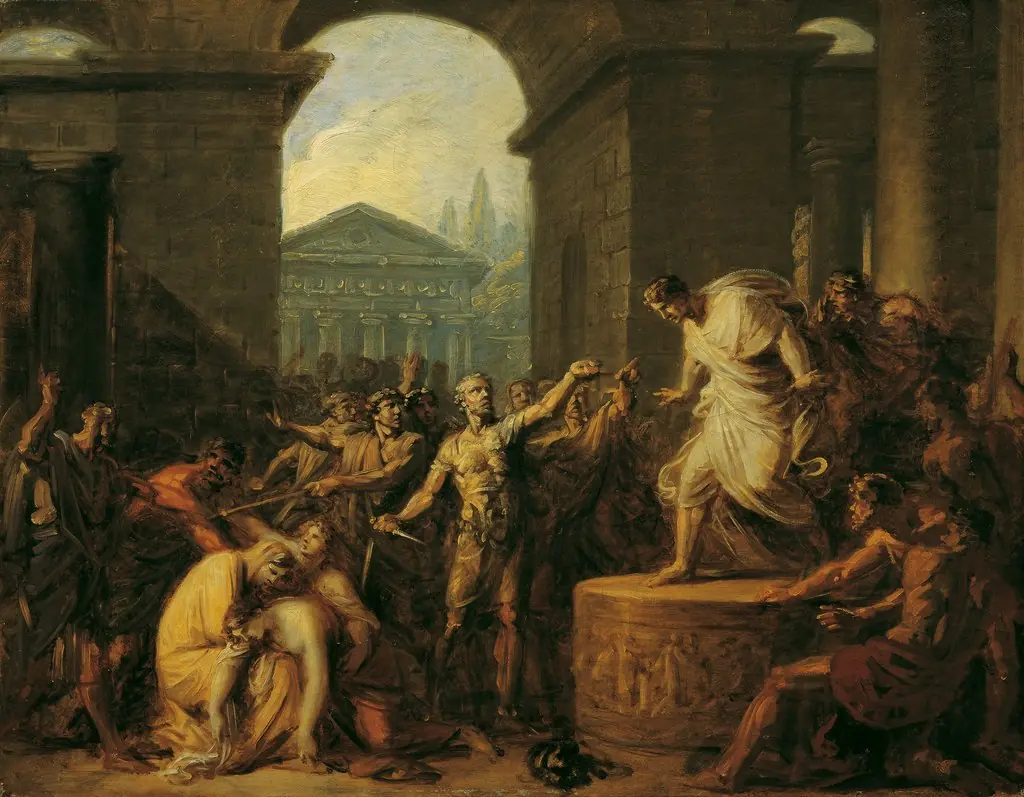
Painted around 1889 by Albert Edelfelt, this work depicts a moment of moral reckoning in a dimly lit, architectural space. A central figure in a blue headwrap and white robe stands elevated, gesturing toward a group below, whose expressions suggest distress. The scene is illuminated by a sharp, directional light that isolates key figures, creating a theatrical contrast between action and stillness. The setting, with its carved stone walls and distant observers, evokes a ritual or judgmental context without specifying a known narrative.
Subject & Meaning
The painting presents a scene of communal tension, likely drawn from biblical or allegorical sources, though no specific story is confirmed. The central figure, authoritative in posture and dress, appears to be delivering judgment or revelation. Below, figures react with anguish—one being assisted, another seated in quiet despair—suggesting consequences of an unspoken transgression. The ambiguity of the setting and roles invites interpretation as a universal moment of accountability, rather than a literal episode.
Technique & Style
Edelfelt employs a controlled chiaroscuro, using stark light to define form and emotion while deep shadows obscure peripheral details. Brushwork is precise in the figures’ faces and garments, yet looser in the background, enhancing the sense of depth and mystery. The palette is restrained—dominated by white, blue, and earth tones—reinforcing the solemn mood. The composition directs the viewer’s gaze along the central figure’s gesture, anchoring the narrative tension in a single, decisive motion.
History & Provenance
Created during Edelfelt’s mature period, the painting was likely produced in his Helsinki studio, where he often explored psychological and symbolic themes. It remained in private Finnish collections until the mid-20th century, after which it entered a public institution. No documentation links it to a specific commission or exhibition at the time of creation, and its title, referencing Joseph and his brothers, was likely assigned later by curators to align with its visual narrative.
Context
In the late 19th century, Finnish artists like Edelfelt were navigating national identity through historical and biblical subjects, often blending realism with symbolic weight. While his earlier works focused on portraiture and everyday life, this piece reflects a shift toward more introspective, staged scenes. The use of dramatic lighting and ambiguous narrative aligns with broader European trends in Symbolist painting, even as Edelfelt retained his commitment to observed detail and naturalistic rendering.
Legacy
Though not among Edelfelt’s most widely exhibited works, this painting is recognized for its psychological depth and compositional discipline. It exemplifies his ability to convey moral gravity through quiet, controlled imagery rather than overt drama. Scholars note its significance in illustrating how Finnish artists adapted international styles to explore internal, universal themes. The work continues to be referenced in studies of Nordic realism and the transition toward modern symbolic expression.
Artist & collection
Artist
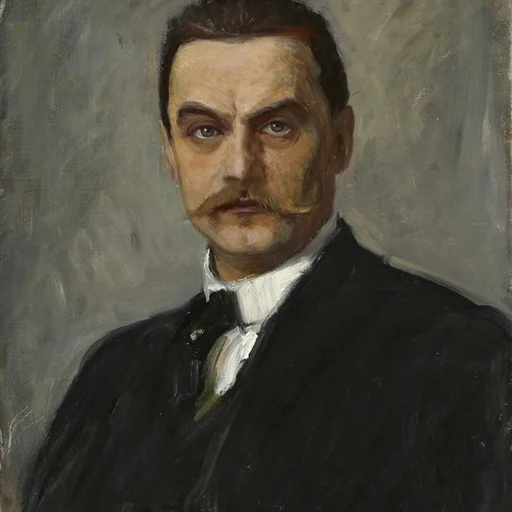
Albert Gustaf Aristides Edelfelt (21 July 1854 – 18 August 1905) was a Finnish painter noted for his naturalistic style and Realist approach to art.