Artwork
An Arab Sheik
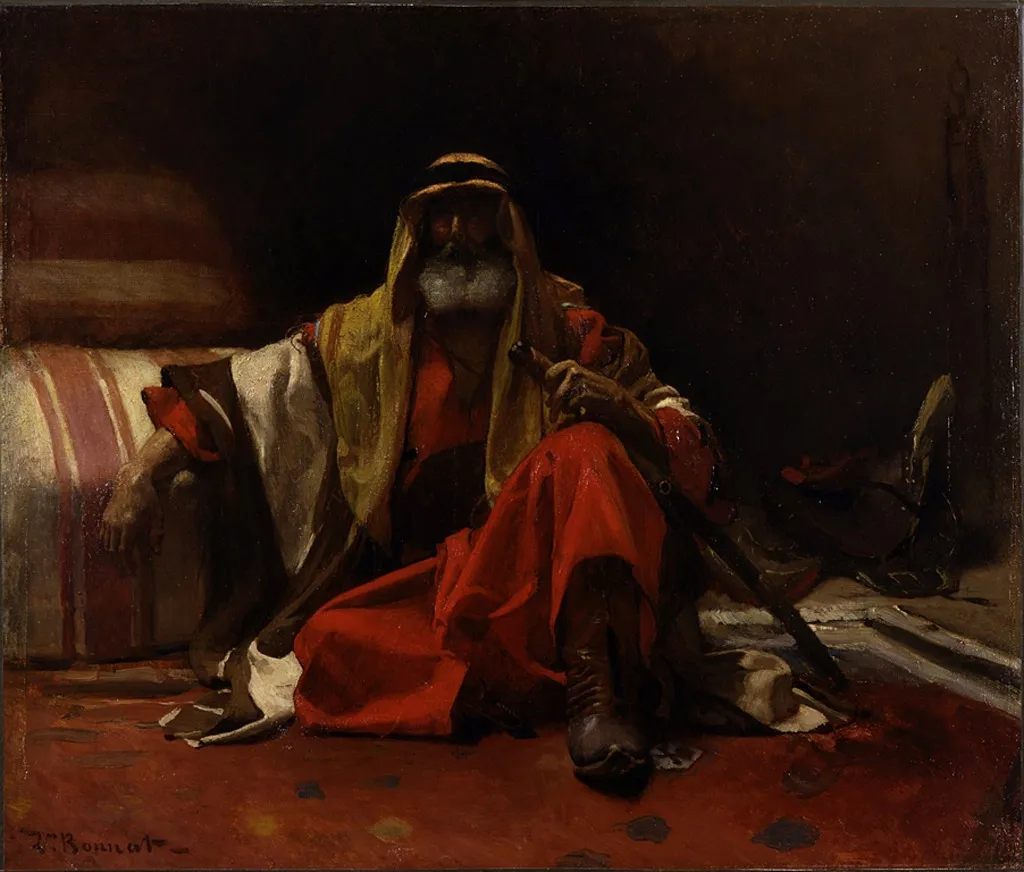
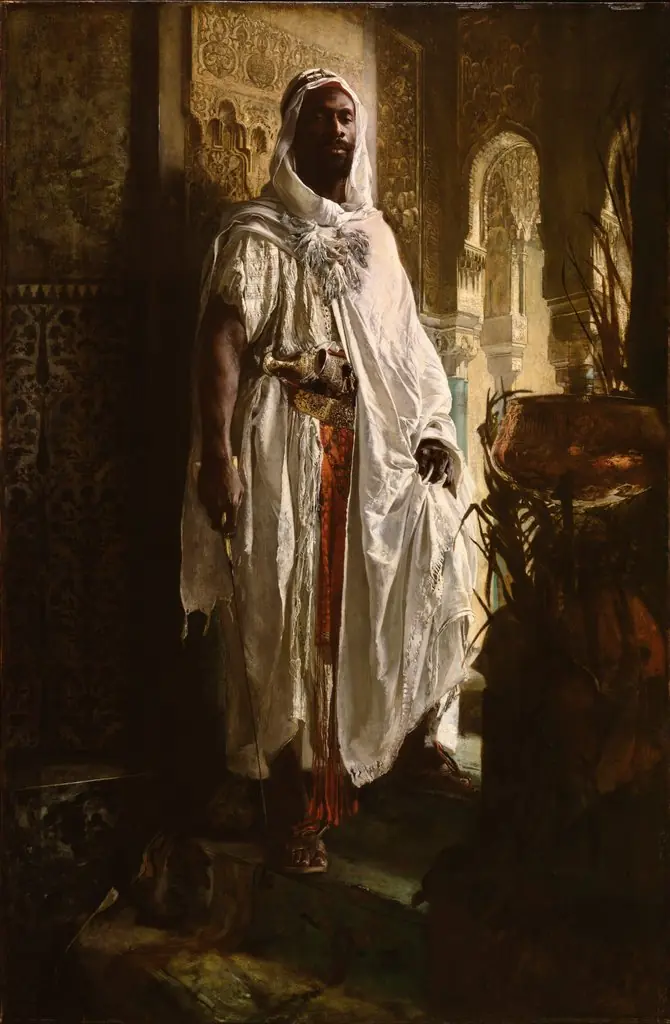
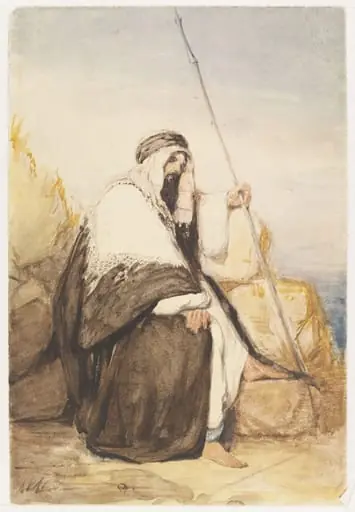
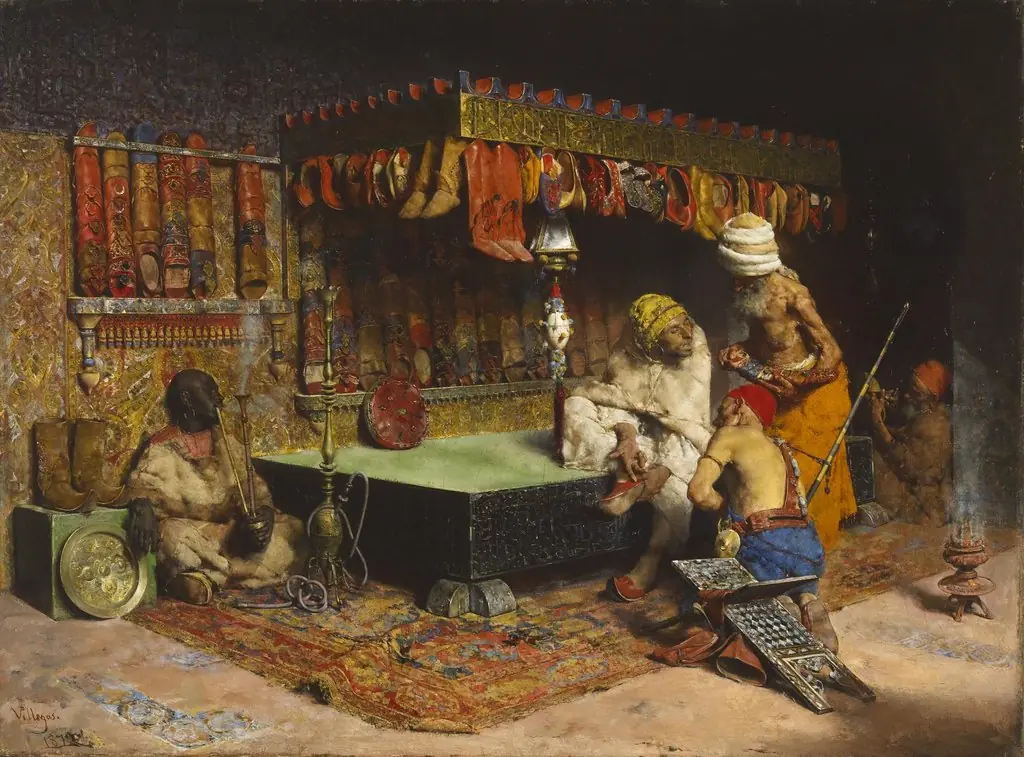
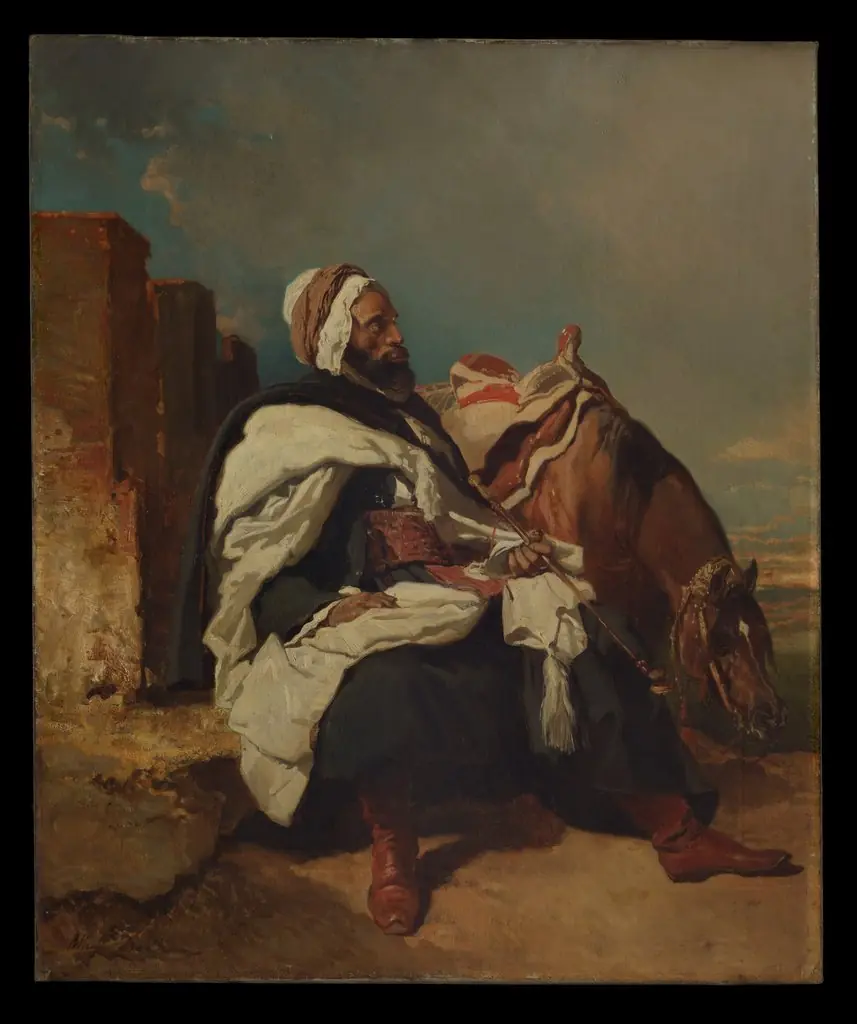
An Arab Sheik is an oil painting by the Orientalist artist Léon Bonnat. It dates from 1870 and is held in the collection of the Walters Art Museum.
About this work
Overview
Painted in 1870 by French artist Léon Bonnat, this oil-on-canvas work portrays a seated Arab sheik in a composed, contemplative pose.
Painted in 1870 by French artist Léon Bonnat, this oil-on-canvas work portrays a seated Arab sheik in a composed, contemplative pose. Executed during the height of Orientalist interest in European art, the painting reflects a fascination with North African and Middle Eastern figures, rendered with attention to costume and setting rather than narrative action. It is now part of the Walters Art Museum’s permanent collection.
Subject & Meaning
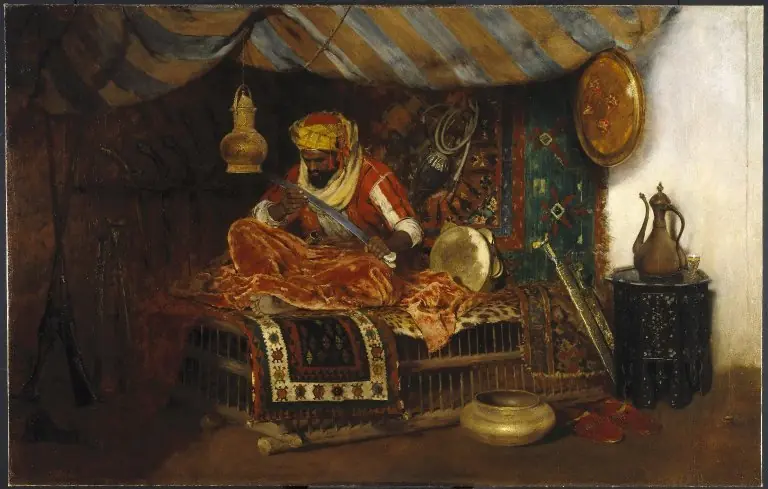
The figure is depicted as a dignified elder, his white beard and still gaze suggesting authority and quiet resolve. Clad in a red robe and yellow headscarf, and holding a sword across his lap, he embodies a blend of martial readiness and serene composure. The absence of action or context invites interpretation as a portrait of character rather than a scene from daily life, aligning with Orientalist tendencies to idealize or mystify Eastern figures.
Technique & Style
Bonnat employs a restrained palette dominated by deep shadows and rich, saturated colors in the garments. The dark background isolates the figure, enhancing the texture of fabric and the precision of facial detail. Brushwork is controlled and smooth, emphasizing realism without theatricality. The composition is frontal and symmetrical, reinforcing the subject’s stillness and presence, typical of academic portraiture adapted to Orientalist themes.
History & Provenance
Created during Bonnat’s tenure at the École des Beaux-Arts, the painting reflects his engagement with ethnographic subjects common among French artists of the period. It entered the Walters Art Museum’s collection in the early 20th century, likely through the acquisition of private holdings that included Orientalist works. Its documented history remains modest, with no evidence of public exhibition prior to its museum acquisition.
Context
In the late 19th century, European artists frequently depicted North African and Middle Eastern subjects, often based on travel sketches or secondhand sources. Bonnat, like many contemporaries, drew from colonial-era curiosity rather than direct cultural immersion. The painting’s calm tone contrasts with more exoticized Orientalist works, suggesting a more restrained, portrait-oriented approach within the movement.
Legacy
While not widely reproduced or celebrated in mainstream art history, the painting remains a representative example of academic Orientalism. It illustrates how European artists framed non-Western subjects through the lens of dignity and stillness, avoiding overt caricature. Its preservation in a major museum allows continued study of how cultural identity was visually constructed during the colonial era.
Artist & collection
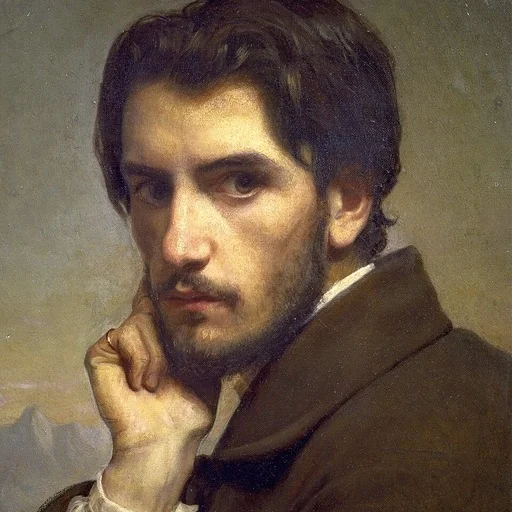
Artist
Léon Joseph Florentin Bonnat (French pronunciation: ; 20 June 1833 – 8 September 1922) was a French painter, Grand Officer of the Légion d'honneur, art collector and professor at the Ecole des Beaux Arts.