Artwork
Jacques Benigne Bossuet
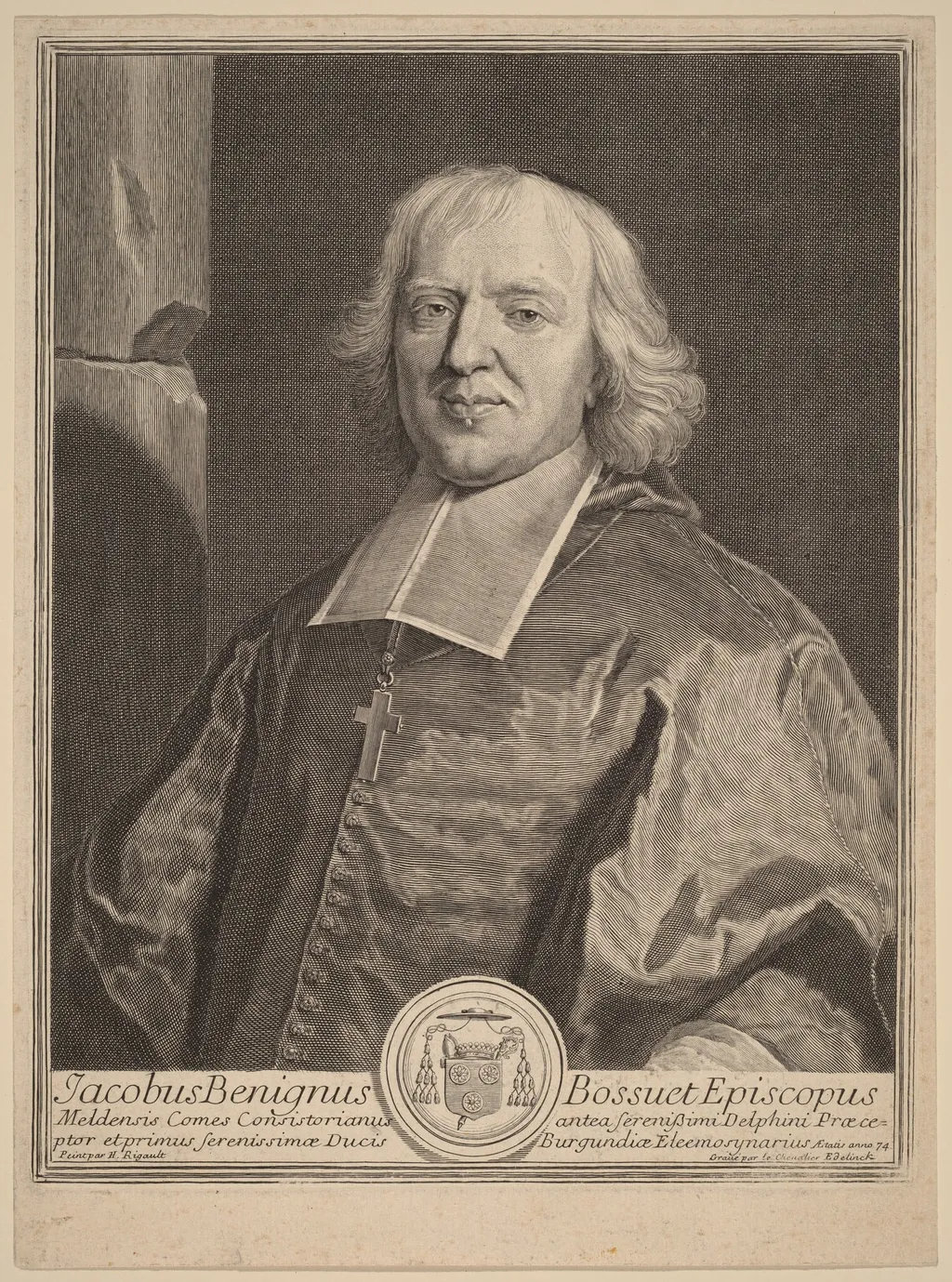
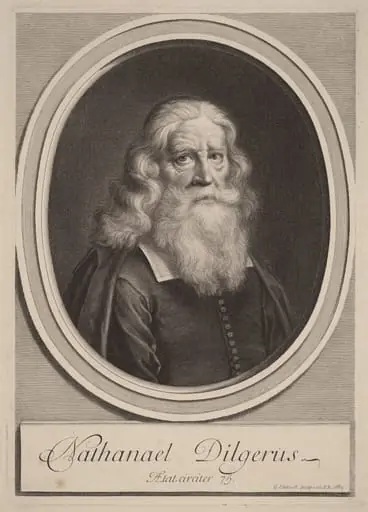
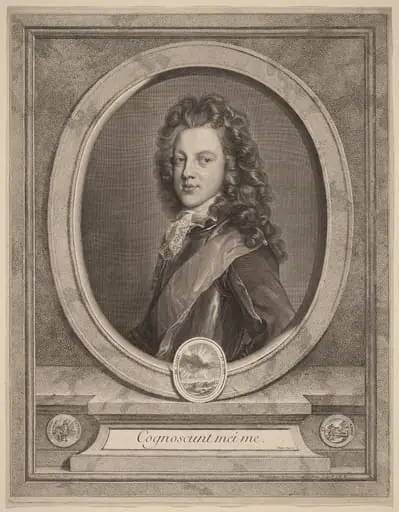
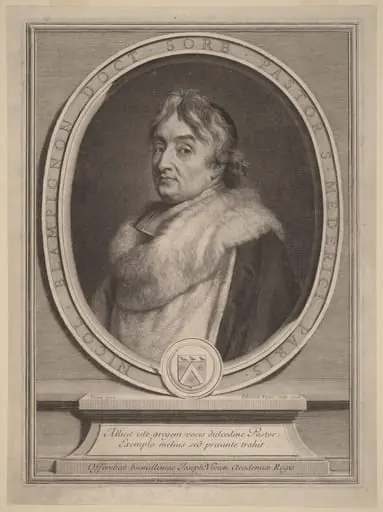
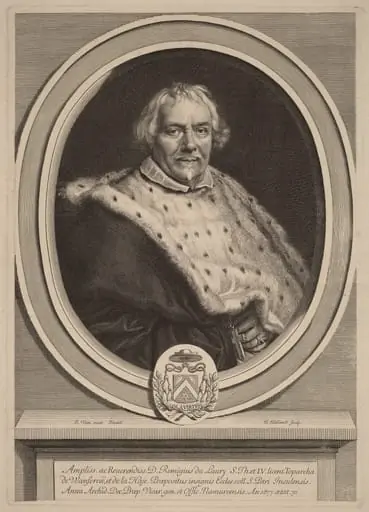
Jacques Benigne Bossuet is an ink print by the Baroque artist Gerard Edelinck. It dates from 1674 and is held in the collection of the National Gallery of Art. This 1674 print by Gérard Edelinck portrays Jacques Bénigne Bossuet, a leading French bishop and theologian.
About this work
Overview
Executed in etching and engraving, the work reflects Edelinck’s technical precision and his role as a key printmaker in late 17th-century Paris.
This 1674 print by Gérard Edelinck portrays Jacques Bénigne Bossuet, a leading French bishop and theologian. Executed in etching and engraving, the work reflects Edelinck’s technical precision and his role as a key printmaker in late 17th-century Paris. Though born in Flanders, Edelinck had settled in France by 1666 and would become a naturalized citizen the following year, aligning his career with the French court’s cultural ambitions.
Subject & Meaning
Bossuet is depicted in ecclesiastical dress, his dark robe and white collar signaling his clerical authority. The cross at his neck reinforces his spiritual role. His composed expression and direct gaze convey intellectual gravitas, consistent with his reputation as a preacher and defender of Catholic doctrine. The portrait serves not as mere likeness but as a visual affirmation of his influence in religious and political life under Louis XIV.
Technique & Style
Edelinck employed fine lines and controlled hatching to render texture and volume, particularly in the fabric of Bossuet’s robe and the subtle contours of his face. The dark, unmodeled background isolates the figure, enhancing its monumentality. The inclusion of a classical column on the left suggests erudition and permanence, aligning the portrait with Baroque conventions that merged realism with symbolic depth.
History & Provenance
Created during Edelinck’s peak years in Paris, the print was likely produced for distribution among educated elites and ecclesiastical circles. As a skilled engraver employed by royal institutions, Edelinck had access to prominent figures, making such portraits both commemorative and propagandistic. The work’s survival in multiple collections attests to its enduring value as a documented likeness of a major religious figure.
Context
In the 1670s, France’s religious and political spheres were tightly interwoven. Bossuet, as tutor to the dauphin and a vocal advocate of Gallicanism, occupied a central role in shaping state orthodoxy. Portraiture in print form became a tool for disseminating the image of such figures, reinforcing their authority beyond the pulpit. Edelinck’s work fits within a broader trend of using engraved portraits to cement public identity.
Legacy
Edelinck’s portrait of Bossuet remains a significant example of French Baroque printmaking, noted for its clarity and restraint. It influenced later engravers who sought to capture intellectual authority through refined line work. While not widely reproduced today, it endures in institutional collections as a precise record of a key figure in French religious history and a testament to the printmaker’s craft.
Artist & collection
Artist
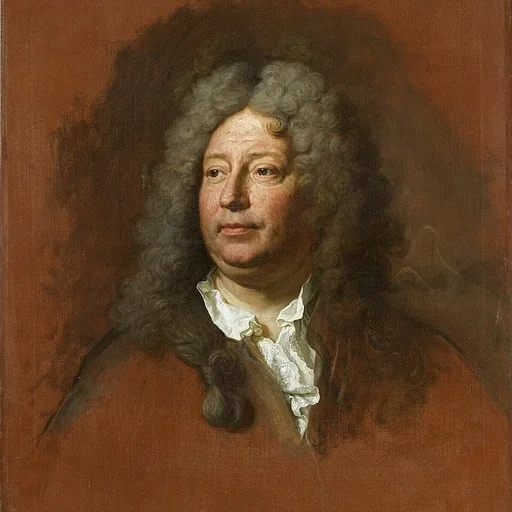
Gérard Edelinck (20 October 1640 (baptized) – 2 April 1707) was a copper-plate engraver and print publisher of Flemish origin, who worked in Paris from 1666 and became a naturalized French citizen in 1675.