Artwork
Copy after 'The Finding of Moses' by Veronese
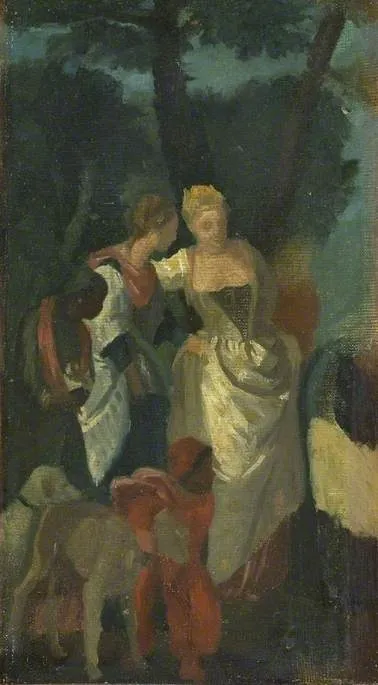
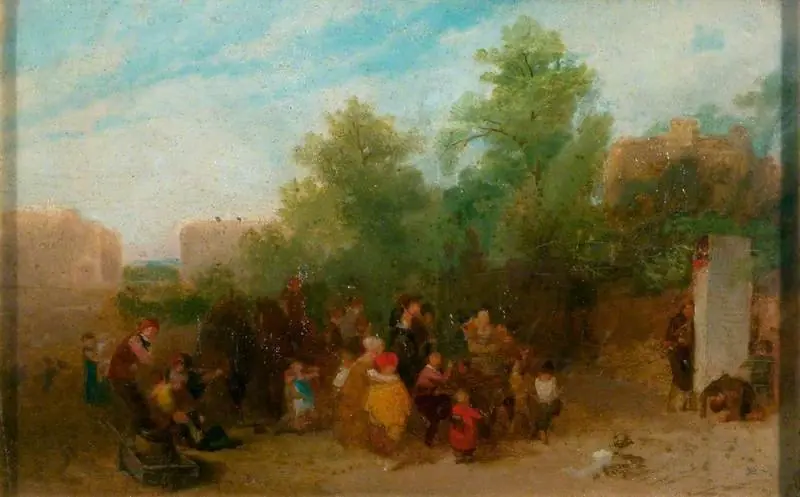
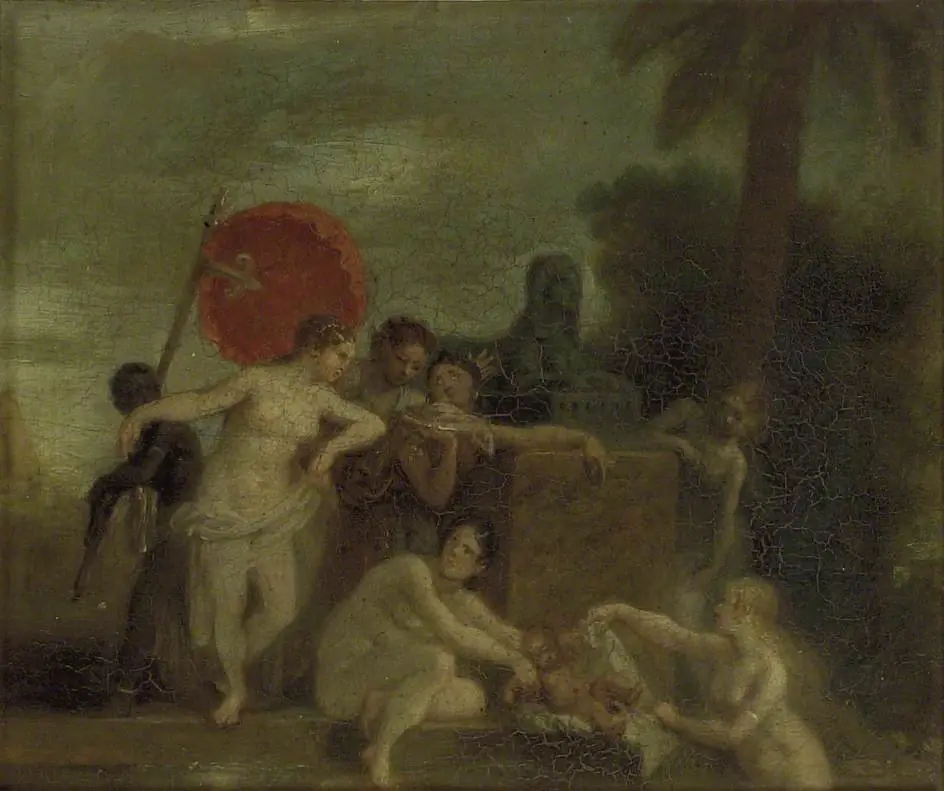
Copy after 'The Finding of Moses' by Veronese is an oil painting by Edgar Degas. It dates from 1855 and is held in the collection of the Fitzwilliam Museum.
About this work
The scene depicts a group of people gathered around a baby, with a woman in the center holding the infant.
This painting is a copy of 'The Finding of Moses' by Veronese, created by Edgar Degas in 1855. The scene depicts a group of people gathered around a baby, with a woman in the center holding the infant. The group is set against a backdrop of trees and a blue sky.
In the foreground, a dog is visible, adding a sense of realism to the scene. The use of oil paint gives the painting a rich, vibrant quality.
If you're interested in learning more about Edgar Degas, look up the artist.
Overview
Edgar Degas produced an oil replica of Paolo Veronese’s celebrated composition The Finding of Moses in 1855. Executed early in Degas’s career, the work mirrors the original’s narrative while revealing the young artist’s engagement with Renaissance motifs. The painting is part of the collection of the Fitzwilliam Museum in Cambridge.
Subject & Meaning
The scene gathers a small group around an infant, echoing the biblical episode in which the baby Moses is discovered among the reeds. Central to the composition is a woman cradling the child, surrounded by onlookers whose gestures suggest curiosity and reverence. A dog positioned in the foreground adds a touch of domestic realism to the otherwise sacred tableau.
Technique & Style
Rendered in oil on canvas, Degas adopts a palette of luminous blues and warm earth tones that convey depth and atmospheric light. The brushwork balances detailed rendering of figures with looser treatment of foliage and sky, reflecting the artist’s study of Veronese’s compositional harmony while beginning to explore his own emerging impressionistic sensibilities.
History & Provenance
Created when Degas was still a student, the copy demonstrates his practice of copying masterworks as a learning tool. After remaining in private hands for over a century, the painting entered the Fitzwilliam Museum’s holdings, where it is displayed as an example of Degas’s formative period and his dialogue with the Italian Renaissance.
Artist & collection
Artist
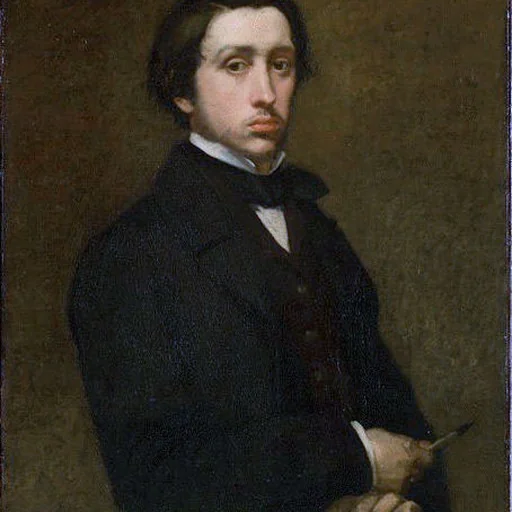
Born Hilaire-Germain-Edgar De Gas on 19 July 1834 in Paris, Edgar Degas came from an affluent banking family with aristocratic roots and spent his childhood among the cultivated circles of the French capital.